“You saw nothing in Hiroshima”. How the Atom Changed Art, an exhibition in Paris

[et_pb_section fb_built=”1″ admin_label=”Colonne principale du Report” _builder_version=”4.16″ locked=”off” global_colors_info=”{}”][et_pb_row admin_label=”Texte du Report + Partage social + Formulaire de dons Give” _builder_version=”4.16″ width=”60%” global_colors_info=”{}”][et_pb_column type=”4_4″ _builder_version=”4.16″ global_colors_info=”{}”][et_pb_text admin_label=”Partage social” _builder_version=”4.24.3″ text_orientation=”center” global_module=”29597″ saved_tabs=”all” locked=”off” global_colors_info=”{}”]

[DISPLAY_ULTIMATE_PLUS]

Sustain Our Work with a Small Monthly Gift

Become part of the Judith Benhamou Reports circle.
Contribute, even from just €10

Click here

[/et_pb_text][et_pb_text admin_label=”Première partie – Texte du report (Desktop et mobile)” _builder_version=”4.24.3″ header_6_font=”|300|||||||” header_6_font_size=”13px” hover_enabled=”0″ global_colors_info=”{}” sticky_enabled=”0″]

Humanity’s greatest catastrophes

In 1959, Alain Resnais and Marguerite Duras released Hiroshima mon amour, a film punctuated like a refrain by the words of the Japanese hero who  tells his French lover, “You saw nothing in Hiroshima.”

Beyond the fleeting romance that unfolds between them in a city marked by the indelible memory of 8:16 a.m. on August 6, 1945, when the atomic bomb dropped by the Americans detonated, this masterpiece confronts the profound difficulty of bearing witness to humanity’s greatest catastrophes.

Francis Bacon
Francis Bacon

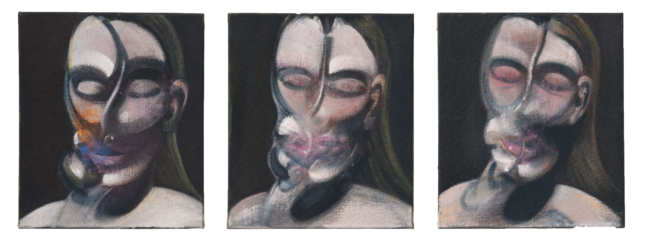
The film had an international impact to the point where Irish painter Francis Bacon, in one of his portraits of a woman in triptych, dated 1976, incorporated as a reference the serpentine lock of hair that crosses the forehead of actress Emmanuelle Riva in a famous scene of the movie.

Julia Garimorth

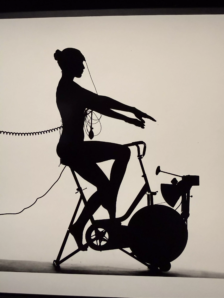
The painting is featured in the exhibition “L’age atomique: les artistes à l’épreuve de l’Histoire” (The Atomic Age: Artists in the Face of History) at  Musée d’art moderne de  Paris, until February 9,  surrounded by over 250 works .  As co-curator Julia Garimorth explains, “the exhibition offers a view of our atomic age, which began in 1945 and seemingly has no end”.

Japanese postwar artists
Kazuo Matsumoro

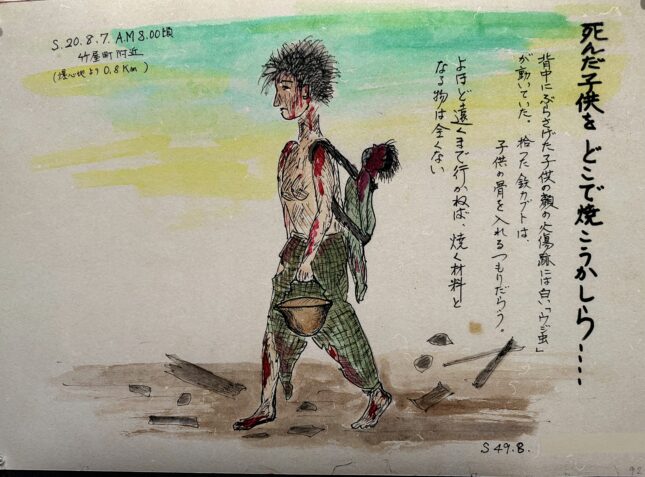
The exhibit is overwhelming in scope, but overlooks certain themes, such as the tremendous impact of the bomb on Japan’s  remarkable and lesser-known postwar artistic  output. However, the exhibit does feature a selection of drawings by survivors from the Hiroshima Peace Museum, depicting the immense trauma they experienced.
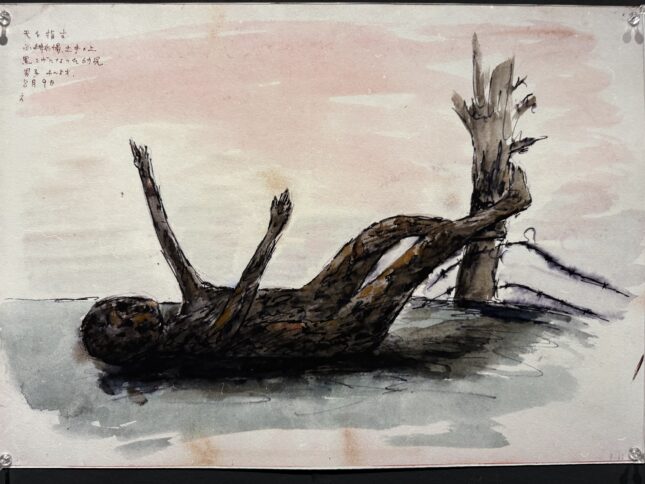
Masato Yamashita
[/et_pb_text][et_pb_text admin_label=”Text Donating=Supporting” _builder_version=”4.24.3″ _module_preset=”default” text_font_size=”22px” link_font=”|600|||||||” link_text_color=”#000000″ header_3_font=”|600|||||||” header_3_font_size=”26px” background_color=”#a6ff00″ text_orientation=”center” custom_padding=”5%|5%|5%|5%|true|true” border_radii=”on|3px|3px|3px|3px” global_module=”46557″ saved_tabs=”all” global_colors_info=”{}” link_text_color__hover_enabled=”on|hover” link_text_color__hover=”rgba(0,0,0,0.85)”]

To appreciate is to support.
To support is to donate.

Support JB Reports by becoming a sustaining Patron with a recurring or a spontaneous donation.

Yes, I want to support ♥

[/et_pb_text][et_pb_text admin_label=”Seconde partie – Texte du report (Desktop et mobile)” _builder_version=”4.24.3″ header_6_font=”|300|||||||” header_6_font_size=”13px” global_colors_info=”{}”]

Marcel Duchamp

The exhibition’s scope extends even further back, beginning with early 20th-century discoveries about the atom’s structure. This theoretical perspective is fascinating, suggesting that artists like Marcel Duchamp and Wassily Kandinsky were captivated by the notion of an atom filled with empty space and the existence of a microscopic world beyond human sight. For Duchamp, this fascination resulted in a form of generalized nihilism, where he experimented, for instance, with the concept of playing with air, in his famous piece “Air de Paris”, composed of an empty glass bulb.

 Wassily Kandinsky
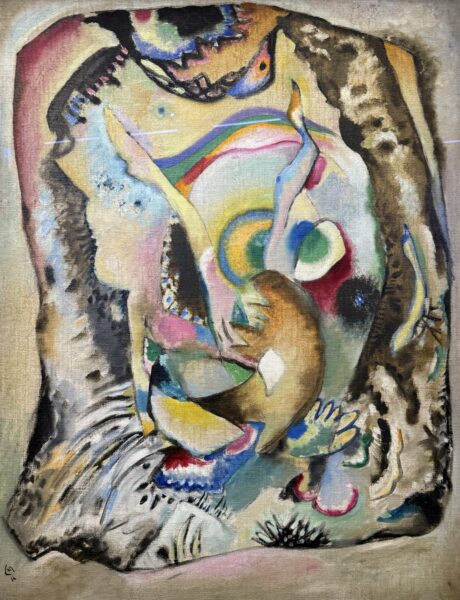
Wassily Kandinsky

For Kandinsky, the exhibition suggests that these discoveries lead him directly to abstraction.

Before and after the bomb
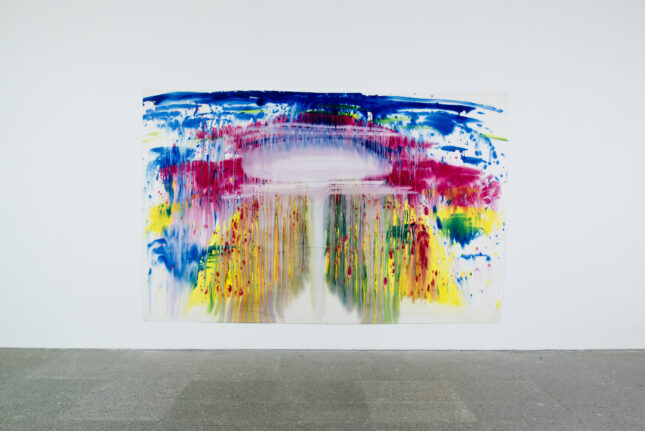
Miriam Cahn

“There is a before and after the bomb,” stresses Julia Garimorth. Jackson Pollock’s dripping technique, developed in 1947, can be viewed as a choreographed expression of moving electrons, while Lucio Fontana’s monochromatic canvases, slashed to create his Concetto spaziale series from 1959 onward, are interpreted as representations of the world’s annihilation.

Bruce Conner

https://youtu.be/kMg2-5G7tIQ?si=MtJAQSR3FvZ_yFoQ

The exhibition also includes an essential masterpiece: a hypnotic 36-minute film by Bruce Conner titled Crossroads, made in 1976, documenting a 1946 nuclear test on Bikini Atoll from 27 unique perspectives. Conner transforms the explosive mushroom cloud— the symbol of devastation—into a haunting visual study, compelling viewers to confront both its destructive power and unsettling beauty.
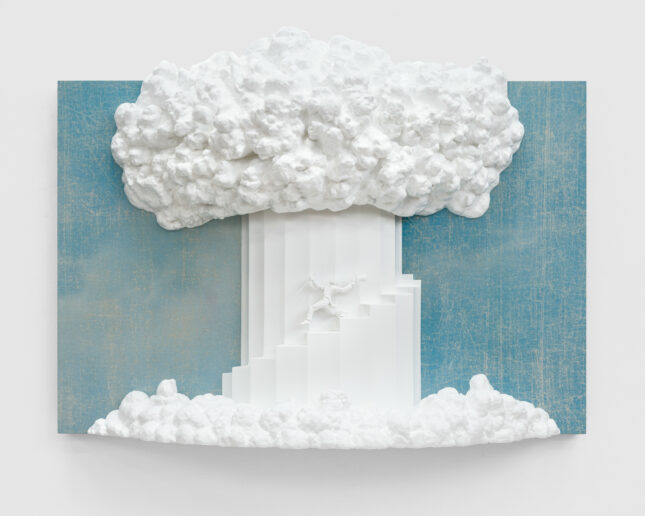
Jim Shaw

Until February 9 at the Museum of Modern Art, Paris. https://www.mam.paris.fr/
[/et_pb_text][et_pb_text disabled_on=”off|off|off” admin_label=”Partage social • Puis Formulaire de dons GIVE” module_id=”donateform” _builder_version=”4.24.3″ global_module=”20835″ saved_tabs=”all” global_colors_info=”{}”]

[DISPLAY_ULTIMATE_PLUS]


[/et_pb_text][/et_pb_column][/et_pb_row][/et_pb_section][et_pb_section fb_built=”1″ _builder_version=”4.24.3″ _module_preset=”default” global_colors_info=”{}”][et_pb_row _builder_version=”4.24.3″ _module_preset=”default” global_colors_info=”{}”][et_pb_column type=”4_4″ _builder_version=”4.24.3″ _module_preset=”default” global_colors_info=”{}”][et_pb_image src=”https://judithbenhamouhuet.com/wp-content/uploads/2024/10/Caillebotte-7-scaled.jpeg” _builder_version=”4.24.3″ _module_preset=”default” global_colors_info=”{}”][/et_pb_image][/et_pb_column][/et_pb_row][/et_pb_section]

Judith Benhamou Reports is an independent insider voice on art, exhibitions and the market.  Join the circle to keep on receiving exclusive perspective, early access and behind-the-scenes analysis. Choose a monthly or one-time donation — even a small amount makes a difference.

You can cancel a recurring donation at any time.

Sustain Our Work with a Small Monthly Gift

Become part of the Judith Benhamou Reports circle.
Contribute, even from just €10

Click here

Select Payment Method
Personal Info

Credit Card Info
This is a secure SSL encrypted payment.
Billing Details

Donation Total: 50,00€ for 12

Latest Reports

Don’t miss a thing. Become a JB subscriber and receive the newsletters as soon as they are published.

Judith Benhamou Reports has access to the most influential professionals in the art world, presenting interviews with artists, both recognized and up-and-coming, and offering an insider perspective on fairs and exhibition openings, exclusive videos, and unconventional visits to sites of artistic creation across the globe.