Just 2h20 apart by train
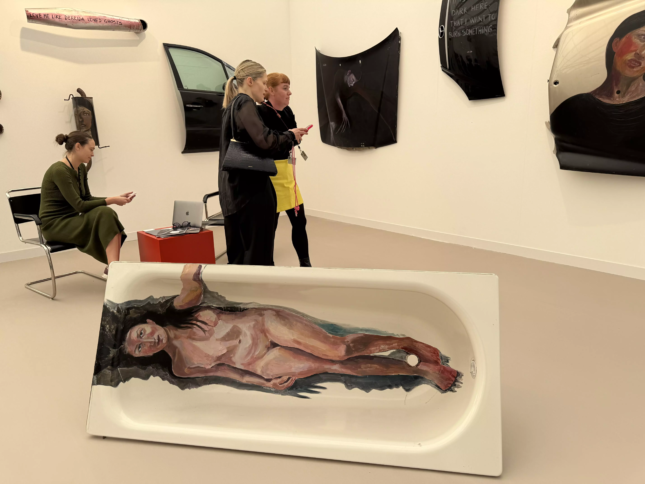
Every year, the situation is the same: just two hours and 20 minutes apart by train, and separated by only a few days, two major fairs on the European art calendar take place in quick succession. On October 14, Frieze London (devoted to contemporary art) and Frieze Masters (covering historical and modern art) opened their doors, running through October 18 and bringing together 312 galleries under two tents in London’s Regent’s Park. Then, on October 20, Art Basel Paris, with its 211 galleries specializing in modern and contemporary art, will hold its VIP preview (1) at the Grand Palais.
worldwide favor
Clearly, few people attend both events back-to-back. For years, London enjoyed worldwide favor and a reputation for excellence. These days, the phrase circulating in the art market is “Paris is the new London,” meaning that the French capital has succeeded in attracting the world’s wealthiest or most influential art enthusiasts.
Sustain Our Work with a Small Monthly Gift
Become part of the Judith Benhamou Reports circle.
Contribute, even from just €10
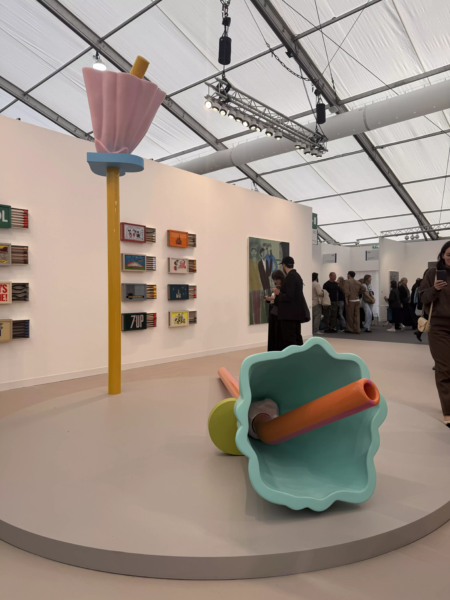
Yet despite the proximity of the two fairs on the calendar, there does seem to be room for both. What people come to London for is not what they find in Paris.
Eva Longret
Eva Longret, director of Frieze London, explains: “What people expect from the fair here is discovery. They want galleries to take real risks. You see artists exhibiting for the first time, daring installations, and artists who are new in terms of their careers. That’s the essence of Frieze. But it’s also the essence of London, a city that has never been afraid to experiment, whether in art, fashion or music.”
Paris, by contrast, is perceived as more traditional.
this Is Still Not a Pipe
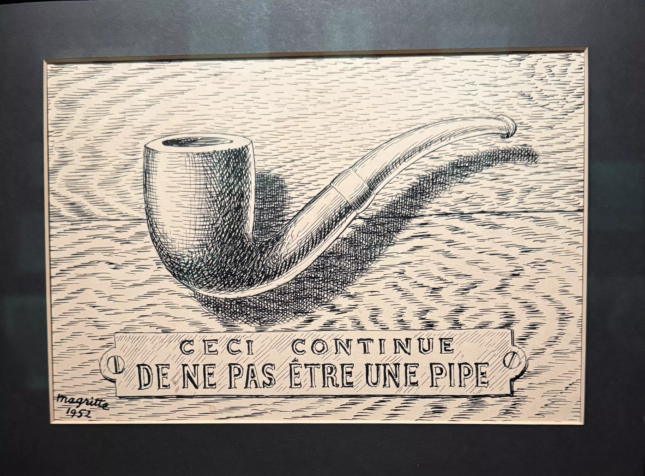
In the British capital, several galleries have demonstrated a new level of ambition. Gagosian, for instance, has mounted a fabulous exhibition worthy of a museum, drawing long lines of visitors every day. Through December 19, “This Is Still Not a Pipe: The Afterlife of Magritte” is devoted to the Belgian Surrealist René Magritte and his legacy in contemporary art.
In an exceptional installation, 120 paintings are on view, including 51 works by Magritte, some of them particularly rare and potentially worth tens of millions of dollars. For the gallery, the exhibition is a way of establishing its expertise in an artist who commands extraordinary enthusiasm in the market, even at a difficult time.
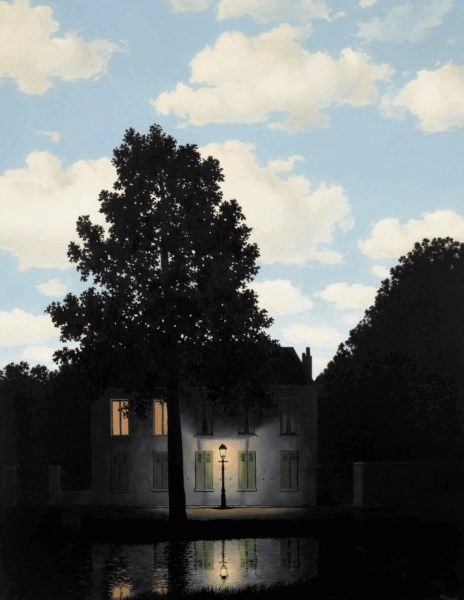
Magritte painted no fewer than 27 versions, on canvas or paper, of “The Empire of Light,” a street scene juxtaposing day and night. In 2024, the largest version, dating from 1954, sold for $121.6 million, setting an auction record for the artist.
Heroes by baselitz
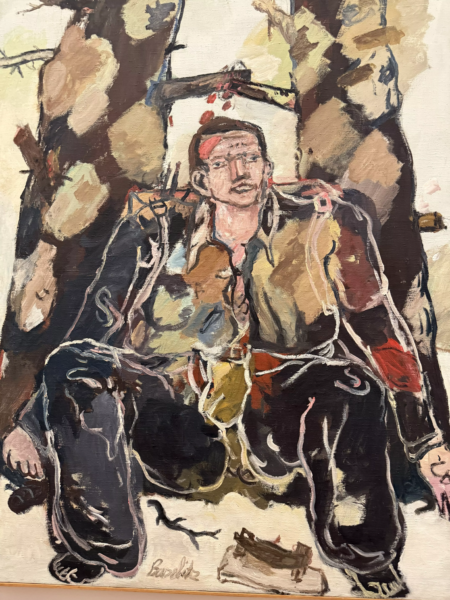
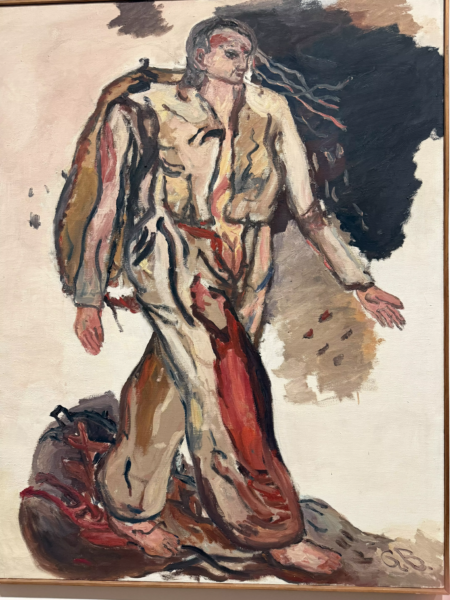
In a similarly institutional spirit, Thaddaeus Ropac has devoted its entire vast gallery space to a rare exhibition — featuring numerous loans from museums — dedicated to one of the major artists on its roster, the German painter Georg Baselitz (1938–2026). Conceived as a tribute following his recent death, the show focuses on his work from 1965 to 1966, when, grappling with the legacy of war, he painted his Heroes: massive, rustic figures wandering through devastated landscapes.
The auction record for a Baselitz painting, €8.6 million, was set in 2017 for precisely one of these Heroes.
Heidi
But London is also an important hub for adventurous contemporary art. The gallery Heidi, founded by the French dealer Pauline Seguin, moved from Berlin to London this autumn, settling into a small space in the fashionable Mayfair district, on the third floor of a building without an elevator.
Its inaugural exhibition is devoted to the American artist Brook Hsu (born in 1987), who tells the story of her love affair in conceptual terms through figurative paintings whose style is directly inspired by the Old Masters. Prices range from $20,000 to $45,000.
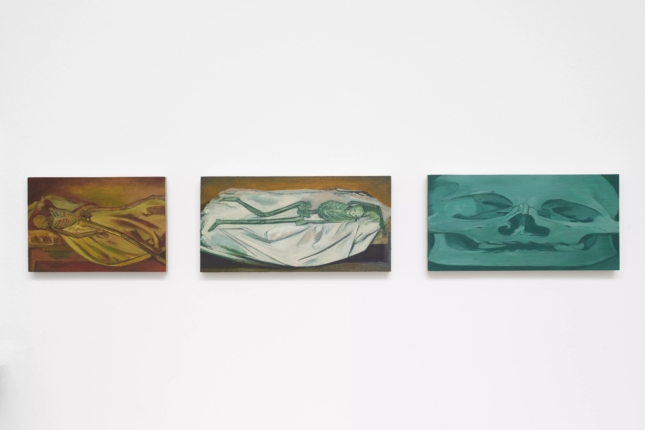
“Establishing ourselves in London means becoming part of a dynamic environment for contemporary art,” explains the very young gallerist, who has decided to prioritize the British scene in Europe and is participating in Frieze for the second time.
Jocelyn Wolff
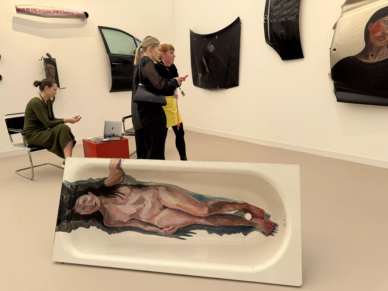
At the fair itself, risk-taking is also much in evidence. For the first time, Jocelyn Wolff has made the journey from Paris to present an installation of no fewer than 24 paintings by the Swiss artist Miriam Cahn (born in 1949). In these spontaneous, rather raw paintings, executed in vivid colors, she chronicles the aging of her own body over time.
The entire ensemble is for sale as a single work, priced at €2 million.
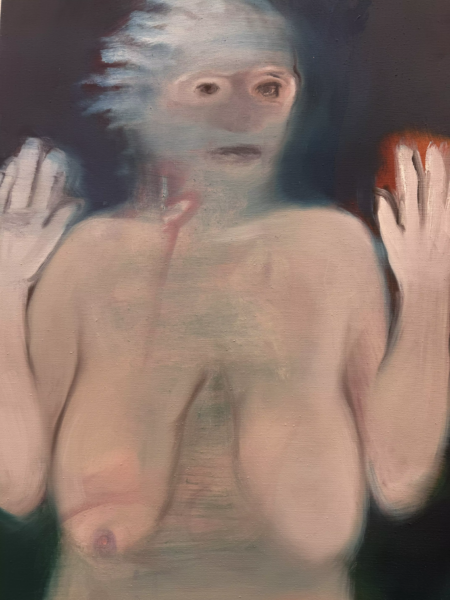
Cahn has recently been the subject of numerous institutional exhibitions, including one in Italy, at Rome’s MACRO contemporary art museum, running through November 15, 2026.
“With Miriam, we waited 15 years before raising the price of a work from €20,000 to €120,000,” explains Jocelyn Wolff. “I’m always extremely careful about how prices evolve. In recent years, unfortunately, a number of artists have reached their market peak too quickly, leaving them vulnerable later in their careers.”
Cathy de Monchaux
In the 1990s, British artist Cathy de Monchaux (born in 1960) was one of the stars of the groundbreaking and highly publicized Young British Artists movement. Then she disappeared from the radar after deciding to have a child.
Through February 14, she is featured in London’s captivating exhibition “The 90s: Art and Fashion” at Tate Britain, which examines the creative energy of England during that decade. But it was in the summer of 2026 that the Palais de Tokyo in Paris truly brought her work back into the spotlight.
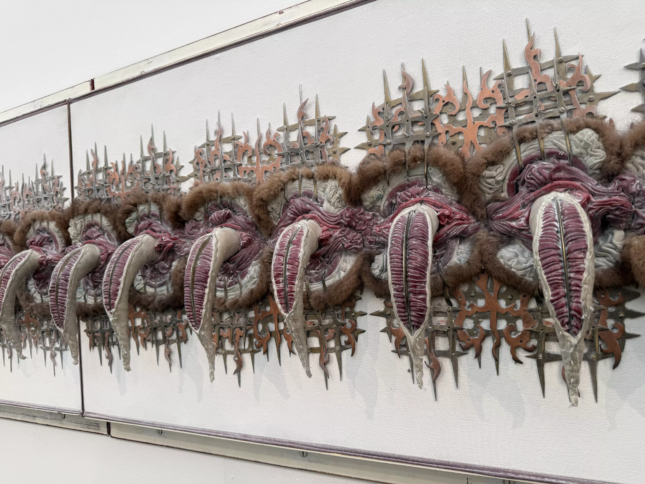
“For 25 years, I couldn’t find a gallery willing to represent me. Apparently, being an artist and having a child were incompatible,” de Monchaux recalls.
Her organic, at times overtly sexual works, with their intertwined forms, are animated by an infinite wealth of detail. They are on view at Frieze on the stand of London dealer Richard Saltoun, priced between £8,500 and £68,000.
The following week, Jocelyn Wolff will exhibit them at Art Basel Paris, becoming the first dealer to officially represent her after this long period of obscurity.
Florian Krewer
The German-born, New York-based Florian Krewer (born in 1986) is one of the darlings of contemporary painting. Through January 4, 2027, he is the subject of an exhibition at the Musée d’Art Moderne de Paris, marking the donation of three works to the institution.
On the museum front, his works have already been acquired by institutions including the Metropolitan Museum of Art, LACMA in Los Angeles, the Centre Pompidou and the Pinault Collection. On the market, in 2026, amid an uncertain climate for young artists, one of his paintings fetched €219,000 at auction.
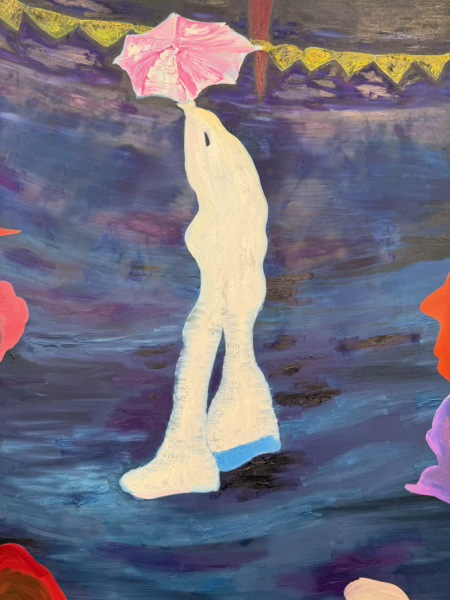
At Frieze, one of his canvases can be admired on the stand of New York dealer Gordon Veneklasen. It depicts a circus scene in which a figure falls from the sky, rendered in vivid colors with little detail, an umbrella the only thing slowing his descent.
Krewer is an Expressionist-style painter who depicts situations whose meaning is never explicitly revealed. The work is offered for $190,000. A substantial sum for a relatively young artist. The painting was already on hold on the fair’s opening day.
“That’s because Florian is in great demand,” confides Gordon Veneklasen. “Generally speaking, clients are very difficult about prices these days. They expect substantial discounts. We’re coming out of a difficult period when, apart from certain major talents like Florian, nothing was selling.”
In between state
Today, interest in contemporary art is concentrated on a limited number of names.
On the one hand, art professionals are seeing a decline in demand amid a highly uncertain political and economic climate. On the other, they find it difficult to adjust their prices to the new reality without undermining the artists reputation.
The market is caught in an uneasy in-between state, unsettling its participants and creating considerable confusion.
(1) Exclusively for VIP guests. The fair is open to the public in Paris from October 23 to 25.