treasure
“”Inventer un trésor” (literally, “to invent a treasure”). This lovely French texpression is used when archaeologists discover a cache of precious objects, buried over the years and lost to memory. No phrase could better describe the new exhibition at the Fondation Louis Vuitton in Paris, on view through March 8. The Paris institution has quite literally excavated from the forgotten corners of art history the extraordinary story and works of a highly singular collector, Gustave Fayet (1865–1925).
obsessive and compulsive
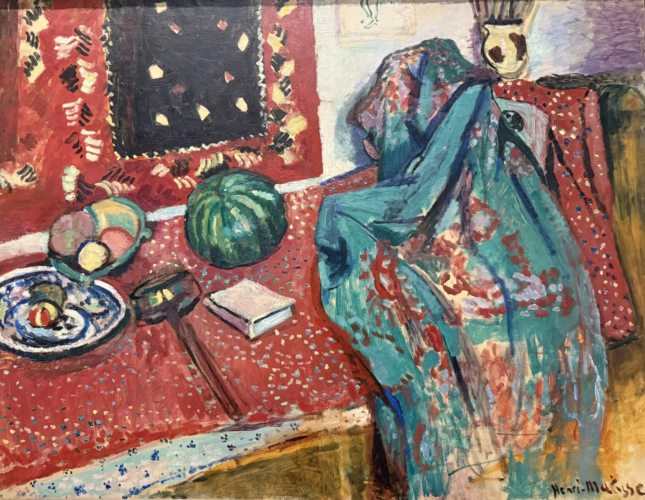
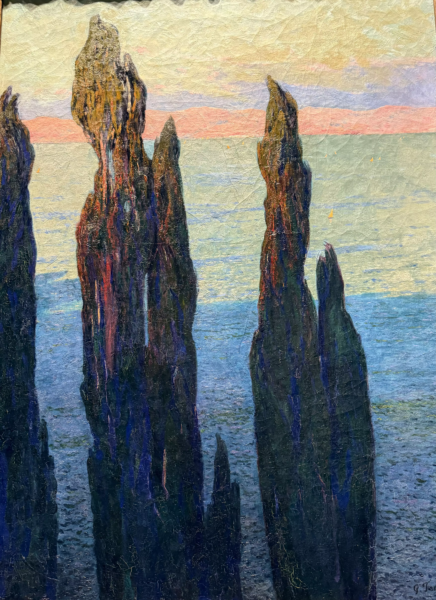
A major landowner from the Béziers region, Fayet possessed, at his best, a personality that was both obsessive and compulsive. What made him remarkable was how early he grasped the importance of some of the greatest talents in modern painting. Alongside Cézanne, Matisse and Bonnard, he developed three particular obsessions, expressed through massive acquisitions of works by Vincent van Gogh, Paul Gauguin and Odilon Redon. In all, 740 works passed through his hands.
Sustain Our Work with a Small Monthly Gift
Become part of the Judith Benhamou Reports circle.
Contribute, even from just €10
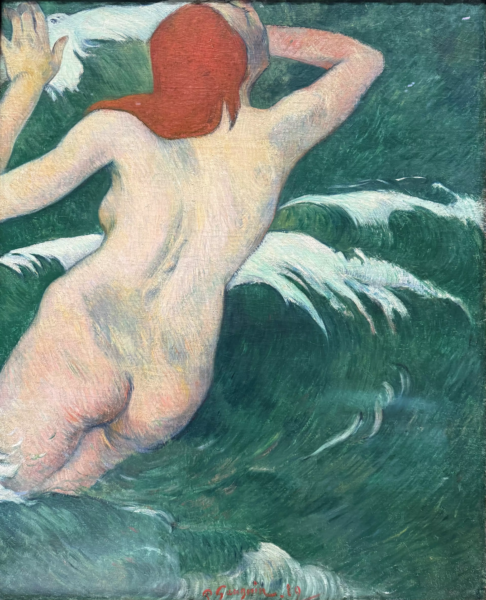
The 250 works shown on the first three floors of the foundation all belonged to Gustave Fayet at one point or another. On the upper levels, another 350 objects, works and personal mementos reveal the life of this singular man, who devoted much of the second half of his life to a Cistercian abbey he purchased and lavishly restored near Narbonne: the Abbaye de Fontfroide, which can still be visited today.
Vast chapel
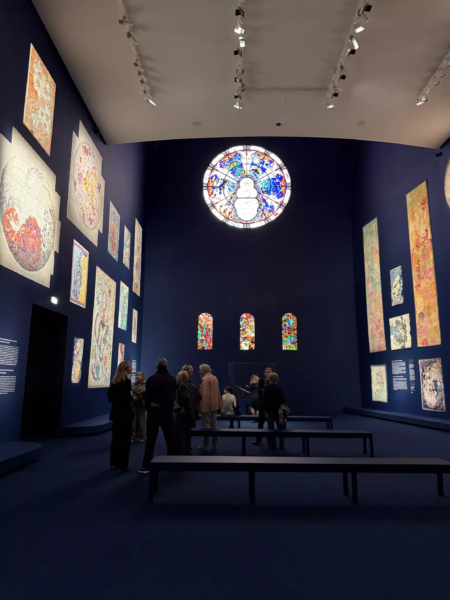
In the Fondation’s final gallery, presented with the atmosphere of a vast chapel, are the stained-glass windows he designed for the former place of worship, along with a multitude of carpets he conceived after metamorphosing from collector into creator. The floral carpets designed by the extraordinary Gustave would become all the rage in Art Deco Paris.
Jean-Paul Claverie
Jean-Paul Claverie, adviser to Bernard Arnault (1), explains how the Fayet phenomenon was brought back to life::“In 2016, during the exhibition of the Shchukin collection at the foundation , I noticed the name of a French collector from whom the Russian had made several major acquisitions. It was Gustave Fayet, a complete unknown apart from a handful of leading specialists.”
He adds: “He was a genius, with a unique eye. So we set out to reconstruct the history of this collection. Sylvie Patry, former director of collections at the Musée d’Orsay, was asked to weave the story back together. This is the first time, and also the last, that this ensemble can be seen reunited here.”
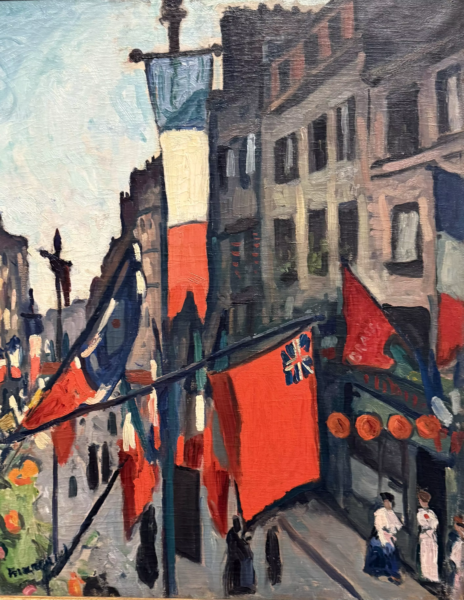
This apparently impossible task—the reconstruction of a phantom collection—required three years of research and an immense investigation. The figures behind the Fayet operation are dizzying: loans from 64 institutions and 71 private collections around the world.
Vincent van Gogh’s self-portrait
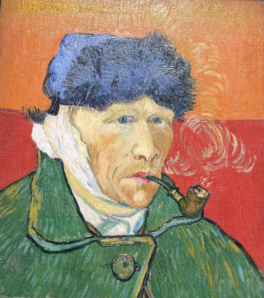
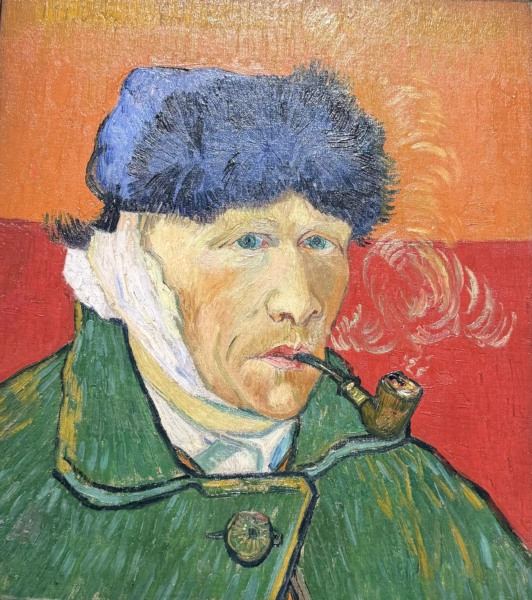
The superstar of the grand show is a modern icon: Vincent van Gogh’s self-portrait with his bandaged ear. The painting has been placed at the very heart of the exhibition. The story is well known: the artist mutilates himself and presents himself to posterity as a martyr to his art. In his small yellow room in Arles, he painted two self-portraits distinguished by the broad bandage wrapped around his head.
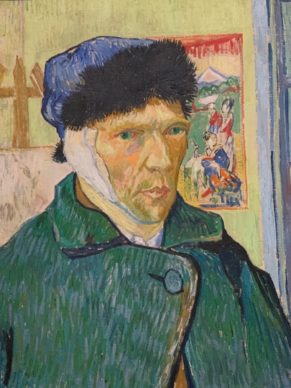
One version, belonging to the Courtauld collection in London, was already shown at the Fondation Louis Vuitton in 2017. In the Fayet version—which hung just above the collector’s bed—Van Gogh is smoking a pipe. According toThe Art Newspaper, the work reportedly comes from the Greek Niarchos collection.
The painting is striking, more pared down than its London counterpart. It is built out of broad, flat areas of color. The background consists of orange-yellow and red laid down in two horizontal bands. In the foreground are the green of the cape, the blue of the hat and, of course, the white of the bandage.
Around the same period, Van Gogh painted the memorable landscape The Large Plane Trees at Saint-Rémy, with its twisting depiction of the trees typical of southern France against a golden background. The painting has travelled from the Cleveland Museum of Art in the United States. Fayet kept it until his death, just as he did the famous self-portrait.
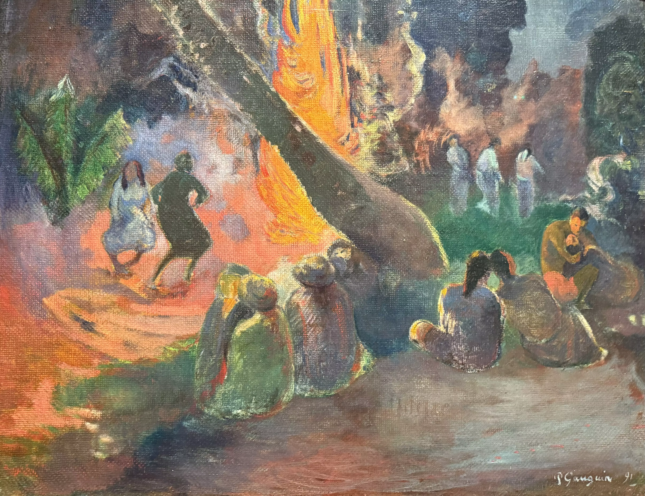
Ten Van Goghs with Fayet provenance have been reunited in Paris. On the same floor, like an exhibition within the exhibition, seven galleries are devoted to Gauguins that passed through the businessman’s hands.
7 galleries for Gauguin
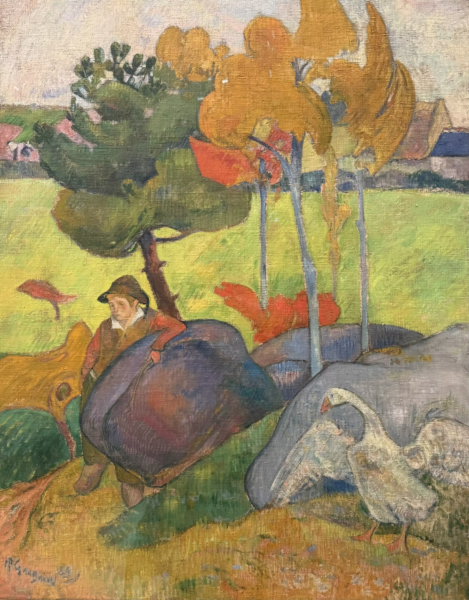
Gustave Fayet’s great-grandson, Alexandre d’Andoque, has just published a book devoted to the collector in which he reveals his ancestor’s fascination with Gauguin (2): “With passionate and insatiable enthusiasm, Fayet gave Gauguin pride of place, seeking works from the different periods of his career.”
When the painter died, the collector wrote to his adviser George-Daniel de Monfreid: “All in all, he was a great man and a fine figure (…) It matters little whether one day his works are worth 50 centimes or 100,000 francs. They are beautiful, and that is enough for us.”
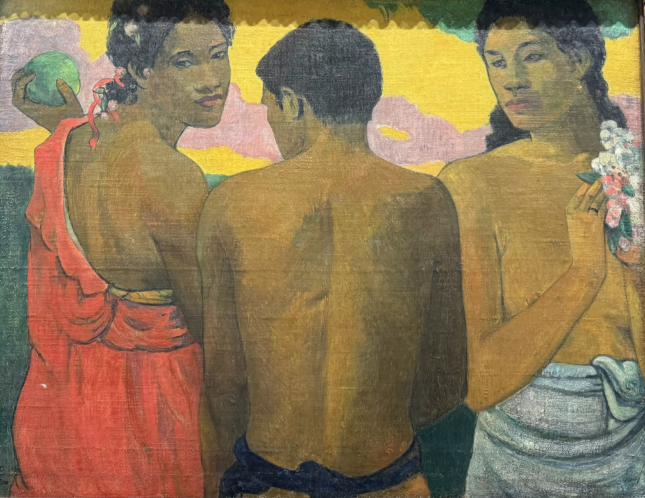
Beautiful, certainly. There are, for example, the three Tahitian figures in conversation, which Fayet once again kept for the rest of his life. Equally beautiful is an Ondine, seen from behind, with red hair amid dark green, turbulent waves, although the collector kept that work for only a year.
the circle of legendary collectors
But why did we have to wait until 2026 for Fayet to enter the circle of legendary collectors?
First, the fact that he never made a major donation to a museum did little to secure his place in posterity. For Suzanne Pagé, artistic director of the Fondation Louis Vuitton, the explanation lies above all in his personality: Fayet was more creator than collector.
“He used to say that paintings made him feel good. But deep down, what he wanted was to be an artist. He began painting, then stopped, before starting again later. He was searching for his path. And Odilon Redon would play a crucial role in steering him toward the decorative arts, which allowed him to reconcile his business sense with his creative potential.”
fantastical redon
For Fayet, Redon was a catalyst for sensibility. And so, true to his compulsive nature, he bought works from him—many works. Eighty-eight are presented in the exhibition organized by the Bois de Boulogne institution.
The Symbolist painter, mystical and fantastical, unfolds a unique universe that probes the unconscious, seeming at times to recount enchanted dreams and at others horrifying nightmares.
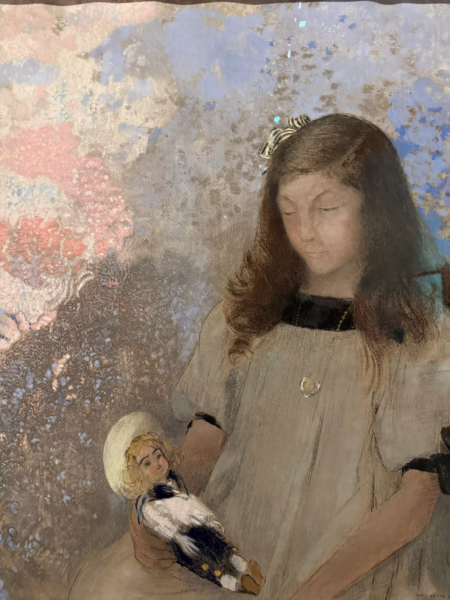
Fayet wrote: “Curious man, isn’t he? To take nature as the starting point of his work when his eyes were open onto another world!”
The high point of their collaboration came in 1910, when Fayet commissioned him to create a mural decoration for the library of his beloved abbey. The three large panels—Le Jour (The Day), in golden tones; La Nuit (The Night), in blues; and Le Silence (The Silence)—animated by mysterious figures, have travelled from Fontfroide despite their protected status as “Monuments historiques
supreme realm
As lyrical in words as he was in paint, Redon wrote a phrase that could just as easily apply to Fayet: “Art is the supreme realm, lofty, salutary and sacred; it brings things into bloom.”
(1) Bernard Arnault is the founder of Fondation Louis Vuitton and owner of LVMH.
(2) Gustave Fayet, artiste et collectionneur. Gallimard.