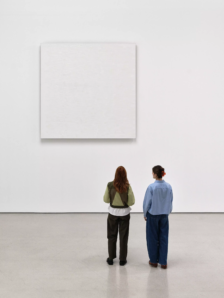
not easy
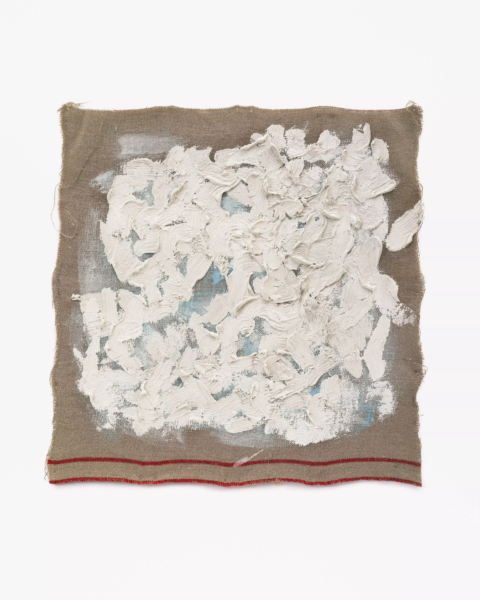
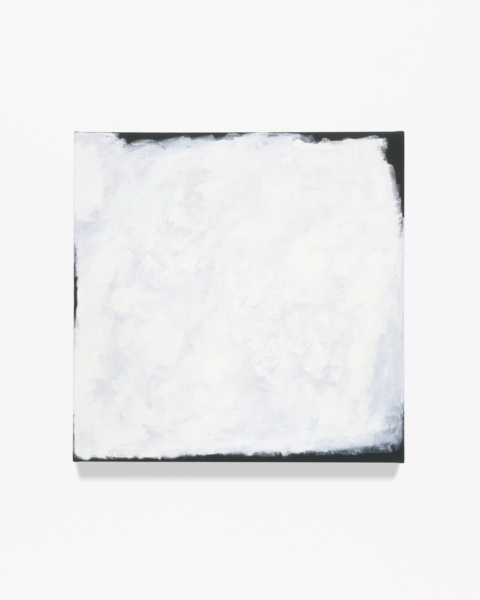
This is hardly easy painting. You might expect to be bored. Or to understand nothing at all. London’s Barbican Gallery is devoting a major exhibition to the American abstract artist RobertRyman (1930–2019). Throughout his life, he devoted himself to painting while simultaneously seeking to strip it of everything that traditionally constitutes it. And so, more often than not, he painted white on white.
most beautiful
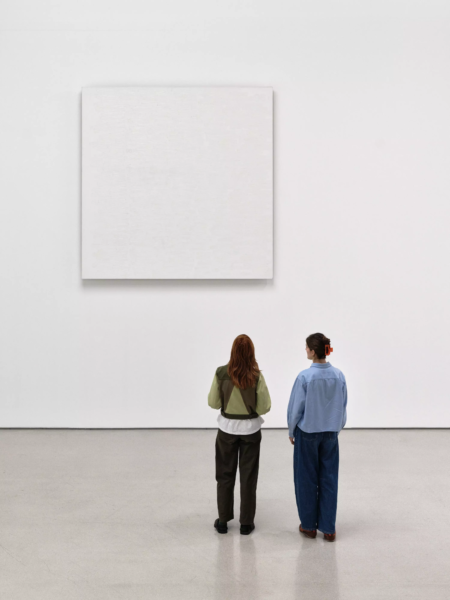
“Robert Ryman: The Real Thing,” on view at London’s Barbican Gallery until February 28, 2027, is undoubtedly one of the most beautiful exhibitions to be seen anywhere in the world right now. The impact is immense. First, you have to allow a little time for the magic to work. Then you find yourself swept away. It is a rejuvenating experience in a noisy world saturated with images. His white paintings are like the hair of an old sage who wants to show us that it takes very little to be happy. Here is a demonstration of how to cleanse the eye.
Sustain Our Work with a Small Monthly Gift
Become part of the Judith Benhamou Reports circle.
Contribute, even from just €10
architecture
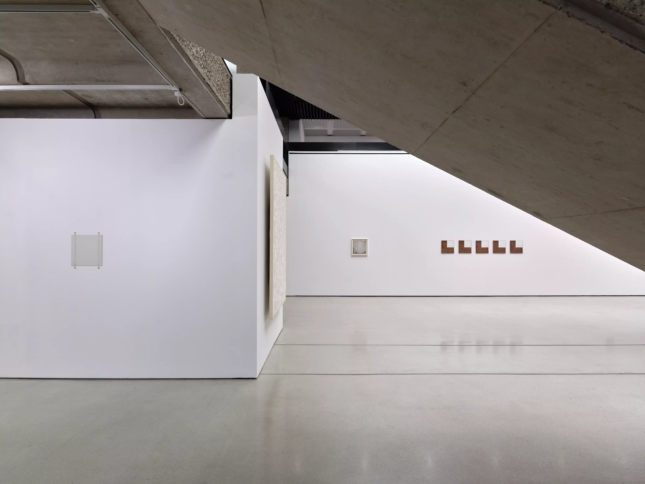
If such a seemingly difficult proposition unfolds so convincingly, it is thanks to the perfect marriage between the setting and the artistic vision. The Barbican Gallery, designed by the British architects Chamberlin, Powell and Bon and inaugurated in 1981, is a radical example of Brutalist architecture. Raw concrete and dark steel beams. The interior landscape is austere. Yet it is precisely this setting that opens our eyes. The viewer is ready to look closely.
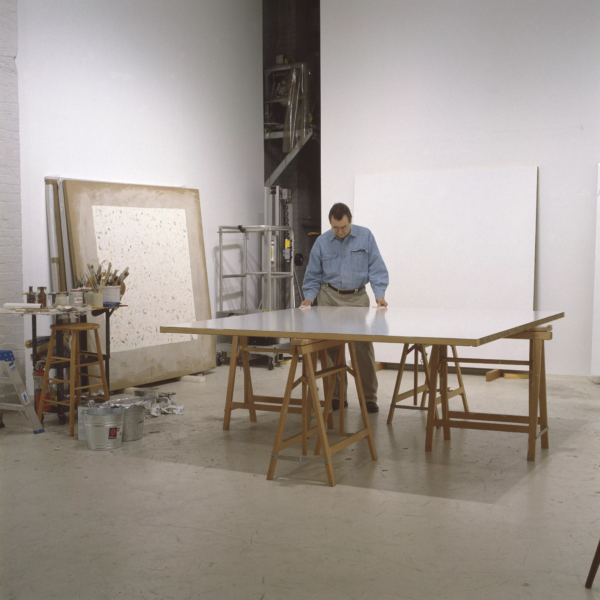
Born in Nashville, Robert Ryman moved to New York at 22 to pursue a career as a jazz musician. His day job was as a museum guard at New York’s MoMA. That was where the revelation came. He abandoned his musical ambitions. But Robert was not going to paint pictures like those of the masters he spent his days observing. Instead, he painted about painting, while also pushing against it.
meditative
The exercise can be seen as meditative. It is about the wall on which a painting hangs, the texture of the paint, the painter’s gesture, the natural light that may or may not illuminate it, and the surrounding space.
The connection with jazz lies in the very concept of creation. The former saxophonist knew the principle: take a defined harmonic structure, a tune or a refrain, and invent endless variations within that framework. As Ryman put it: “So, you learn your instrument, and then you play within a structure.”
But his paintings are not thunderous, like a soaring saxophone solo. They are almost silent. They awaken your inner world.
anti-everything
For Ryman was, in painting, an anti-everything artist: anti-frame, anti-pattern, anti-color, anti-commotion. He once said: “With realism, there is no picture. […] There is no story. And there is no myth. And there is no illusion, above all.”
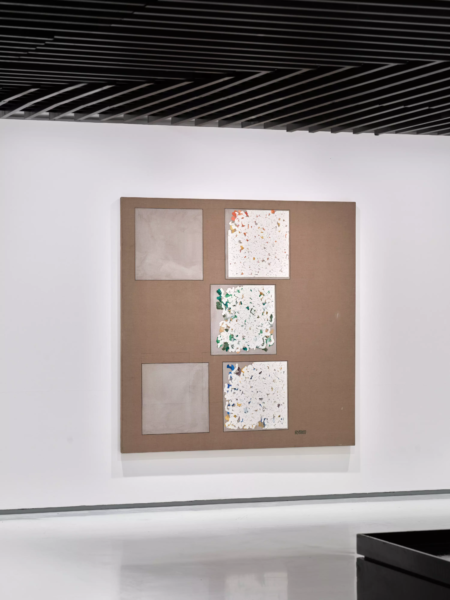
What does that look like? Variations in format, variations in brushwork, variations in how the canvas is covered…
how to paint
Technically speaking, during the 1960s and 1970s, he produced square paintings on linen or cotton canvases of various colors. He explored the visual effects of different brush sizes, scrutinizing the direction and thickness of each brushstroke.
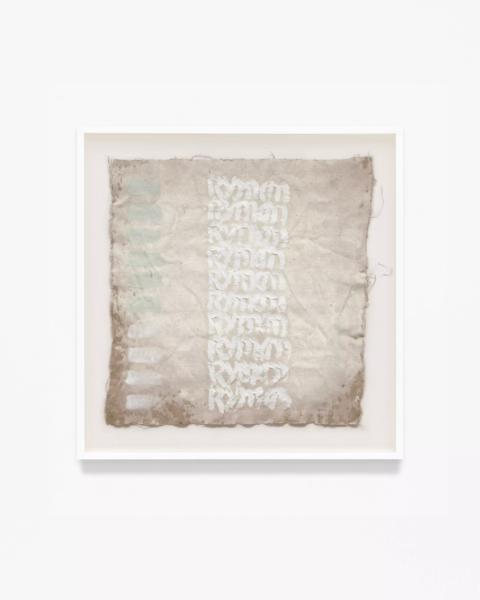
The artist, who initially applied layers of different hues before covering them with white, declared: “White has a tendency to make things visible.” Or: “There is never a question of what to paint, but only how to paint.”
In fact, as with Dan Flavin’s neon works, Ryman’s paintings need the right setting, the appropriate works around them, preferably other works by the same artist.
It is something of a miracle that he achieved recognition. His work, which began in the 1950s, fitted into no established category: neither Abstract Expressionism, nor Pop Art, nor Minimalism. Yet in 1972, he had his first exhibition at New York’s Guggenheim Museum.
For nearly 60 years, Ryman pursued his path as a silent jazzman of painting.
The Barbican Gallery exhibition is called “The Real Thing.” It is also the title of a piece by saxophonist Gerry Mulligan. It would be worth listening to that piece of cool jazz. But only after leaving the exhibition.
The exhibition is so absorbing that, once inside, I had no desire to take photographs or shoot videos. Sorry!