miracle
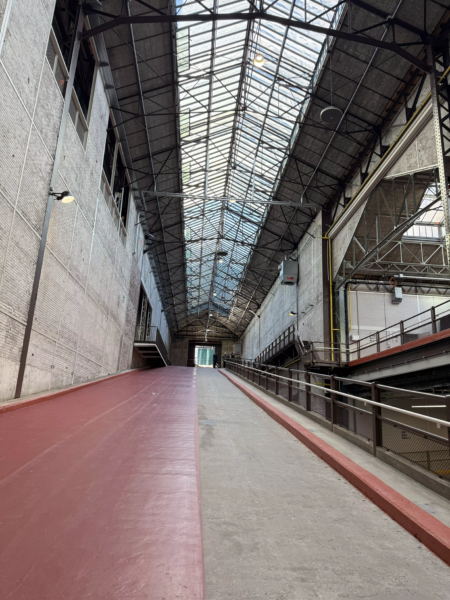
A small miracle is taking place in Brussels. On Saturday, November 28, a new museum called Kanal opens its doors. A former Citroën garage, a modernist landmark of concrete, steel and glass built in 1934, has been transformed into a vast cultural complex spanning 40,000 square meters.
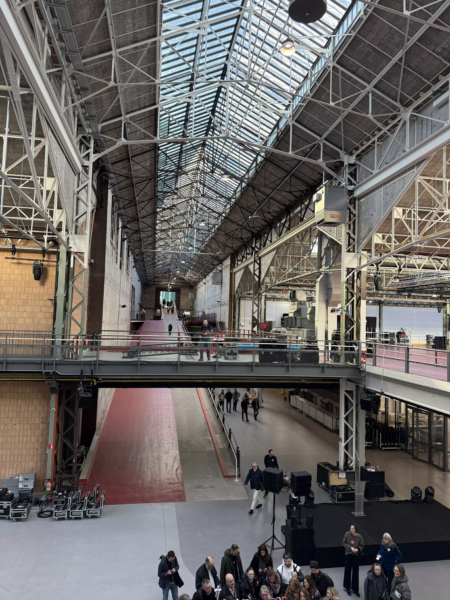
A miracle because, at a time of dwindling public funding for the arts, and despite the severe financial crisis facing its main financial backer, the Brussels-Capital Region, the project has nonetheless come to fruition.
Sustain Our Work with a Small Monthly Gift
Become part of the Judith Benhamou Reports circle.
Contribute, even from just €10
Bilbao effect
“Like all institutions here, we are subject to austerity measures. But our contract runs through 2028,” explains Kasia Redzisz, its artistic director.
The authorities are clearly banking on a “Bilbao effect” — named after the Guggenheim Museum that transformed the fortunes of the Basque industrial city — to attract an international audience. It is one way of securing the project’s long-term future.
Kanal’s greatest asset is its partnership with the Centre Pompidou, which has another five years to run and costs the Brussels institution two million euros annually.
Laurent Le Bon
“Kanal was an obvious choice,” says Laurent Le Bon, president of the Centre Pompidou. “Its programming is entirely independent. I particularly appreciate its multidisciplinary spirit. There aren’t that many places in Europe where, alongside exhibitions, you can find a library, a bookstore, several restaurants, a cinema, workshops for children and spaces for artistic creation. It’s quite close to the spirit in which the Centre Pompidou was founded in 1977, an approach that was far from universally embraced at the time. And yet it has become one of the world’s great art destinations.”
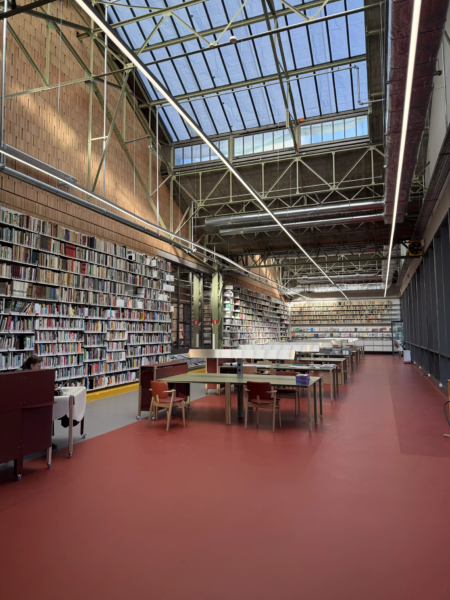
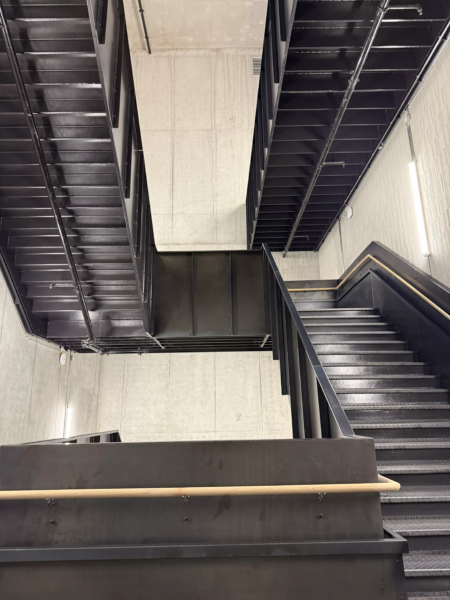
The first striking experience here is simply wandering through the vast, 20,000 square meters of open public space in this former industrial complex, sensitively transformed by a consortium of European architects. One could easily spend hours here.
300 works from the Pompidou
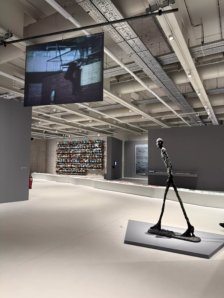
Kanal’s other major attraction is an exhibition spread across three floors, featuring more than 300 works on loan from the Pompidou. It is a journey through the art of the 20th and 21st centuries that cuts across chronological boundaries.
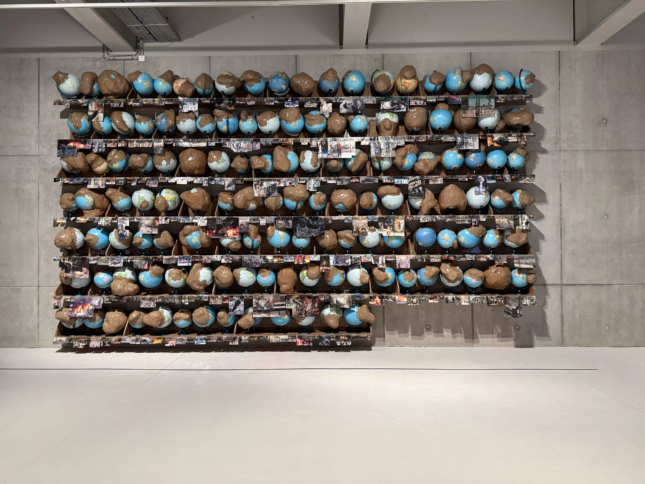
There are several moments of sheer exhilaration along the way, as the exhibition reveals the affinities between artists across time.

Such thematic agility is possible only for a museum with collections as extensive as those of the Centre Pompidou, particularly now that it is closed — officially until 2030.
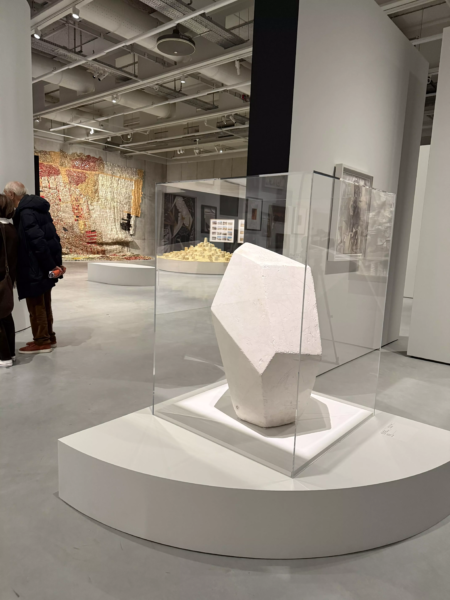
The section devoted to artists who have embraced other cultures and, by extension, other forms contains several masterpieces.
It opens with Alberto Giacometti’s Cube (1933–34), a white polyhedron that references not only Cubism and African sculpture but also a geometric form found in a celebrated engraving by the German Renaissance master Albrecht Dürer.
Belkis ayon
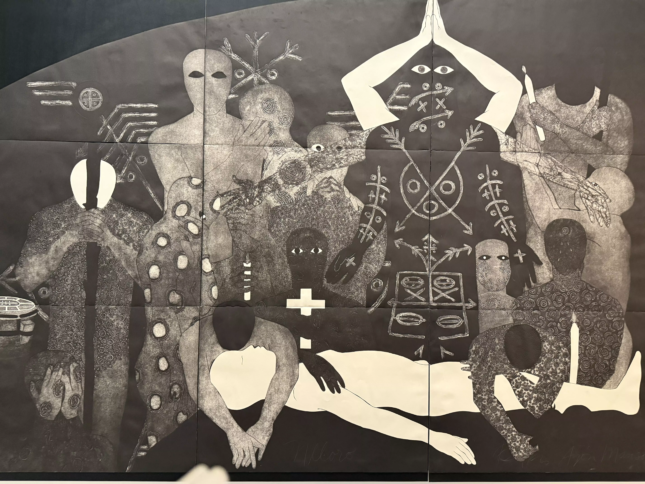
Not far away is an exceptional black-and-white work on paper by the Cuban artist Belkis Ayón (1967–1999), who drew inspiration from the rituals of an Afro-Cuban secret society and whose work is instantly recognizable for its ghostly figures.
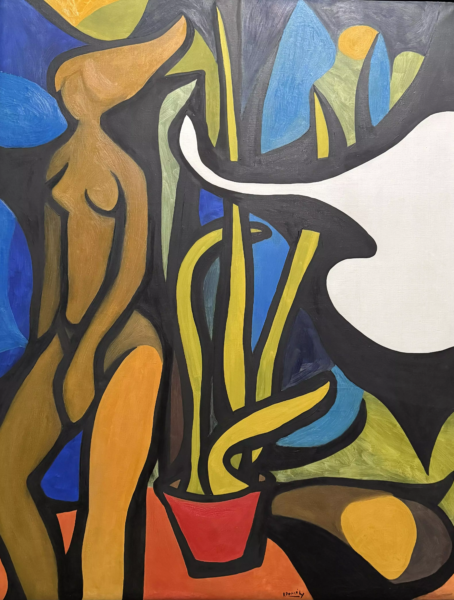
She is one of a number of women artists who have recently been rediscovered, in her case by the Reina Sofía Museum in Madrid. In a very different vein, another talent who until recently remained largely overlooked is the Haitian painter Roland Dorcély (1930–2017), whose sinuous, dreamlike forms hold their own alongside the giants of art history. We first discovered his work in January 2025 at the Marrakech art fair, at the booth of Galerie Loeve&Co.
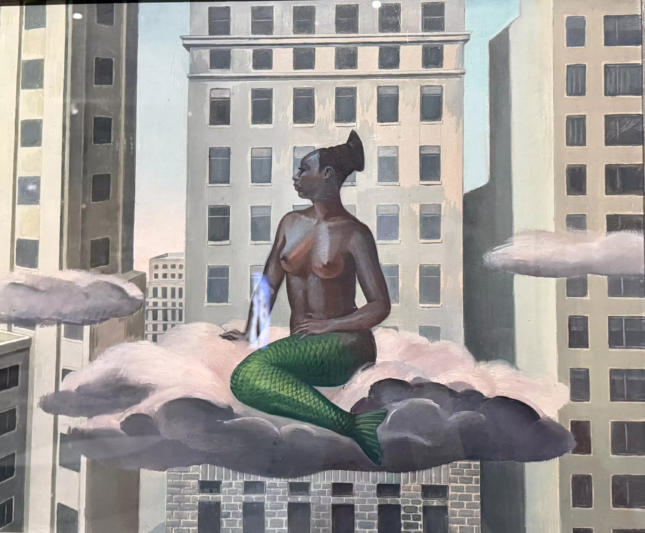
Among the Belgian artists, special mention should go to an outlandish painting by Jane Graverol (1905–1984). Entitled L’Afrique inconnue – La mythologie comparée (1958), it depicts a Black woman, mermaid-like, hurtling through a landscape of skyscrapers on a flying carpet.
Paul Klee
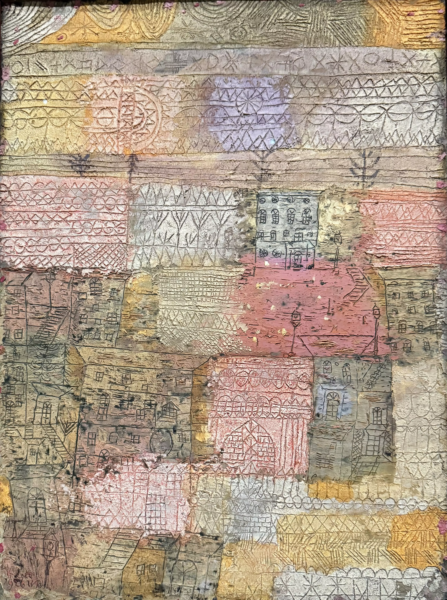
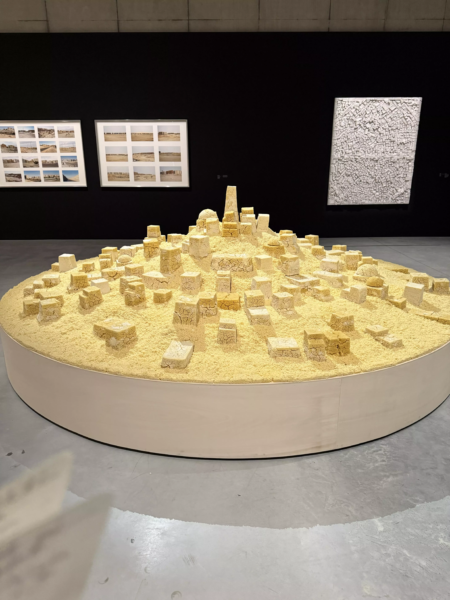
Florentine Villas (1926), by the Swiss artist Paul Klee (1879–1940), is an almost golden landscape reminiscent of a patchwork of fabrics. It is displayed alongside what might pass for an architectural model of the Algerian city of Ghardaïa. Except that the artist, Kader Attia (born in 1970), made it in 2009 out of grains of couscous.
Next to it hangs a sweeping metallic drapery by the Ghanaian star artist El Anatsui (born in 1944). A shimmering patchwork of an entirely different kind, it is composed of countless fragments of bottle caps joined together. It is on a monumental scale that El Anatsui is at his best.
No show
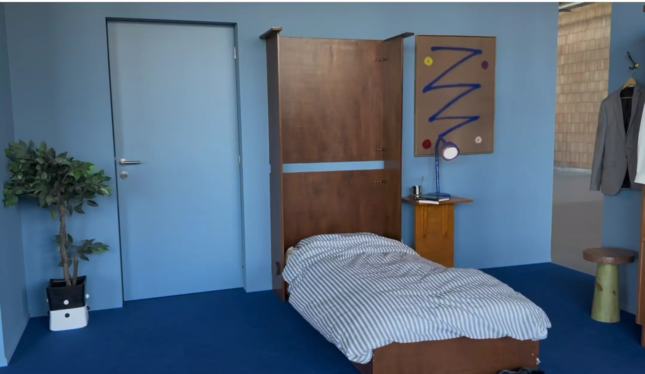
Alongside this exhibition, courtesy of the Pompidou, Kanal is presenting several other shows that are somewhat less persuasive, being both more local in focus and more conceptual in nature.
An exception is No Show, devised by a collective of Brussels-based artists who have recreated a film set in which you are the actors.
And indeed, you are the protagonists in these museums, which are waiting for nothing more than your presence to come more fully to life.