the greatest rediscovery
In the future, the history of modern art will undoubtedly tell us that this was the greatest rediscovery of the early 21st century. In 2018, the Guggenheim in New York devoted its entire spiral-shaped building to a Swedish woman painter who was virtually unknown. It was a phenomenal success: 600,000 visitors, a record attendance for a solo exhibition at the institution. However, at the time, the large-scale exhibition was insufficiently contextualized.People flocked to discover the work of Hilma af Klint (1862–1944), ignored for far too long because she was a woman, because she was Swedish – Sweden is not one of the main centers of artistic activity- and also because she was driven more by a mystical impulse than by any desire for social success.
in Hilma’s favor
Since then, by late 2024, Hilma’s work had travelled, among other places, to the Guggenheim Bilbao, in a sumptuous display that entered into a perfect dialogue with Frank Gehry’s architecture. Time passes, and continues to work in Hilma’s favor — she who rightly said that she painted for the future.
Sustain Our Work with a Small Monthly Gift
Become part of the Judith Benhamou Reports circle.
Contribute, even from just €10
pascal rousseau
Now, at last, she is being shown in Paris, at the Grand Palais, through August 30. One of the great strengths of this new exhibition, as the distinguished curator Pascal Rousseau explains, is the way it contextualizes her work in light of recently discovered details about her personal life — she was homosexual and liked to work within a community — which shed new light on her creation.
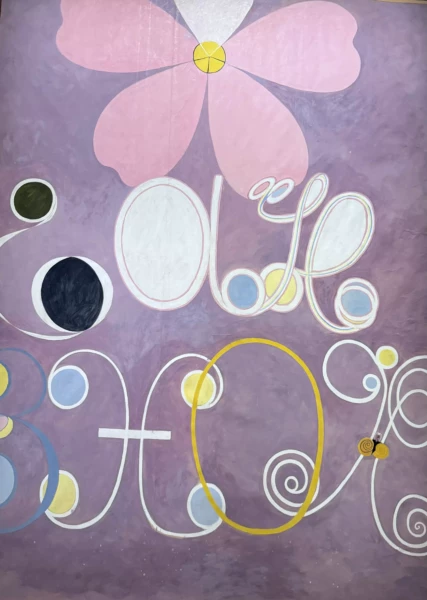
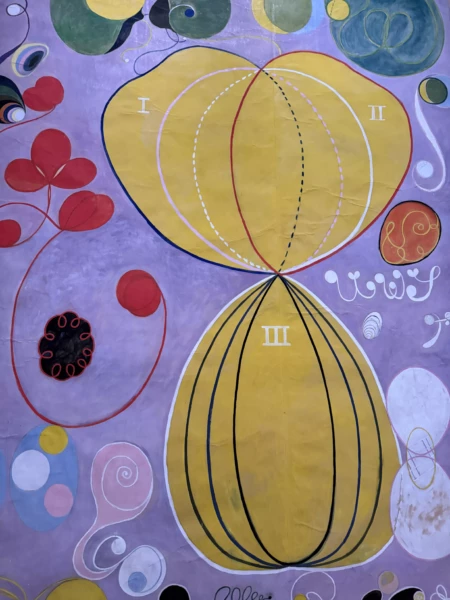
Moreover, the narrowness of the rooms in Gallery 8 brings her gigantic works powerfully close to us. All are on paper, in pastel colors, covered with esoteric signs and forms, some measuring more than three meters high. It is a kind of gentle visual shock, a source of obvious pleasure.
double life
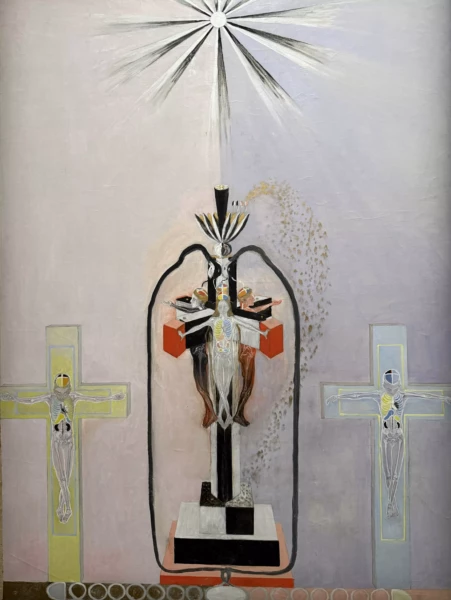
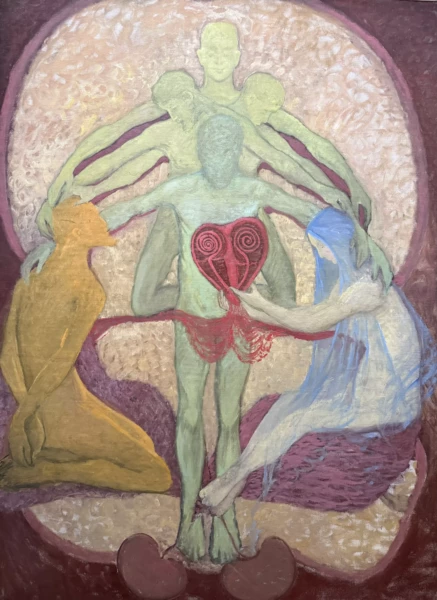
In fact, Hilma led a double artistic life: on the one hand, an orthodox, even rather dull production; on the other, a cycle of extraordinary paintings, some of which are abstract before the official invention of abstraction. They were guided, she said, by seven or eight angels, but also inspired by spiritualism — very much in vogue at the time — and by a whole jumble of beliefs ranging from Lutheran faith to Theosophy and Buddhism.
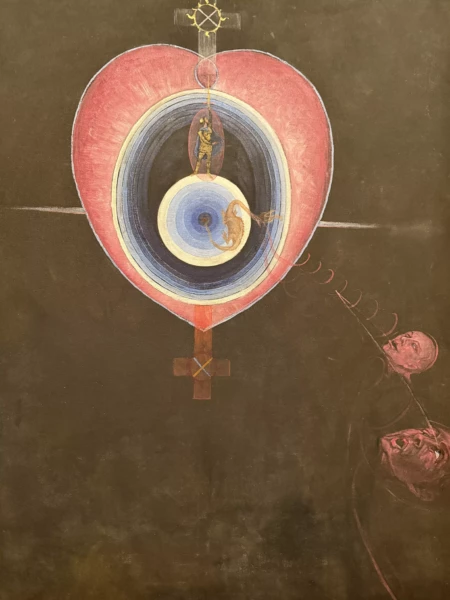
It is this production dictated by heaven, made between 1906 and 1915 — The Paintings for the Temple — that is being shown at the Grand Palais. s a result, the exhibition is relatively small in scale yet highly impactful.
20 years after her death
The very body of work that, in her will, she forbade from being revealed until 20 years after her death. In that sense, through this creation conceived for the future, she resembles Marcel Duchamp — but before him. (Duchamp stipulated that his final work, Etant Donné, was to be unveiled only after his death).
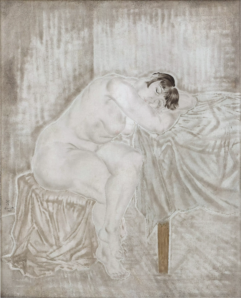
One should not imagine that Hilma’s creation belongs in the category of outsider art. The artist was not a social case. She had no psychiatric problems. She had even received a classical art education at the Royal Academy of Fine Arts in Stockholm. This is mystical art taking forms unlike any others.
abstraction & figuration
But Hilma does not promote a genre of art. She even makes abstraction and figuration coexist.
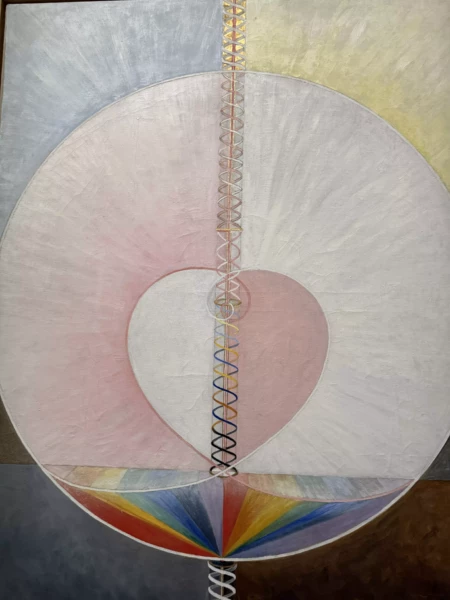
Yet, as Pascal Rousseau explains, “In 1906, af Klint was already working in abstraction, while Kandinsky” — the official inventor of abstraction in art history textbooks — “was still painting forests.”
Daniel Birnbaum
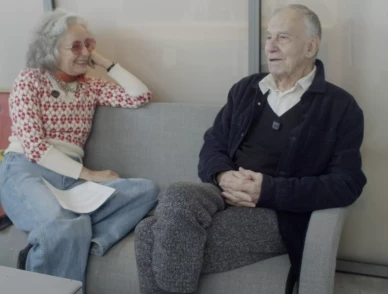
The Hilma specialist behind her recent catalogue raisonné, the Swedish curator Daniel Birnbaum, who has just co-written a book on the relationship between Hilma and Kandinsky, goes even further: “We now look at Kandinsky in light of Hilma. We forced her into a narrative we all know, one classically dictated by influential museums.
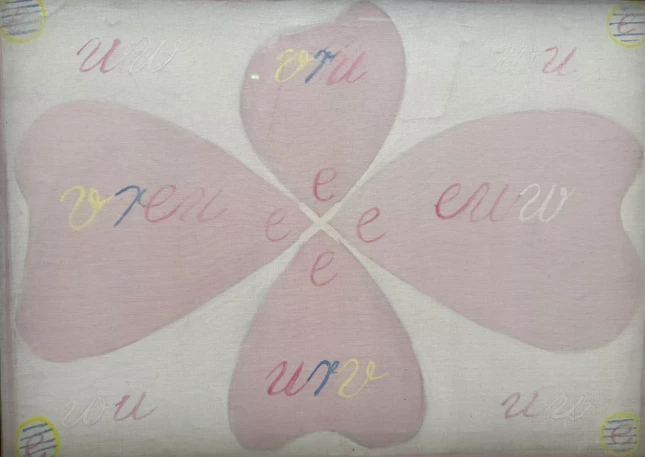
But now things are different because we take Hilma seriously. For example, we know that Kandinsky lived for a very short time in Stockholm. We don’t know whether they met, but she wrote his name in one of her notebooks.” Let us wait and see what comes next…
Psychedelic
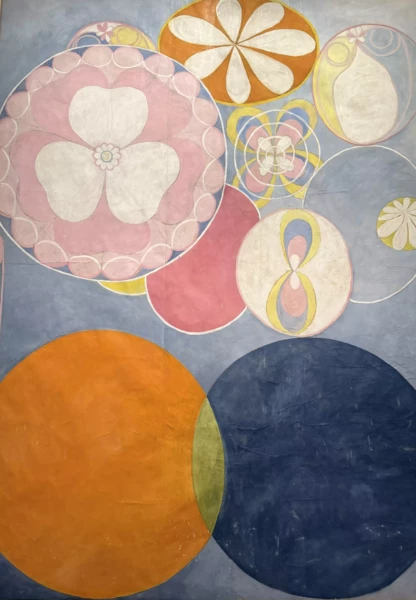
Unlike Kandinsky, Hilma was not a theorist of abstraction. She made paintings that are sometimes paradisiacal, sometimes symbolic, and very often psychedelic, using geometric figures, among other elements, in pinks and pastel blues that were unusual at the time, to which she assigned various functions. We recognize signs of the zodiac, the dove of the Holy Spirit, scrolls, rosettes, a pyramid, all mixed with messages written directly into the composition.
The exhibition presents 130 works, in a sublime, hallucinated universe that often feels strikingly contemporary before its time. Hilma the visionary.
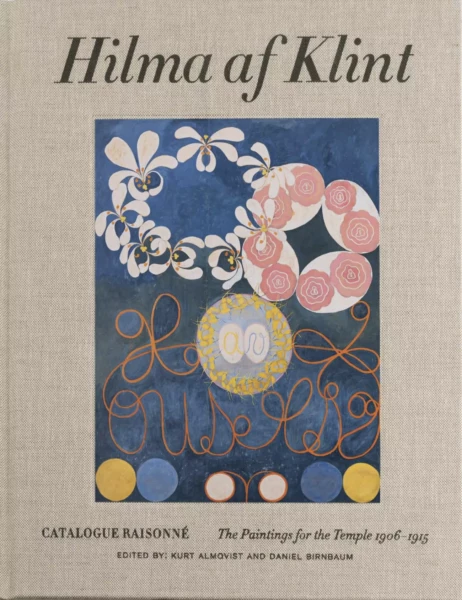
The seven-volume catalogue raisonné of Hilma af Klint has also just been published by Bokförlaget Stolpe
Through August 30. www.grandpalais.fr/