revolution of modern art
At the beginning of the twentieth century, the revolution of modern art—with its countless innovations, from abstraction to Surrealism—was able to flourish not only because of the brilliance of its creators, but also because they shared an extraordinary sense of camaraderie. In Paris, this precious solidarity among painters, sculptors, poets, and art critics fostered a constant exchange of ideas and influences.
These exceptional talents formed tightly knit circles that supported one another in every rebellious undertaking, gathering each evening in the cafés and restaurants of the French capital. They often travelled together as well.
Sustain Our Work with a Small Monthly Gift
Become part of the Judith Benhamou Reports circle.
Contribute, even from just €10
subversive painter
Among them was Francis Picabia (1879–1953), an artist long underestimated but now regarded as a major inspiration by many contemporary artists. The companionship of those around him undoubtedly nurtured his taste for irreverence while helping to soothe his chronic anxiety.
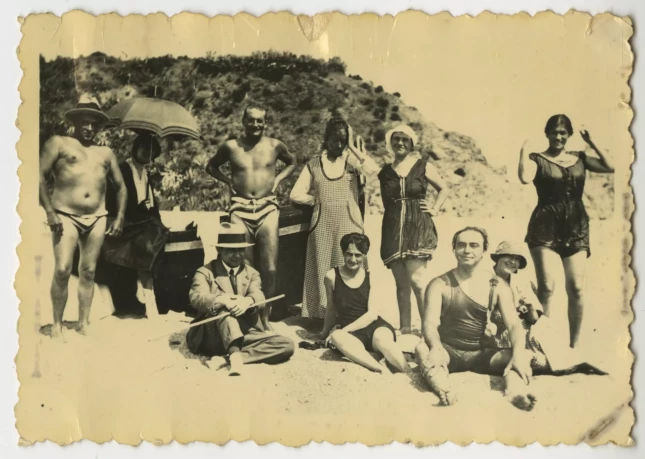
Roche, Otto von Wätjen, Marie Laurencin, Gabrielle Buffet,
Olga Sacharoff, Albert Gleizes, Dagoussia-Mouat,
Béla Szilárd et Andrée Compère, Tossa de Mar, 1916 (Galerie 1900-2000)
Just half an hour by car from Perpignan, the museum in the small town of Céret—home to roughly 7,500 inhabitants—is presenting, through 29 November, an exhibition that perfectly captures the spirit of Picabia, the subversive painter closely associated first with Dada and later with Surrealism. The exhibition brings together forty works by Picabia alongside around sixty pieces by the friends and collaborators who meant so much to him. Its focus is limited to the 1910s and 1920s.
Céret
Why Céret? First, because the town played a significant role in the development of modern art thanks to the stays of Pablo Picasso and Chaïm Soutine. More broadly, however, the museum has made it its mission to examine the history of the avant-garde in Catalonia.
“From 1916 to 1918, Picabia sought refuge in Spain, which remained neutral during the war,” explains Gwendoline Corthier-Hardouin, the museum’s head of exhibitions.
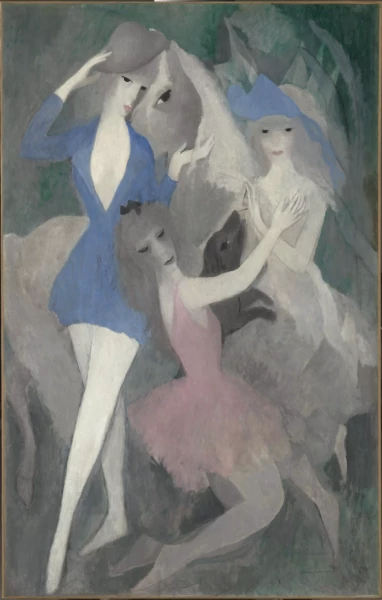
In Barcelona, the influential gallery owner Josep Dalmau was determined to introduce the latest avant-garde movements to Spain. It was the painter Marie Laurencin who introduced him to Francis Picabia. Dalmau became one of his strongest supporters and gave him a solo exhibition in 1922.
The Sevillian Woman
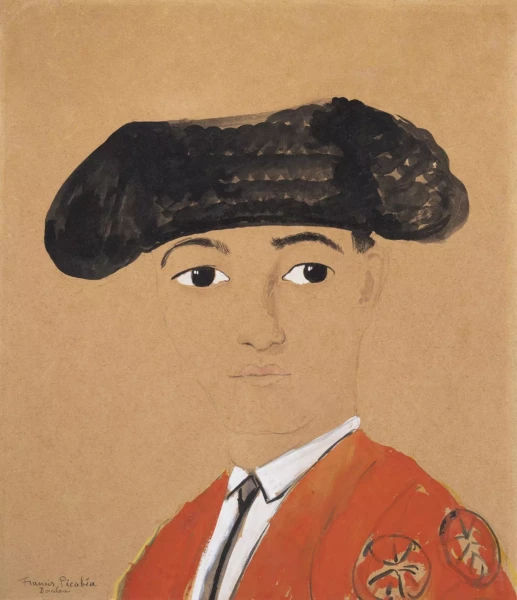
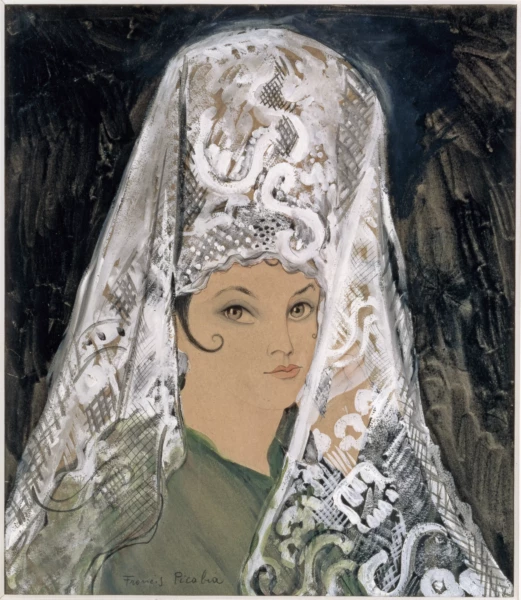
Picabia became fascinated by the stereotypical postcard image of the Sevillian woman, adorned with a mantilla, an elaborate chignon, and carefully styled curls. Delighting in parody and provocation, he produced countless versions of these figures long after leaving Spain, as visitors can see throughout the exhibition in Céret. Picabia mocked almost everything—except perhaps his own relentless pursuit of amusement.
391
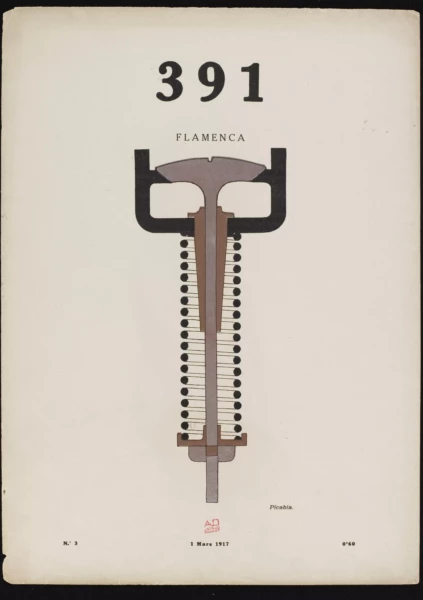
One expression of that spirit was the literary magazine 391, which he founded in 1917 as a direct reference to 291, the influential journal launched by Alfred Stieglitz in New York two years earlier. While in Madrid, Picabia published four issues of 391, financed by Dalmau.
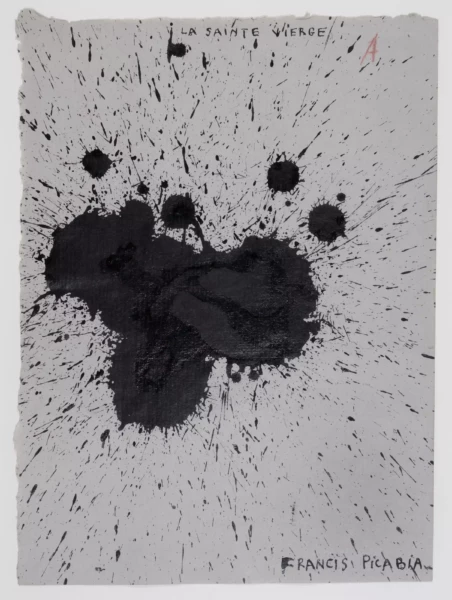
His guiding principle was simple: to dismantle every form of artistic classicism and institutional authority. The magazine freely combined photographs, drawings, poetry, and essays. Marie Laurencin was among its contributors.
The air must be cleared
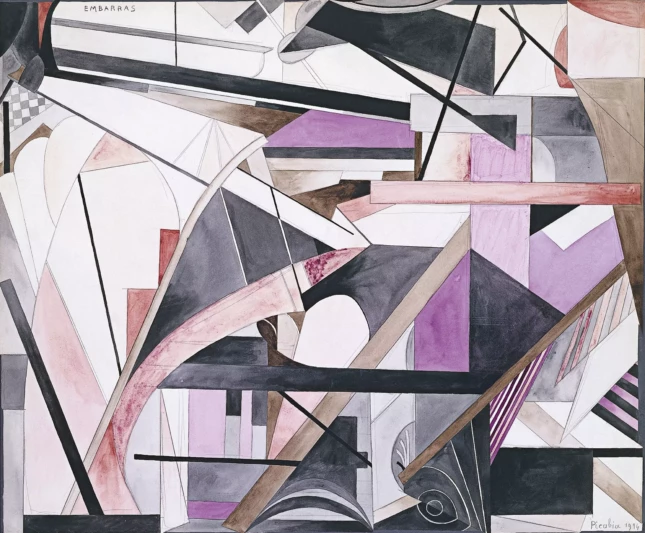
Picabia’s unconventional writing evidently found an audience. In 1917, a Barcelona publisher released his collection of poems Fifty-Two Mirrors. Among its most memorable lines is a statement that could equally serve as Marcel Duchamp’s credo: “The air must be cleared of everything that is art.”
Picasso and Cravan
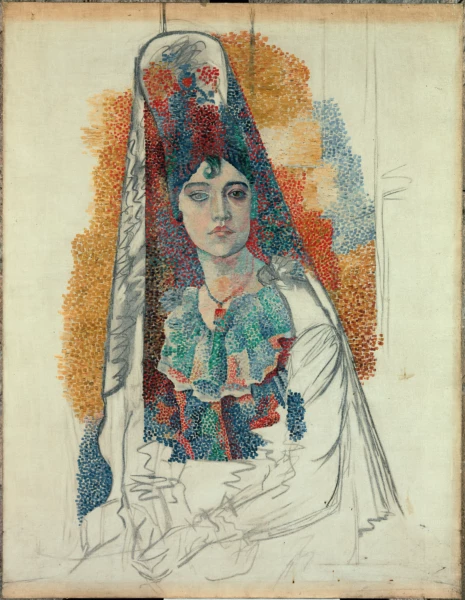
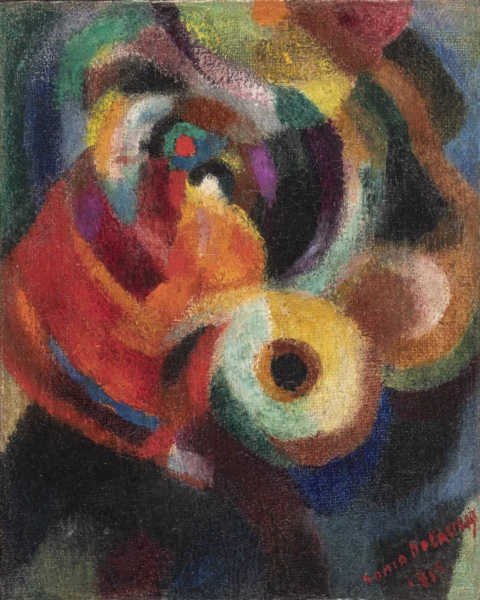
The exhibition also examines the many artistic revolutionaries who passed through Barcelona during these years. Pablo Picasso is represented by his 1915 Woman with Mantilla, a striking work rendered partly in a Pointillist style and partly in charcoal. Sonia Delaunay appears with her magnificent Cubist oil painting Study for a Spanish Dancer (1916).
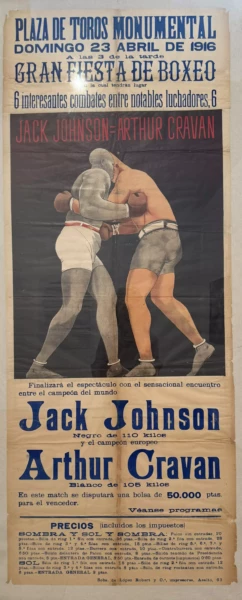
The poet and boxer Arthur Cravan (1887–1918), who would later become a cult hero among the Surrealists, fought the first African American world heavyweight champion, Jack Johnson, in Barcelona on 23 April 1916.
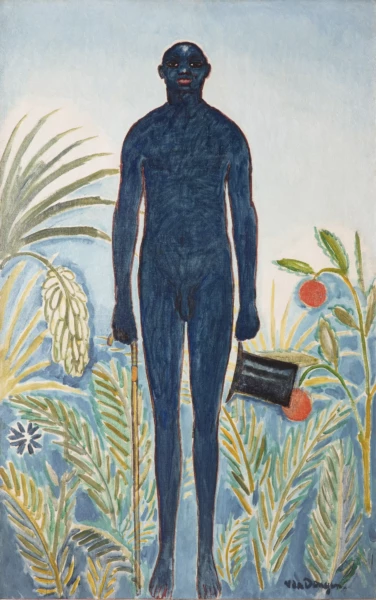
A poster commemorating the bout—widely regarded as a fixed fight in which Cravan was defeated—is displayed in Céret alongside an extraordinary painting on loan from the Prince’s Palace of Monaco. Johnson, nicknamed “The Galveston Giant,” was portrayed in 1914 by the fashionable painter Kees van Dongen (1877–1968), who depicted him as a monumental nude standing in a natural landscape. Van Dongen would also exhibit at Dalmau’s gallery.
Entr’act: a masterpiece
Also on view in the exhibition are excerpts from René Clair’s 1924 short film Entr’acte, based on a screenplay by Francis Picabia. The film premiered on 4 December 1924 in Paris during the intermission of Relâche, a ballet conceived by Picabia with a score by Erik Satie. It marked the first integration of film into a dance performance. Both its imagery and its concept are quintessentially Dada.
Picabia, who delighted in constantly reinventing his artistic style, famously declared: “Our heads are round so that our thoughts can change direction.”
Marcel Duchamp
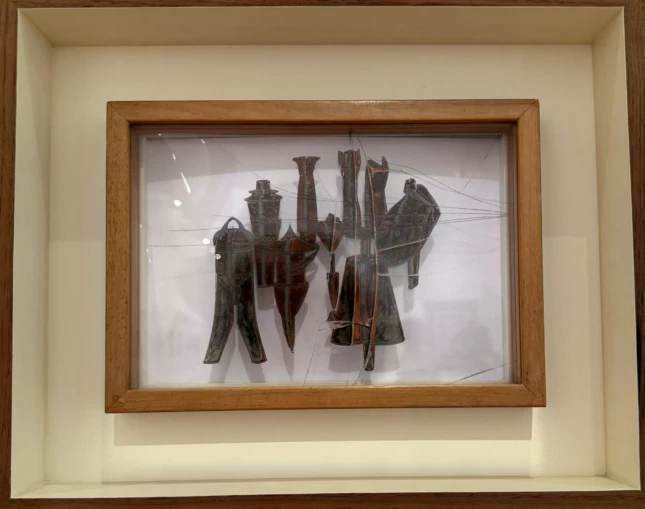
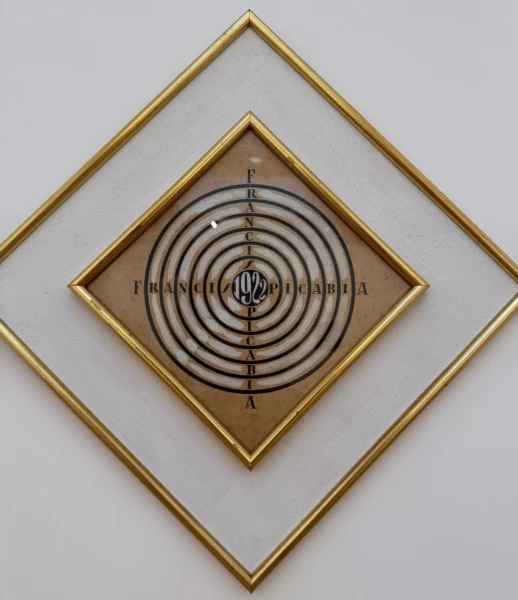
Before settling in Barcelona, he had made several trips to New York during the 1910s, often accompanied by one of his closest collaborators, Marcel Duchamp. The exhibition also explores this period, particularly Picabia’s mechanomorphic drawings—intricate compositions of gears and mechanical devices that embodied the very essence of modernity. It was in this same spirit that he designed the poster for his 1922 exhibition at Dalmau’s gallery: a large spiral creating the illusion of perpetual movement.