her great-grandfather
Sustain Our Work with a Small Monthly Gift
Become part of the Judith Benhamou Reports circle.
Contribute, even from just €10
She makes no bones about it: “I’m a writer, not an exhibition curator.” Anne Berest, the bestselling French author of Gabriële, a book recounting the life of her great-grandmother Gabriële Buffet, the wife of the artist Francis Picabia (1879–1953), almost turned down the opportunity to curate an exhibition devoted to her great-grandfather. But the invitation from Milan’s Palazzo Reale was too tempting. So she drew on what she knows best: the art of storytelling.
150 works
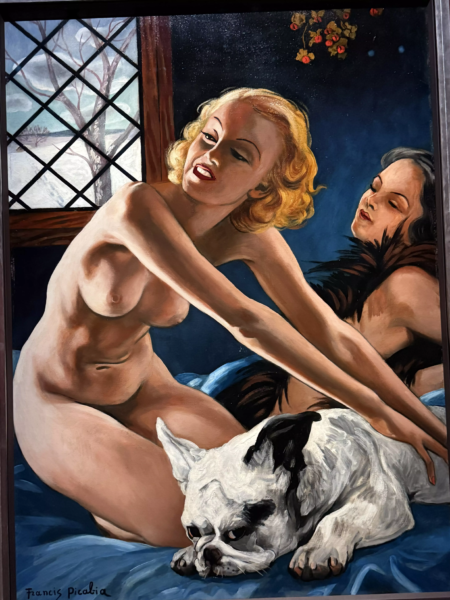
The result is a highly personal vision of Francis Picabia, told through 150 works. An extraordinary painter associated with Dada and Surrealism, a professional neurotic, a lover of women and automobiles—he is said to have owned around a hundred cars—Picabia was a flamboyant spendthrift and, above all, an artist who changed styles as often as other men changed their shirts.
an artist’s artist
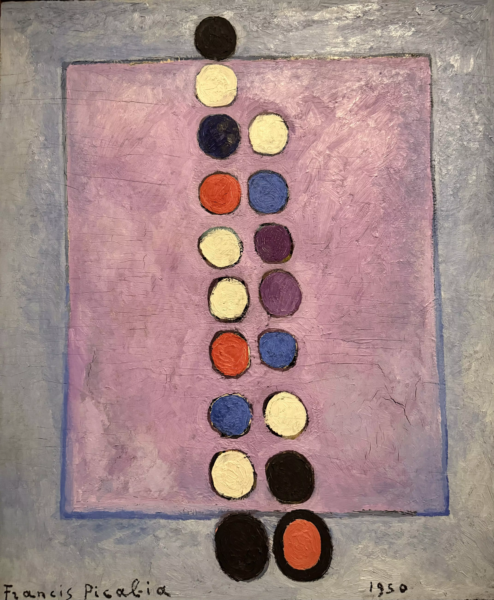
Today, he is one of the most fashionable figures in modern art. He was enormously prolific, and the sheer variety of his styles, which long made him so difficult to pin down, has become a virtue perfectly attuned to the spirit of the 21st century. Above all, as the art world likes to say, the dashing Francis is “an artist’s artist”: a source of fascination for the most creative minds, who admire the way he pushed the very possibilities of painting to their limits, from respectable Impressionism to abstraction made up of colored dots.
Through January 24, Anne Berest tells the story, in her own fashion, of the extraordinary stylistic leaps made by one of modern art’s most fascinating pioneers.
Anne Berest
“I thought we ought to imagine spending the night with him, because that was when he was at his most creative. The exhibition is a night owl’s journey, with dancing, women and a certain idea of the nightmare—he was a hypochondriac, and when that happened, he would stop painting and write poetry instead. I wanted an exhibition that wouldn’t be boring, conceived as a party. It had to stir emotions.”
A fitting descendant of a man of many identities, Anne Berest has even decided to adopt, for the duration of the exhibition, the Picabia surname inherited through her mother.
Arnauld Pierre
Anyone looking for museum orthodoxy should steer clear. Berest follows her own decidedly fanciful logic. The exhibition also lacks a number of major works, despite loans from institutions including the Centre Pompidou and the Kunsthaus Zürich. Many of the pieces on display come from private collections and dealers. It is worth remembering that Picabia, who suffered from recurring bouts of depression, was erratic in his painting output.
Arnauld Pierre, vice-president of the Comité Picabia, nevertheless takes a sympathetic view of the undertaking:
“This isn’t the Picabia we’re used to seeing in exhibitions, with a chronological arrangement. It’s a vision of Picabia born of a family sensibility, informed by important documents. You get a sense not only of the artist but also of the man, someone who went out a great deal and met countless poets, writers and artists. A life lived to the full.”
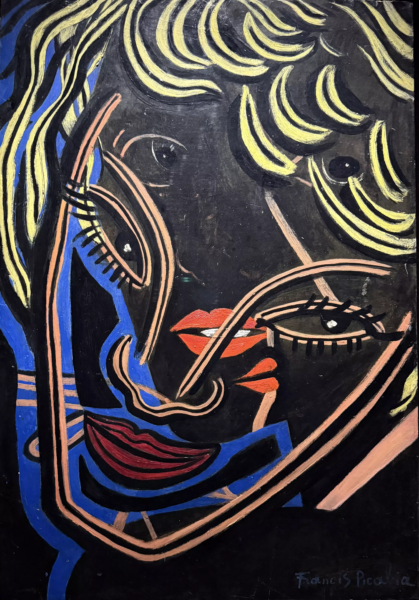
The night shines
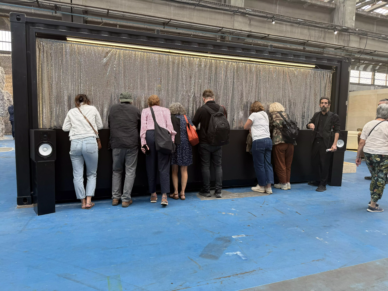
In 1918, Picabia wrote in one of his poems: “The night shines like sheets of glass.” The exhibition, plunged into darkness, tells the story of his illuminations.
Picabia was driven by obsessions. He had a particular fascination with progress, movement and speed, expressed in his numerous drawings of mechanical devices. He was equally passionate about Spain, his father’s country of origin. He took refuge in Barcelona in 1916–17, when Spain remained neutral during the war, and repeatedly produced images of Spanish flamenco dancers, their faces framed by elaborate kiss curls.
Transparencies
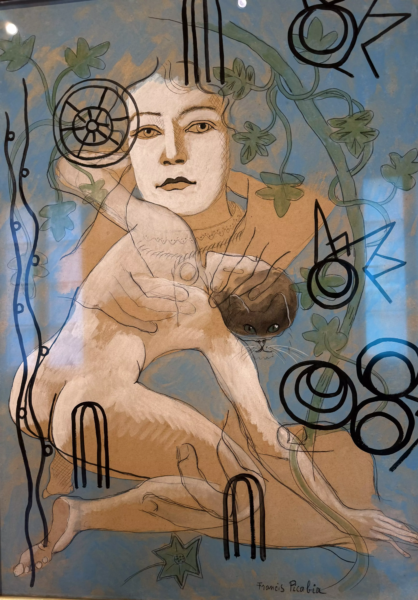
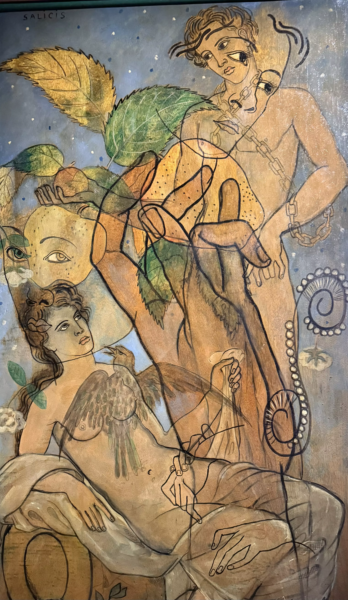
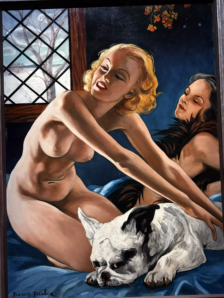
Beautiful or repellent, drawn from magazine photographs or conjured from his imagination, women occupy a central place in his repertoire. Nowhere is this more apparent than in his most accomplished period, that of the Transparencies, which he developed between 1927 and the early 1930s. In these paintings, he superimposed images of imagined female figures with architecture, animals or ancient gods. In one work from 1928, an Andalusian woman appears on the same plane as a menacing classical profile. The idea was to give visual form to simultaneous thoughts arising in the mind.
Ugly pictures
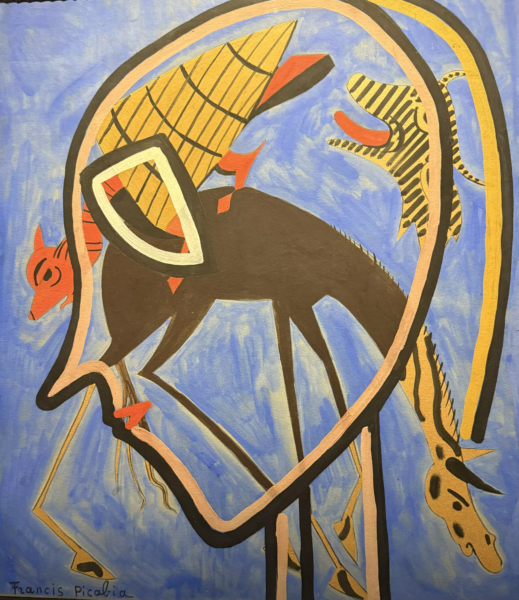
We also come to understand that Picabia, ever the provocateur, deliberately enjoyed painting ugly pictures. It was a form of negating art itself, in a Dadaist, even nihilistic, spirit. His dark, deeply enigmatic, almost bituminous abstract paintings from the immediate postwar years belong to this category.
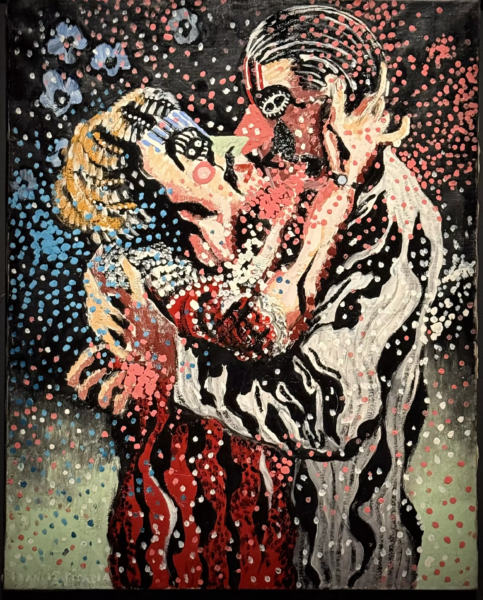
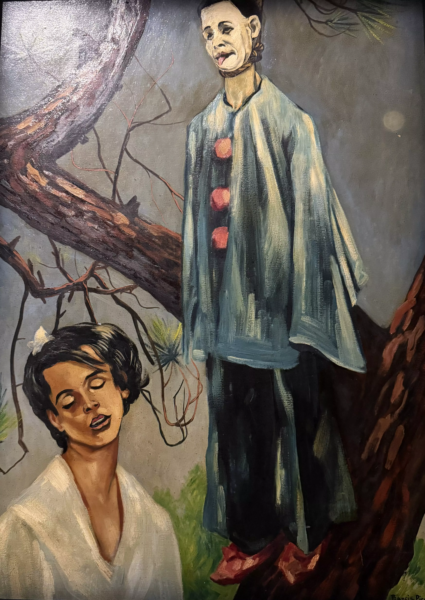
But by the 1940s, the party was already over. Consider his fascinating Pierrot pendu, depicting Pierrot hanging from a tree, his tongue dangling. Perhaps Pierrot is Picabia himself. By then, he had squandered his entire inheritance.
a bientot
Francis Picabia died in 1953. His lifelong friend Marcel Duchamp sent a telegram to his home containing just three words: “Francis, à bientôt” (“Francis, see you soon”).
Wit, always wit.