Inner Strength
It takes uncommon inner strength to turn a resounding failure into a model success. It takes a rare spiritual stamina to transform the story of a science-fiction film boasting the most extraordinary cast imaginable — Dalí, Orson Welles, music by Pink Floyd — yet destined never to be made, into an enduring legend that lives on, defiantly, in the minds of people around the world. One must be Alejandro Jodorowsky to love art for art’s sake — provided it has truly been imagined, whether it comes to fruition or not.
Arthur Cravan, Jacques Vaché
Sustain Our Work with a Small Monthly Gift
Become part of the Judith Benhamou Reports circle.
Contribute, even from just €10
The beauty of the paradox lies in being better known for what one did not do than for what one did. It then calls to mind those early twentieth-century heroes without a body of work — surrealists before surrealism — such as the boxer Arthur Cravan or the epistolary poet Jacques Vaché.
Titanic project
Alejandro first became known for having dreamed, in the 1970s, of creating that unprecedented film, the fruit of every superlative: Dune. The titanic project that was never shot was recounted by him and Moebius in the form of storyboards, and later, in 2013, in the documentary Jodorowsky’s Dune by Frank Pavich, which also revealed the battered brilliance of its creator.
Benjamin Labatut
Here, then, is the story of Alejandro, born on February 17, 1929, in Tocopilla, Chile. He likes to say that Chile stands outside the world — that one is bored there. A theory recently echoed by the compelling Chilean writer Benjamin Labatut, author of Maniac.
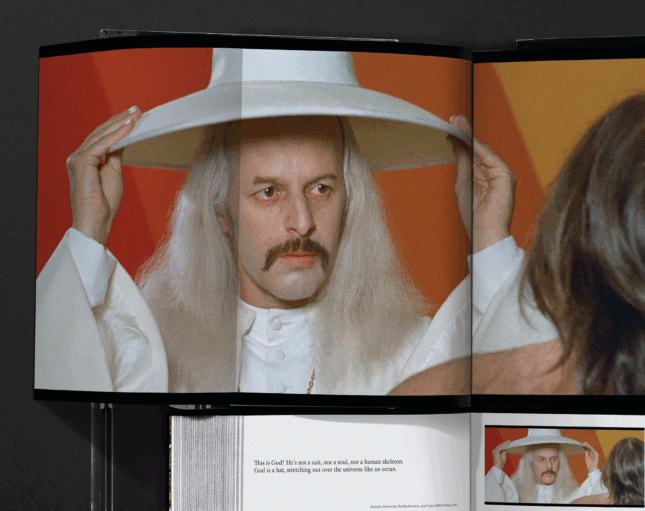
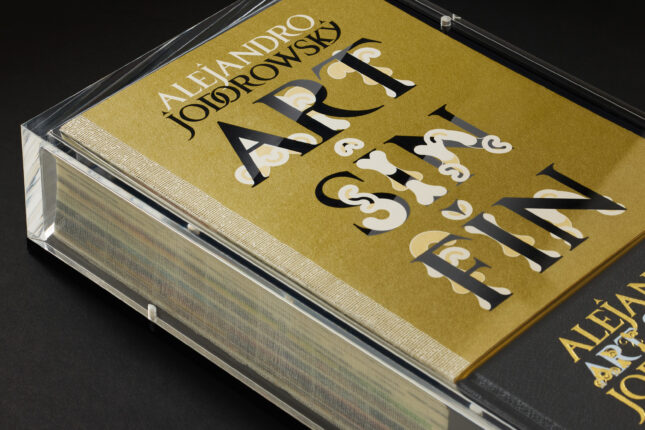
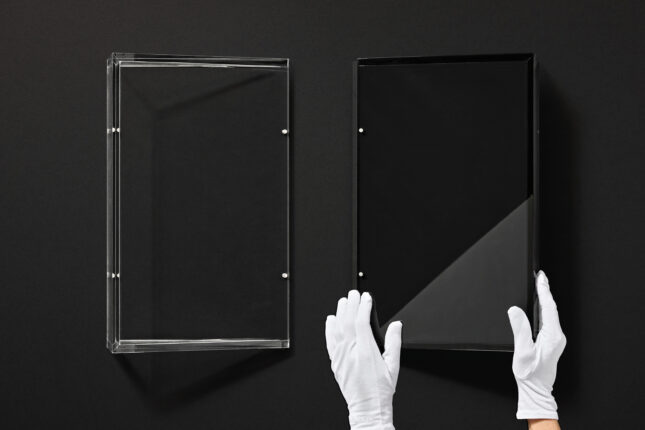
Alejandro would spend time in Hollywood and, above all, in Paris. He would live a thousand lives before reaching 97. And here we are: 97. He has just published, with Taschen, a gigantic double volume. 1,072 pages. 14 kilos. Priced at €1,200 in a signed limited edition. .”Alejandro Jodorowsky. Art sin Fin”. It comes encased in a Plexiglas shell designed by the French duo M/M (Paris).
René Magritte
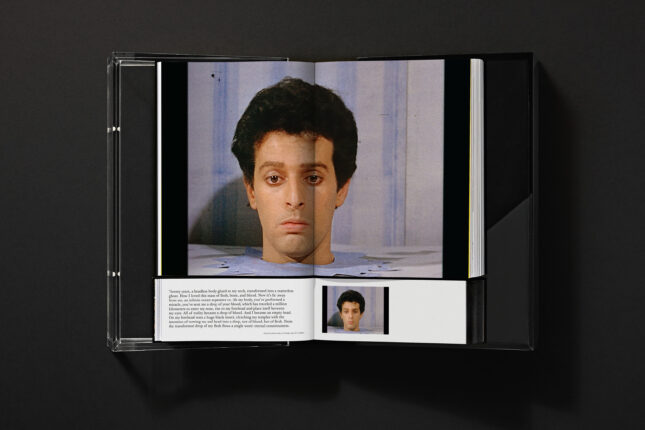
The work unfolds in two parts. On one side, a chronological sequence of images from his life — in the broadest possible sense of the word. On the other, the corresponding texts, which in fact do not always correspond to the illustrations. It immediately brought to mind René Magritte, who asked his friends to invent enigmatic titles that would deliberately refuse to converse with his paintings.
André Breton
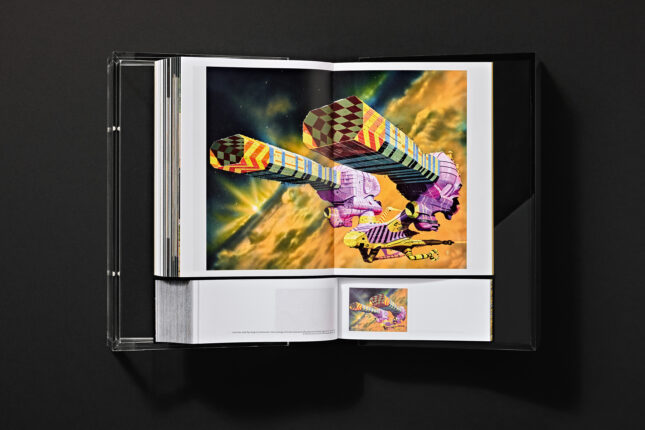
Magritte famously clashed with André Breton, the authoritarian and dogmatic theorist of Surrealism. Jodorowsky, for his part, simply missed his encounter with Breton; he found him too bourgeois. Yet Jodorowsky rather enjoys suggesting that he is the last of the Surrealists. Between the Plexiglas panels of this XXL volume resides the world of the filmmaker (14 films), comic-book creator, mime, tarot reader, theatre designer and psychomagician.
Donatien Grau
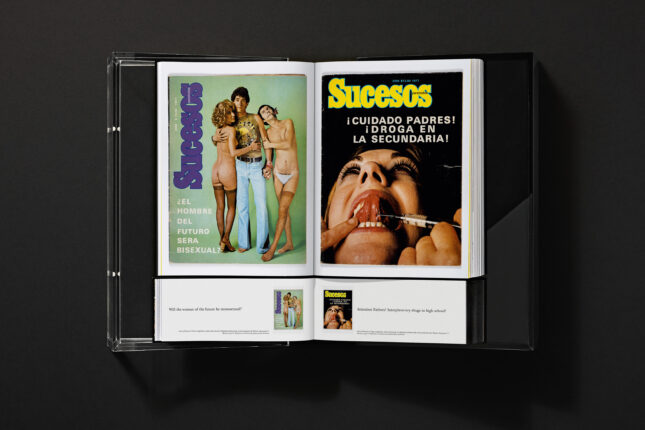
The driving force behind the project over five years was his friend Donatien Grau — advisor for contemporary programmes at the Louvre and a philologist by training. “We selected roughly 1,000 images out of the 5,000 initially identified. He dictated the 1,000 texts to me.” Some are deliciously aphoristic, such as: “Mouth open, eyes closed. You are what you want and not what you are. All you have is what you’re not looking for.” Grau adds: “The book also functions like a film edit. The comic-strip images have been emptied of their speech bubbles.”
Pascale Montandon-Jodorowsky
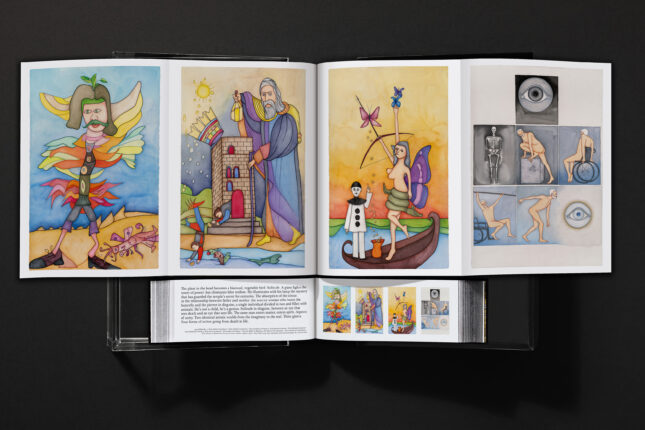
Alejandro Jodorowsky is also Pascale Montandon-Jodorowsky, his wife, with whom he forms a deeply fused couple. Forty-three years his junior, she says: “Our temporalities have completely merged.” She participated in the book as she participates in everything that concerns him. Together they also produce drawings, exhibited among others by the Los Angeles gallerist Tim Blum, who closed his space in the summer of 2025.
Sunday afternoon
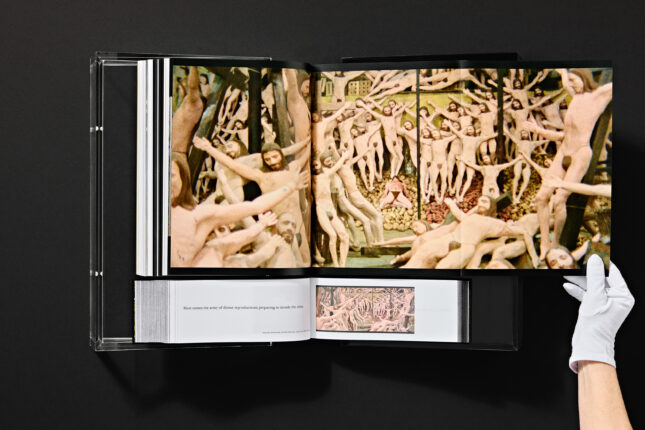
The three of us — the couple and I — met on a Sunday afternoon for a rather unconventional conversation. Today, Alejandro is above all a figure who enjoys an undeniable aura. Pascale explains that Alejandro is often in a state of trance. His ideas gather and flow outward in a continuous stream. He does not so much answer questions as follow the current of his own thought.
Psychomagic
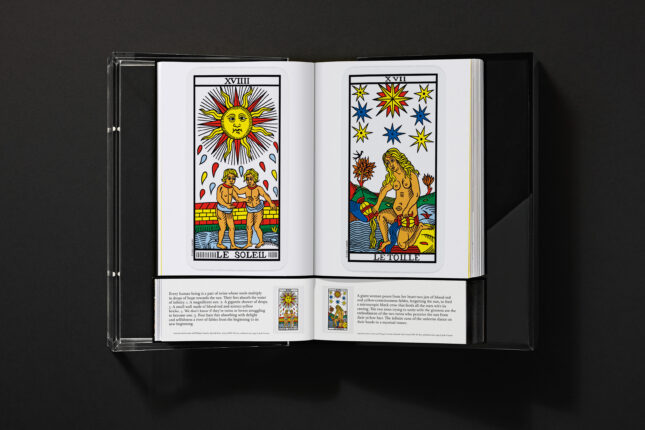
We speak about the book, which presents images from his birth up to 2025, including stills from his films. We speak about psychomagic, the theory he developed in the 1970s, rooted in symbols and enacted gestures. “I seek wisdom. That is what matters. I arrived at psychomagic naturally, perhaps at the age of four.” And later: “We are not ill. We simply do not know the truth.”
THe horse and the rider
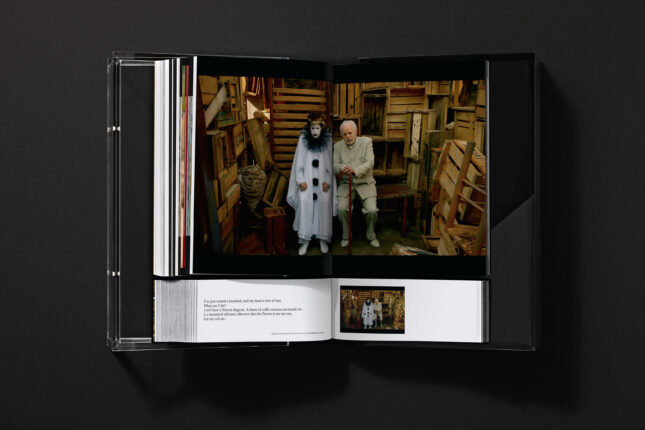
To illustrate his idea of Surrealism, he offers the example of the horse transformed into a being designed to understand the rider. “At that point it is no longer a horse with a horse’s desires for food or sexual desire. It becomes a monster — but a beautiful monster — suited to humans… Surrealism allows one to move away from death.”
Death
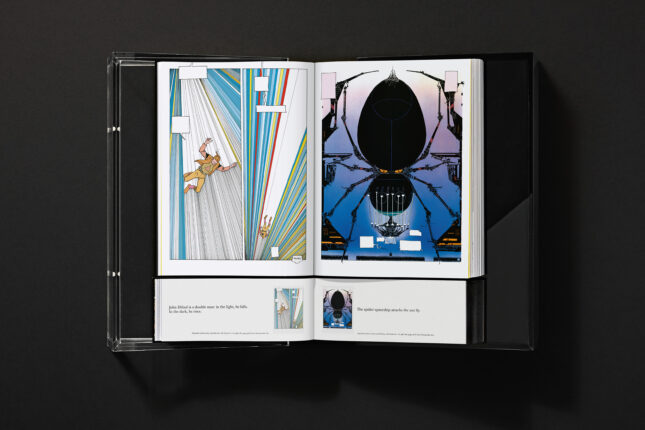
And death, indeed: “I place myself three years from death. My father, at one hundred, underwent a metamorphosis. He took a kind of knife and slit his veins.” “You are not your father,” Pascale interjects.
One picks up a few key phrases in passing: “Tarot develops earthly intelligence.” Or, “Dreams have the same value as reality.”
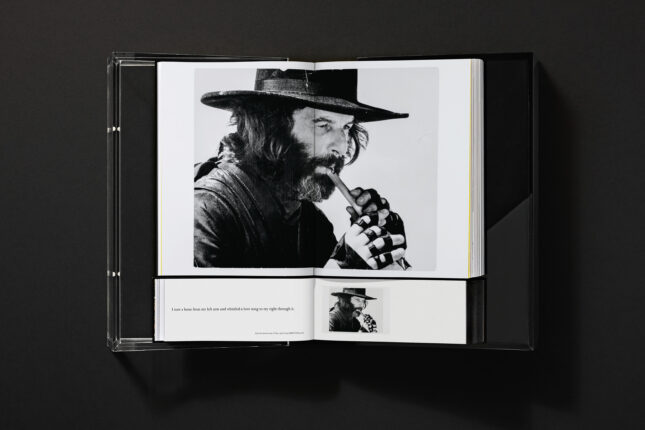
On the practice of art: “It is not reality but a state of grace.”
And on his eternal quest: “Perhaps I am a little tired of seeking the truth. But that is not a failure. It is a small triumph.”
Make way for poetry in an interview unlike any other.