Absolute masterpiece
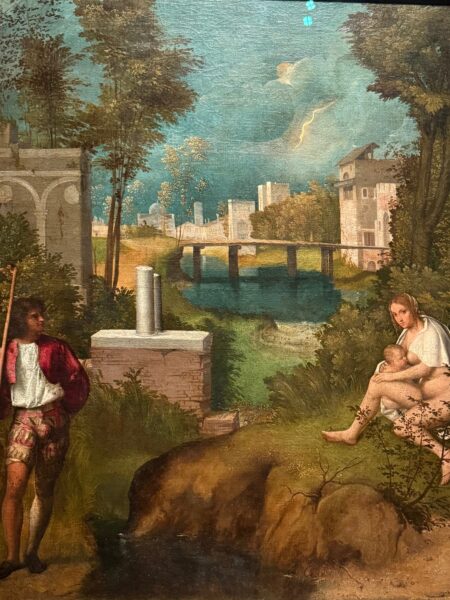
When we think of the absolute masterpieces of art history, we often think first of the Italian Renaissance. And among the Italian museums that house some of the most significant examples, the Gallerie dell’Accademia in Venice holds a prominent place. Housed in this venerable institution is one of the most important and enigmatic paintings ever created—despite its modest dimensions: “The Tempest” by Giorgione (circa 1477-1510).
Sustain Our Work with a Small Monthly Gift
Become part of the Judith Benhamou Reports circle.
Contribute, even from just €10
Mystery
What is this nude woman doing, nursing her child in the middle of nature, while on the opposite bank, a stylish shepherd—or is he a soldier?—looks over at her, a large staff in hand? In the distance, a lightning bolt flashes across the sky. Art historians have long pondered its meaning.
Vitruvian Man
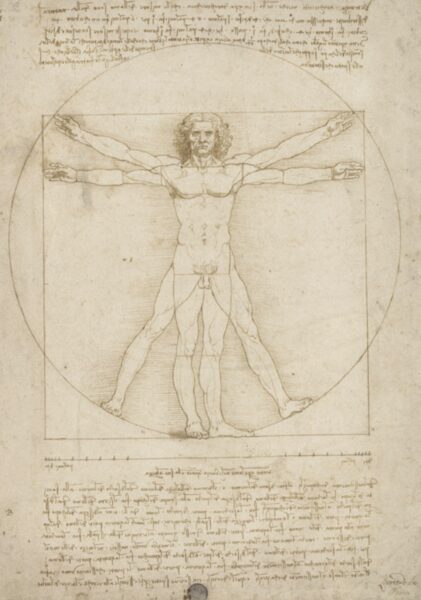
If, before July 27, 2025, you go looking for this painting in the museum’s permanent collection, you won’t find it. Though rarely moved, it is currently displayed just a few hundred meters away in a major exhibition on the body in the Renaissance—also at the Accademia. The same goes for “Vitruvian Man,” a drawing by Leonardo da Vinci (1452-1519), which depicts a nude male figure in motion, inscribed within a circle and a square.
Leonardo
This exploratory sketch of a perfectly proportioned body, accompanied by Leonardo’s own reflections and a mention of the Roman architect Vitruvius (hence the title), is one of the most famous drawings in the world—and it, too, is housed at the Accademia in Venice. However, due to its fragility, it hadn’t been on view since 2019.
Inside the woman’s womb
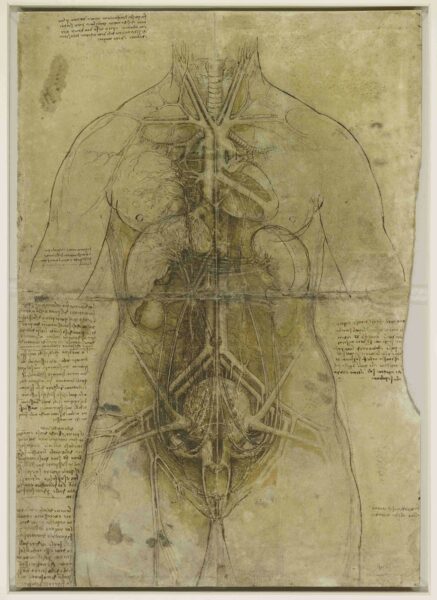
It now appears in this thrilling temporary exhibition, alongside another drawing by Leonardo, exploring the mystery of origins: the dissection of a woman’s womb, on loan from the British Royal Collection.
To appreciate is to support.
To support is to donate.
Support JB Reports by becoming a sustaining Patron with a recurring or a spontaneous donation.
Francesca Borgo
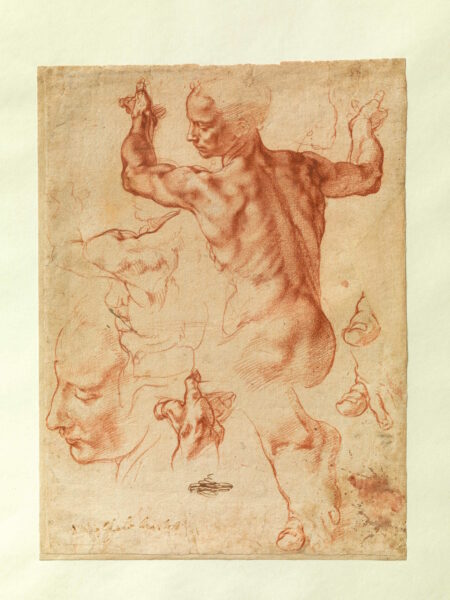
But the show does more than simply assemble treasures. The disastrous exhibition design is easily forgotten, thanks to the compelling narrative. “In the Renaissance, the body became an object of both scientific inquiry and desire,” explains co-curator Francesca Borgo.
Albrecht Dürer
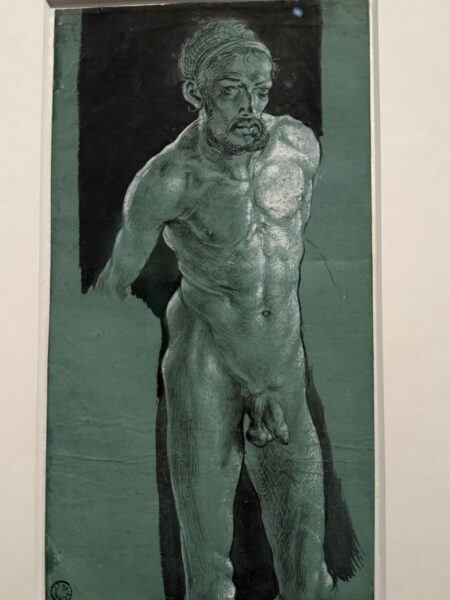
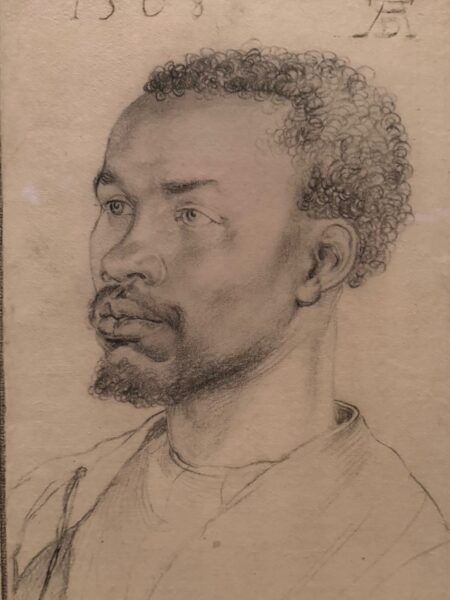
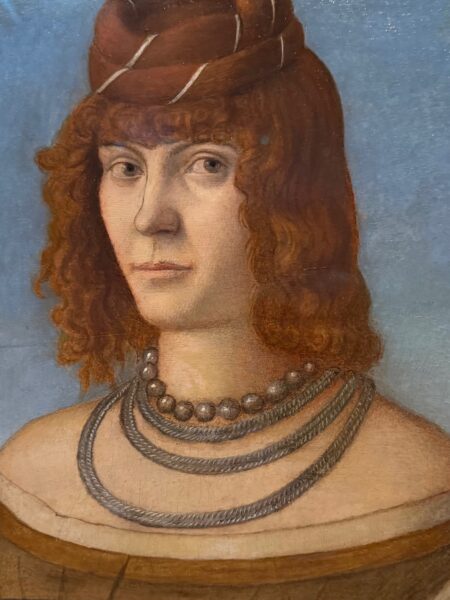
A wonderful outlier in this exploration is Albrecht Dürer (1471-1528), leader of the German Renaissance, who spent extended periods in Venice on two occasions. The master observed the Venetians closely—as seen in his painted portrait of a local woman—but he also scrutinized his own body, as revealed by a self-portrait in the nude and a detailed sketch of his hand. (See here a report about Durer at the Albertina) .
Among the 89 works on display here are numerous depictions of nude, languid women, reclining in nature with their eyes closed, as though recovering from sensual pleasures.
Where your past pleasures are recalled
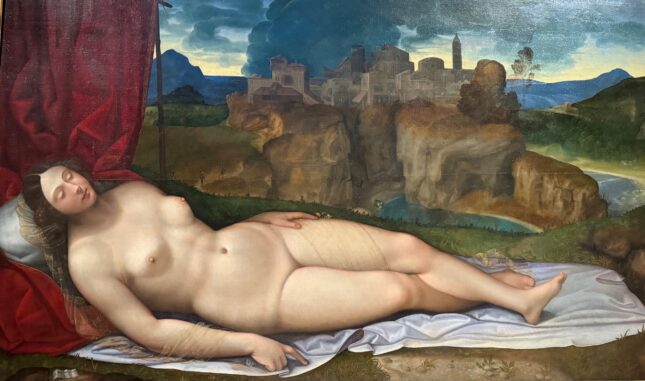
In the exhibition catalogue, Renaissance art historian Frank Fehrenbach writes:
“For a long time, landscape was the site of romantic charm and attraction. Leonardo da Vinci speaks of this in his “Treatise on Painting,” in a passage from around 1492, where he praises painting for its ability to depict ‘sites of rivers, woods, valleys and fields, where your past pleasures are recalled.’”
Titian
As a true heir to the genre, Titian (circa 1488-1576) in Venice would become the undisputed master of this depiction of the reclining woman. “It is Venice’s gift to the tradition of Western art,” concludes Francesca Borgo.
Through July 27. “The Making of the Body in Renaissance Venice.” Gallerie dell’Academia. Venice. http://www.gallerieaccademia.it/en