Viral image
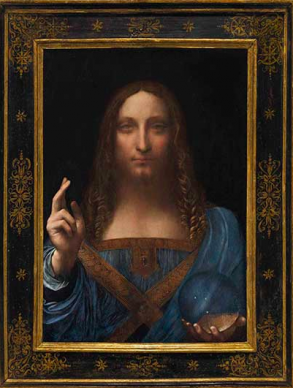
This image went around the world. In November 2017, Christie’s sold a remarkably rare painting by Leonardo da Vinci, a Salvator Mundi painted around 1500, for $450 million, making it the most expensive work ever sold at auction. The fact that this depiction of Christ by one of the most famous artists of all time had been outrageously over-restored changed nothing. The myth proved stronger than anything else, and its owner today is apparently Saudi Crown Prince Mohammed bin Salman.
Cousin of the record-breaking painting
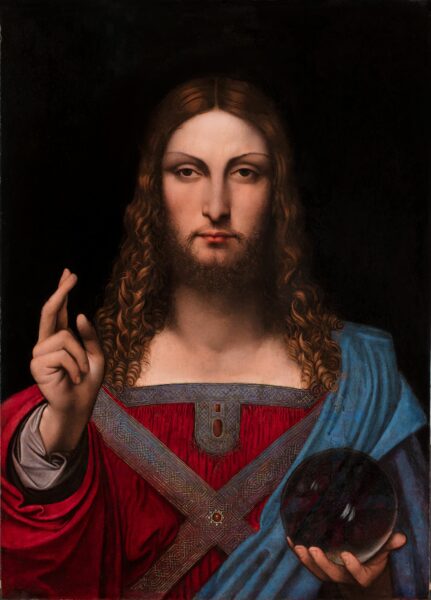
Each year, TEFAF Maastricht presents at least one star work. This time, that coveted position is occupied by a cousin of the record-breaking painting: another of the roughly twenty known versions of Salvator Mundi, executed not by Leonardo himself but officially by one of his early sixteenth-century followers. It is being unveiled on the stand of the highly reputable British dealer Agnew’s.
Sustain Our Work with a Small Monthly Gift
It’s very simple. Just $10 a month allows us to keep going.
Reliable information is valuable.
The gallery’s director, Anthony Crichton-Stuart, explains that the private collector who owns the painting has requested that potential buyers submit an offer. So what might its value reasonably be? “Several million euros,” specialists whisper. This powerful image, once owned by the French de Ganay family, was sold in 1999 for $332,500 and has since been restored. In 2020, the panel exhibited by the Louvre and then the Prado was described in its favor as “painted under the supervision of the master, with his possible intervention.” The history of art is a complex science…
Many other treasures
But in Maastricht, from March 14 through March 19, the almost Leonardo is the tree that hides a forest of many other treasures. This is the world’s greatest antiques fair, both in scale—276 exhibitors—and above all in quality. Its strength lies in the special attention it gives to a wide range of specialties. In this way, it succeeds, unlike any other event, in attracting both the most passionate collectors on the planet and museum specialists whose authority rests on highly specific areas of knowledge.
Boris Vervoordt
And yet, once again, no one can ignore a difficult context: major wars, very significant economic uncertainty, and art market players who are noticeably more reluctant to travel. “For the moment, except in the Middle East, we have not recorded any notable visitor cancellations,” observes Boris Vervoordt, chairman of the fair’s executive committee.
Diego Velazquez
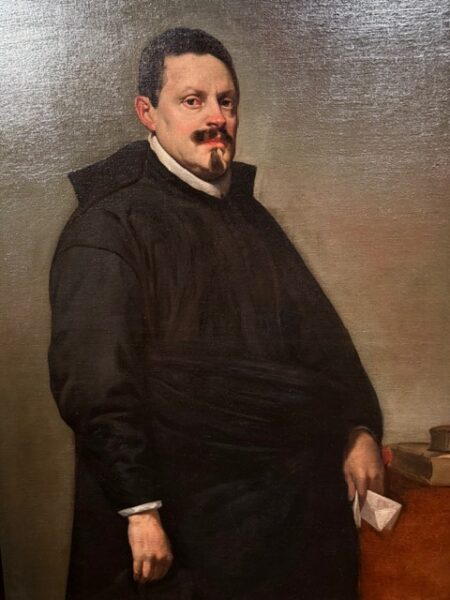
Diego Velazquez
Dealers, for their part, are going the extra mile to offer works tied to thrilling stories. First, in the field of Old Masters, with heavyweights such as the Spanish gallery Colnaghi, which is showing a painting by the illustrious Diego Velázquez. It is a portrait of King Philip IV’s secretary, Don Sebastián de Huerta, and is priced at more than $5 million. The work suffers from a major handicap on the international market: it does not have authorization for permanent export from Spain.
Extraordinary vases
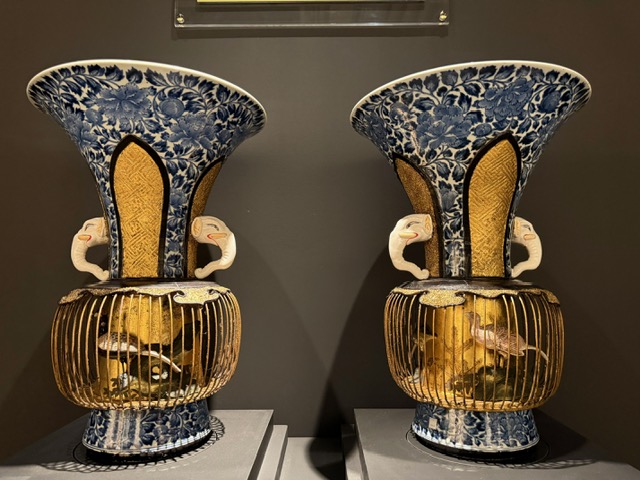
TEFAF also gives pride of place to the most precious decorative arts. Here, the 2026 star presented by the Dutch dealer Vanderven is a pair of Japanese porcelain vases of extraordinary richness. Created around 1700, they are decorated with birdcages applied in relief, birds included. A special commission for the Elector of Saxony (€700,000).
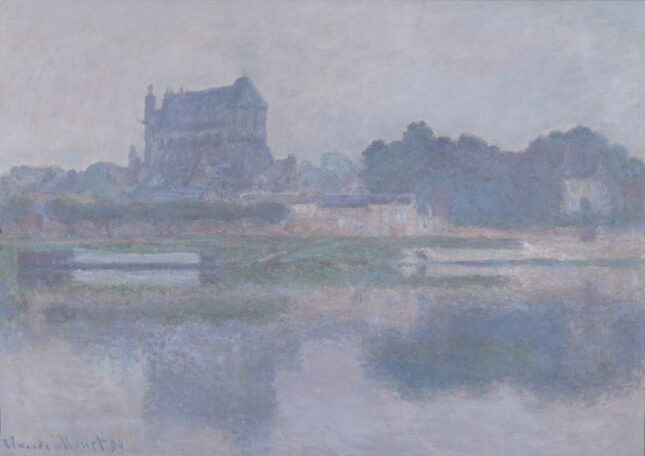
Climatic variations for a single motif
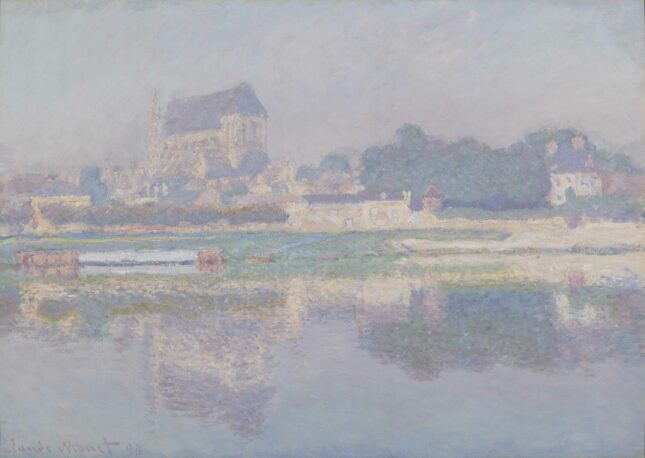
In the modern section, the English dealer Alon Zakaim has had the brilliant idea of bringing together two paintings: two delicate landscapes painted in Vernon in 1894 by Claude Monet. This pair perfectly illustrates the Impressionist’s obsession with climatic variations around a single motif.
The village church, the trees, the reflections in the water are depicted in sunshine in one case and under gray skies in the other. The sensations are especially subtle. ( $20 million.)
Raoul Dufy transparencies
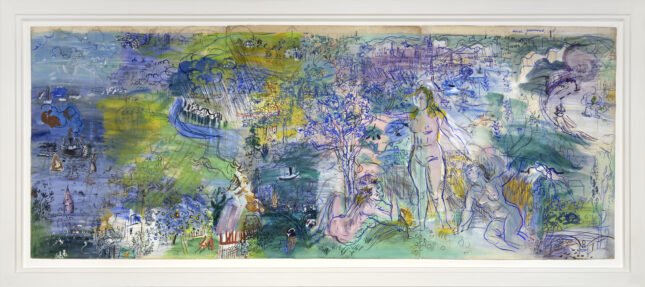
Raoul Dufy
The Brussels dealer David Lévy is showing a three-meter-long gouache by a famous name in modern art, known for his mastery of color as well as for his prolific output, Raoul Dufy (1877–1953). He is remembered above all for having created in 1937 the sumptuous mural hymn to light, La Fée Électricité, still visible at the Musée d’Art Moderne de la Ville de Paris. It was in that same year that he executed this study for another mural, intended for the smoking room of the Palais de Chaillot. The Course of the Seine is a vibrant composition of color contrasts that, as in the work of his contemporary Francis Picabia, plays with transparency effects to express movement (€950,000).
Formafantasma
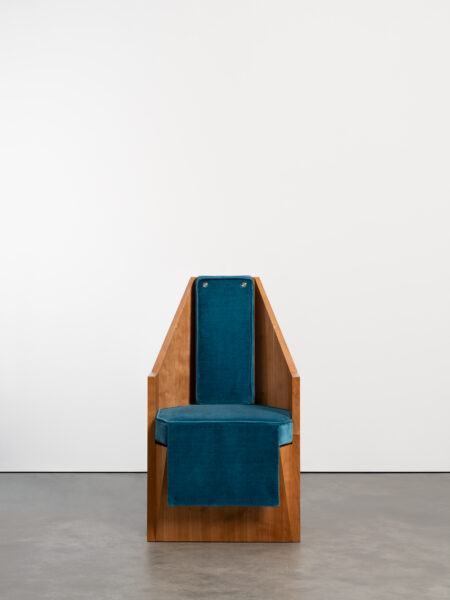
The 2026 edition of TEFAF also offers several unexpected proposals in the contemporary field. The American design specialist Friedman Benda is devoting its chic, spare stand entirely to a duo of Italian creators, Formafantasma—literally “ghost form”—founded in 2009. Since then, from the MoMA in New York to the Venice Biennale, Andrea Trimarchi and Simone Farresin have regularly been invited to participate in museum projects. Their approach is more conceptual than utilitarian. Here, for example, they started from the idea of the wooden plank to imagine pieces with what they call a “restricted aesthetic.” Their armchair, produced in an edition of eight, looks like a contemporary cathedral. (From €21,500.)
Michael Heizer
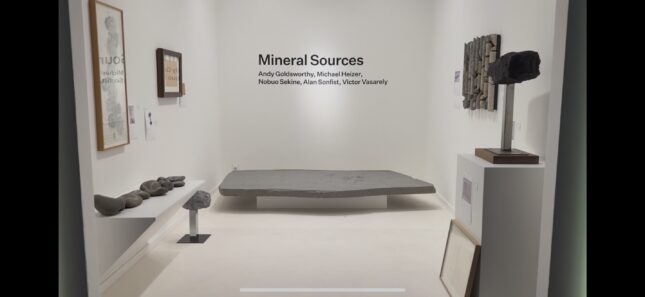
MIchael Heizer
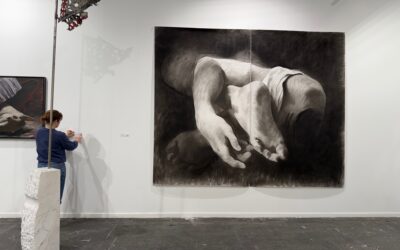
For his first participation in TEFAF, the French dealer Alexandre Devals—a passionate admirer of American Minimal art—is showing exclusively contemporary works that use stone as their primary material. This is the case with a piece conceived by one of the founding myths of American Land Art, Michael Heizer (born 1944). He is famous for works on a gigantic scale, such as the one inaugurated in Nevada in 2022, a kind of uninhabitable architecture that plays with geometry, shadows, and emptiness. Through March 28, at Gagosian in New York, he is the subject of the widely publicized exhibition Negative Sculpture, which operates at the scale of the vast gallery space, with lines drawn into the depth of the ground. In a far more modest gesture, in 1971 the young Heizer cut a 2.4-meter fragment of granite, marked, in a minimal act, by match burns. A human trace on a piece of nature. As he put it: “I am more interested in the structural characteristics of materials than in their beauty.” (For sale at €850,000.) One cannot really speak of a market for Michael Heizer, since he produces almost exclusively institutional projects.
TEFAF Maastricht, March 14 through March 19.
Support independent art journalist
If you value Judith Benhamou Reports, consider supporting our work. Your contribution keeps JB Reports independent and ad-free.
Choose a monthly or one-time donation — even a small amount makes a difference.
You can cancel a recurring donation at any time.