Immense ambitions
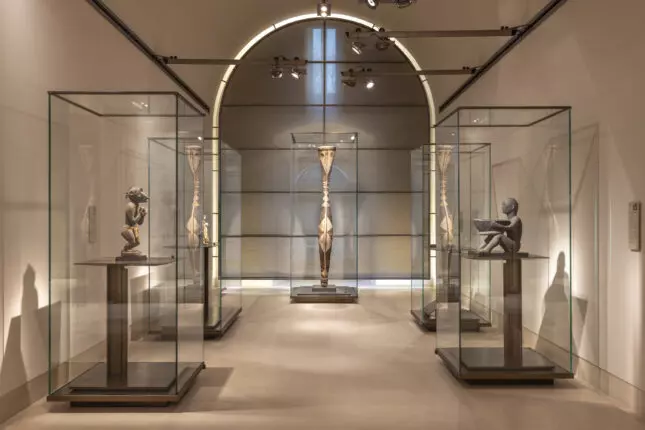
The Louvre once had immense ambitions. Then came the controversies — the resignation of its president, water leaks, strikes, and even a spectacular burglary — that buried the world’s largest museum under a mountain of problems. As early as 2000, the Pavillon des Sessions had been created at the initiative of Jacques Chirac.
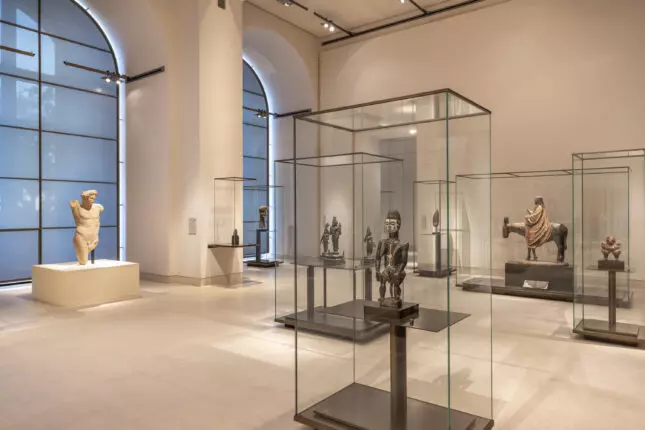
In a luxurious setting of 1,200 square meters, it presented absolute masterpieces of what was then called “primitive” art (today it is difficult to find a politically correct generic term, so works are generally designated simply by their origin — African art for works from Africa, and so on).
Sustain Our Work with a Small Monthly Gift
Become part of the Judith Benhamou Reports circle.
Contribute, even from just €10
Galeries de cinq continents
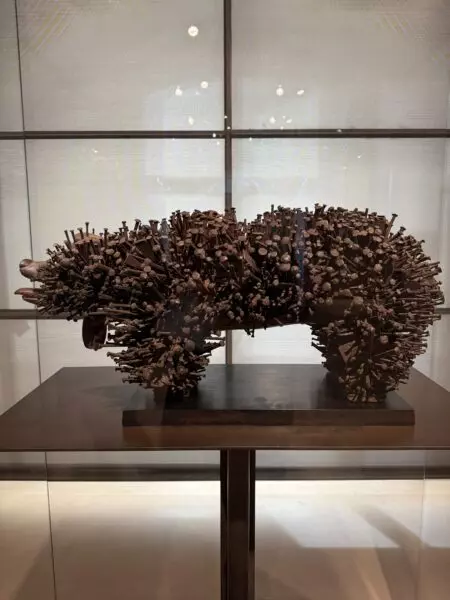
But the Pavillon des Sessions closed in 2024 to make way for a new, more contemporary formula. In December 2025, it reopened as the “Galerie des cinq continents” (Gallery of the Five Continents). It reflects a conception of the world that aims, according to official statements, to offer “a cross-disciplinary approach to the global history of art.” Through this mixing of origins, it follows the concept of the Galerie du Temps at Louvre-Lens and the sumptuous presentation of the permanent collections at Louvre Abu Dhabi. Works from Africa, Oceania and the Americas are displayed alongside those from Europe.
Skip the line
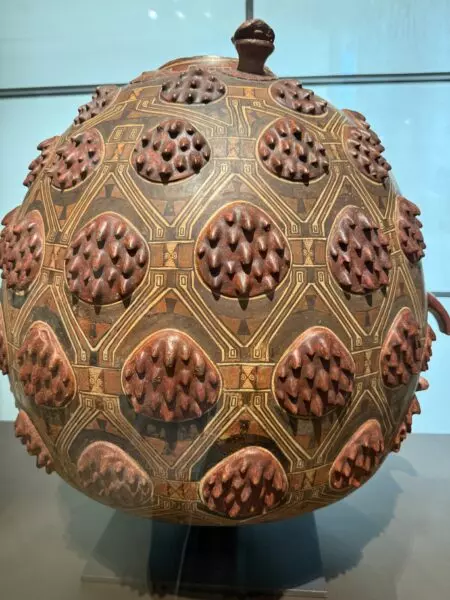
The first advantage of the visit is that the gallery can be accessed through its own entrance, the Porte des Lions, near the Quai du Louvre. Because the space is new — and still largely unknown to mass tourism — it allows visitors to avoid the long lines that are inevitable when entering through the Pyramid.
Marlene Dumas commission
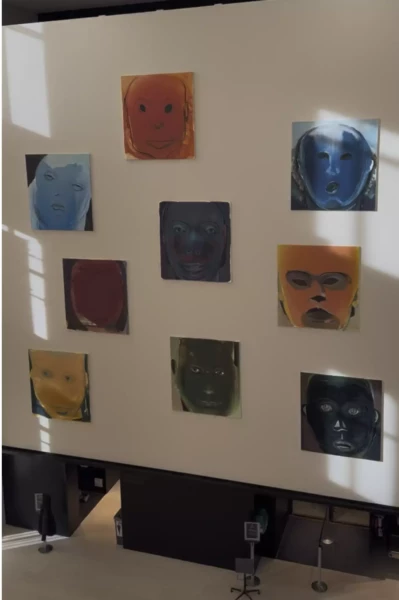
The second advantage is the opportunity to discover the Louvre’s latest commission, given to the great South African painter Marlène Dumas (born 1953). Even if it may not be her most successful work, it surprises positively through its monumentality. The installation consists of nine large paintings placed where a group of ancient bas-reliefs once stood. They depict ghostly faces, translucent and threatening mask-like forms. The project continues a tradition of commissions. After a temporary commission — unfortunately short-lived — to Luc Tuymans, the last major intervention of this kind dates back fifteen years and was created by the American Cy Twombly (1928–2011), who painted the sumptuous blue ceiling in the Salle des Bronzes.
Discreet inauguration
The discreet inauguration of “Liaisons” during Art Basel Paris can be explained by the fact that its installation coincided with the burglary suffered by the institution in October 2025. No information has been given about its financing, at a moment when the Louvre is also going through a period of financial strain.
120 objects
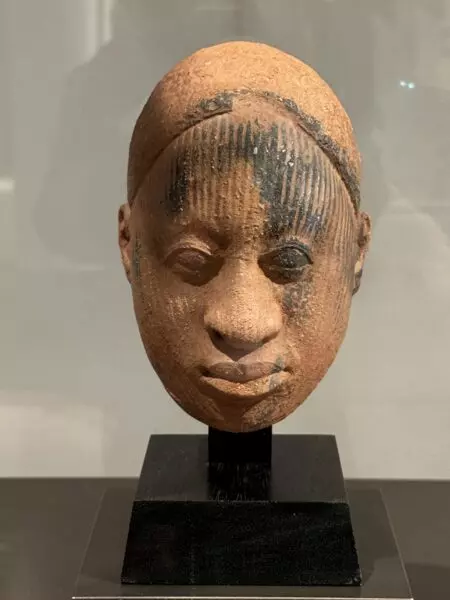
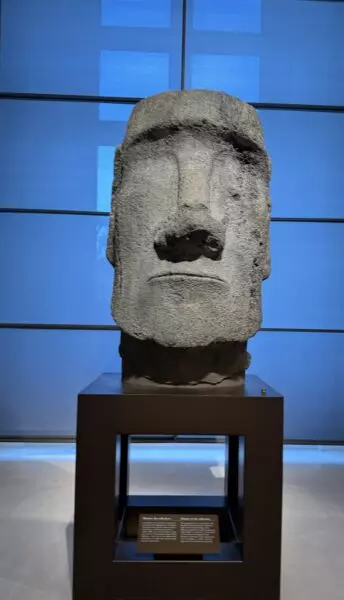
But let us come to the point: the presentation of the Gallery of the Five Continents was conceived to attract a broader public. The 120 objects on display include neither drawings nor paintings. Curiously, in these comparisons across cultures, the curators avoided overly literal parallels.
As a result, some juxtapositions are not always immediately convincing to the eye. According to professional sources who preferred to remain anonymous, some department curators could have refused to lend major works, which might explain why certain comparisons remain somewhat unclear.
Aurélien Gaborit
Aurélien Gaborit, seconded from the Musée du Quai Branly to oversee the project, explains: “We organized the display around themes — a way of showing that human beings everywhere share the same concerns.” Birth and death is probably the most universal theme, illustrated for example by a Spanish Virgin and Child from around 1300 that shares the same attitude as a Bangwa maternity figure from Cameroon dating from the nineteenth century.
Extraordinary quality
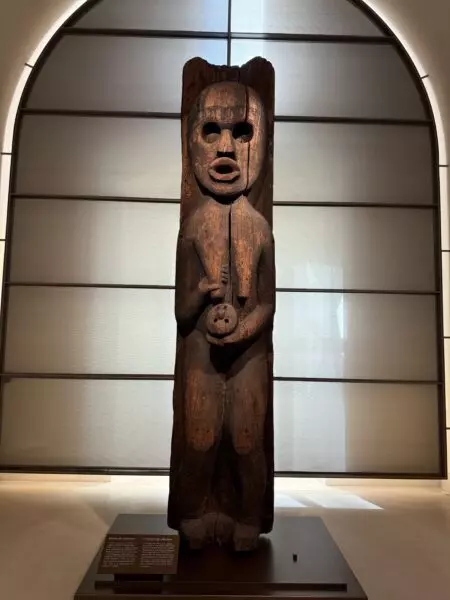
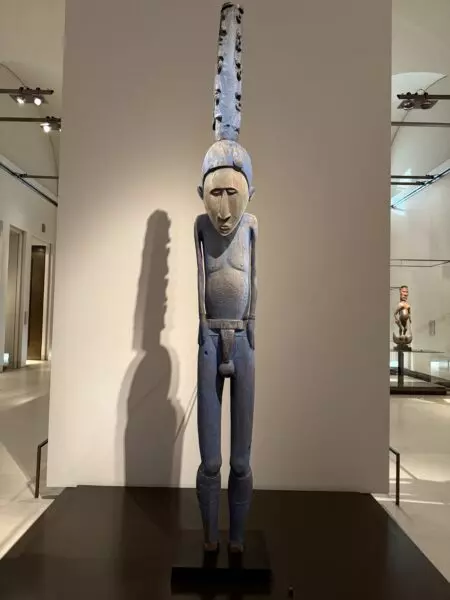
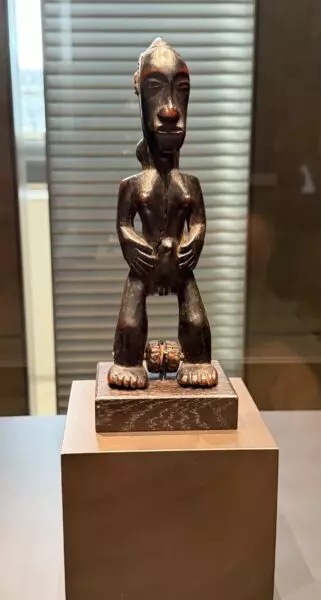
Yet the greatest strength of this new gallery — as previously with the Pavillon des Sessions — lies in the extraordinary quality and beauty of certain works. It is, in a way, a small gallery of wonders. Among them is a large anthropomorphic sculpture of a Turu Kuru dignitary from Vanuatu, carved in blue wood and dating from the nineteenth century. From the same period comes an equally monumental cedar house pillar by the Gwasila people of British Columbia. It depicts a cannibal ogress that the Surrealist painter Max Ernst once placed in front of his home before donating it to the Musée de l’Homme.
Zulu spoon
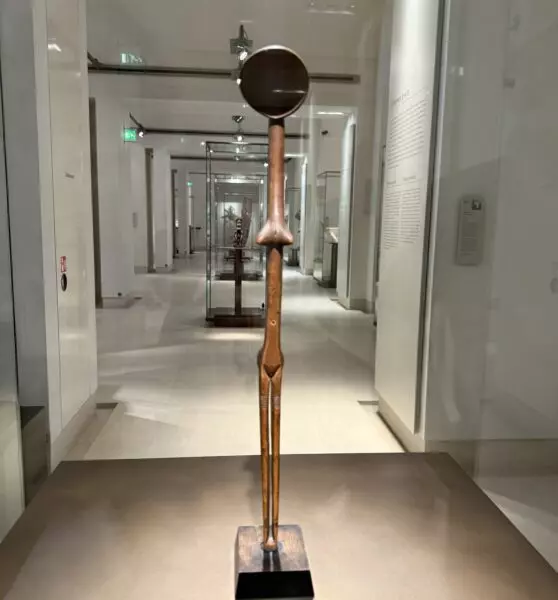
Much smaller but aesthetically just as powerful is a long Zulu spoon from South Africa shaped like a female body with pointed breasts. Once an instrument of power — used by a chief when serving himself food — it is today regarded as a sculpture that, in spirit, could evoke a Giacometti, though it predates him by a century.
www.louvre.fr/decouvrir/le-palais/aux-quatre-coins-du-monde