













Once upon…
This story could begin with “Once upon a time,” because it concludes in a veritable palace. But a palace of a particular kind. It can be found on Fifth Avenue in New York, opposite Central Park. The neoclassical building, adorned with colonnades, was originally built in 1914 as the home of steel magnate Henry Clay Frick, known for his ruthless character—especially towards workers—but also for his taste for collecting in art. In 1935, it was transformed into a museum.
Temple of collecting
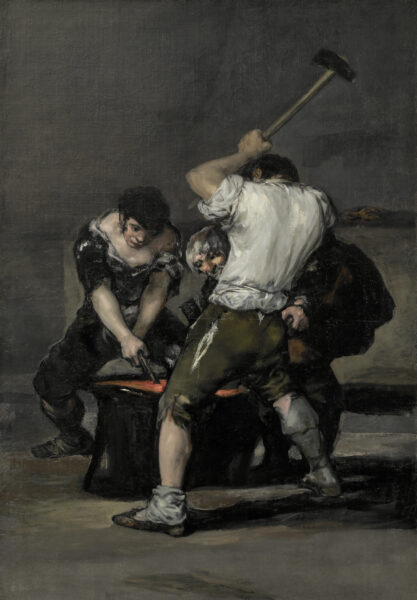
Francisco de Goya y Lucientes
And so, once upon a time, there was the Frick Collection, the most “old school” of New York museums. But this temple of collecting, home to 1,800 works, was in need of renovation. The process was a lengthy one.
Before Sotheby’s and after the Met
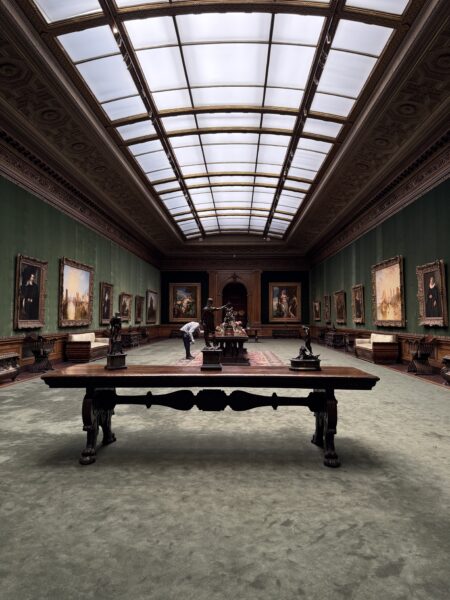
In 2014, the institution announced an expansion project. It immediately sparked controversy, as it involved removing the garden. In 2018, a new plan—garden included—was approved. In 2020, the museum closed and temporarily relocated. In a game of musical chairs, it moved to Madison Avenue, into the former Met Breuer building (the contemporary annex of the Metropolitan Museum, which no longer exists), which had previously replaced the Whitney Museum (which itself moved downtown). Ultimately, in November 2025, auction house Sotheby’s will set up its headquarters there.
Annabelle Selldorf
Meanwhile, in April 2025, the Frick Collection finally reopened in its original setting on Fifth Avenue, spanning 18,200 square meters. Annabelle Selldorf, the famous German architect living in New York, subtly reorganized the space, adding 30% more exhibition space.
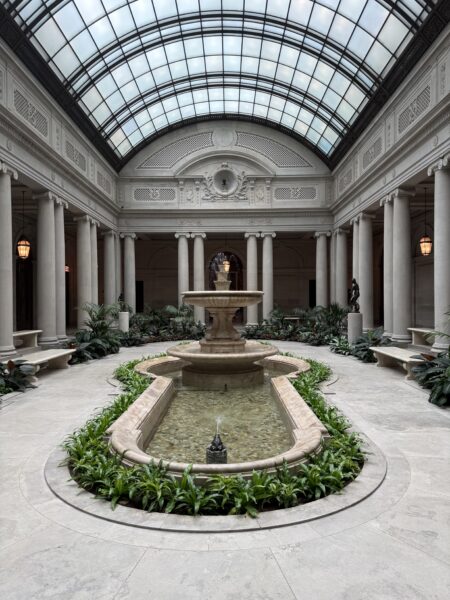
“The project’s first priority was to improve all those beautiful features you don’t notice, like lighting and air conditioning,” she said. “We took the opportunity to carve out a bit of space here and there. But the real goal was to support an institution revered as much for its exceptional architecture as for its furnishings and incredible painting collection. We used the same materials, maintained the same circulation flow. And we preserved the ‘tableau garden,’ so called because it can only be viewed, not accessed,” she explained.
Thrilling and uncanny
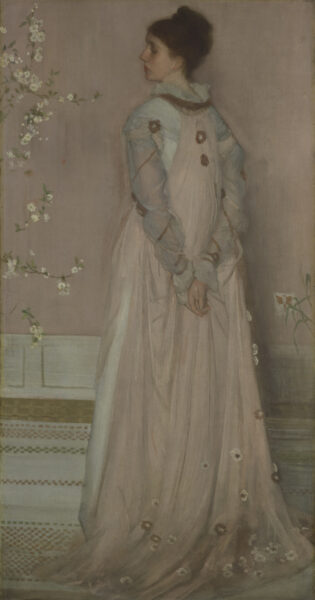
James Abbott McNeil Whistler
For the visitor, the new Frick experience is both thrilling and uncanny. You find again that fascinating atmosphere, the inverse of the “white cube”: an entirely furnished American mansion, from a time when one still looked to old Europe for inspiration.

Rembrandt
The opulent atmosphere is enriched by a multitude of 18th-century French commodes—two of which belonged to Marie Antoinette—armchairs, wood paneling, porcelain, painted ceilings, carpets and of course, extraordinary paintings, from two Titians to a Renoir, along with four Rembrandts and three Vermeers (1).
Marie-Laure Buko-Pongo
Yet, there’s a prevailing je ne sais quoi, as the Americans say, that animates the space differently. Listening to curator Marie-Laure Buko-Pongo’s explanations brings some clarity. It’s the idea of the new replicating the old. So, for example, all velvet wall coverings were rewoven by the same Prelle manufacturer in Lyon that had produced the originals.
The new second floor
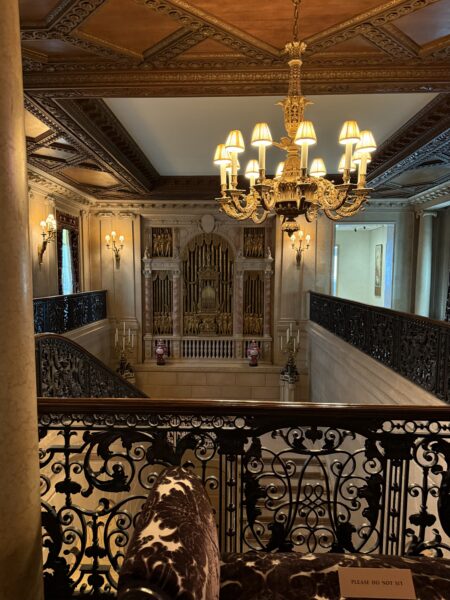
The major change—aside from some rehanging details—concerns the second floor, which was long off-limits as it housed administrative offices. Though it has lower ceilings, it now houses the graceful “Comtesse d’Haussonville” by Ingres, one of the collection’s most famous portraits, but also impressionistic (avant la lettre) studies of clouds by British painter John Constable and a delightful young lady reclining on a chaise longue by François Boucher.
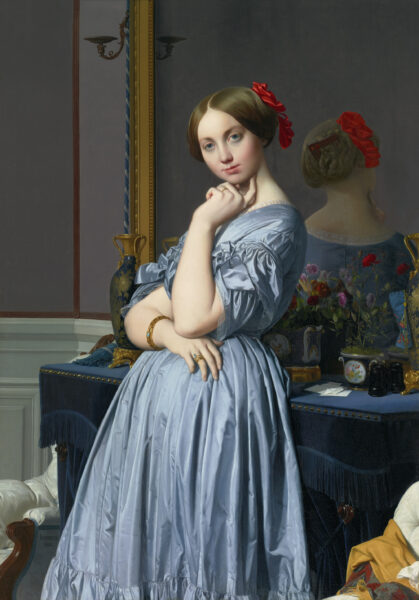
Jean-Auguste-Dominique Ingres
Finally, the ultimate reward: There’s now a café, making it possible to linger in the home of Mr. Frick for a little while longer.
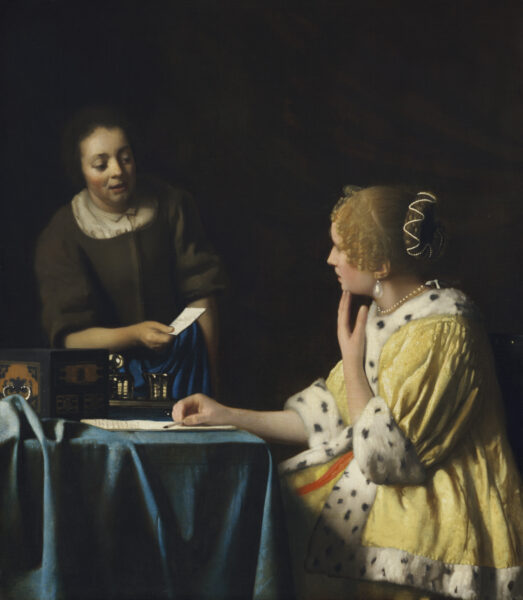
Johannes Vermeer
(1) From June 18 through September 8, the Frick will present a mini exhibition of Vermeers, composed of just five paintings, on the theme of love letters.
Support independent art journalist
If you value Judith Benhamou Reports, consider supporting our work. Your contribution keeps JB Reports independent and ad-free.
Choose a monthly or one-time donation — even a small amount makes a difference.
You can cancel a recurring donation at any time.