Love is the message
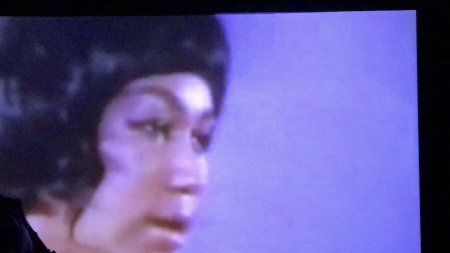
Conservative minds may object, but in the twenty-first century, many of the most revolutionary works of art have used video. Among them are Love Is the Message, the Message Is Death (2016), by the California artist Arthur Jafa, which explores the contradictions and suffering of African American culture, and The Clock (2010), by the American-Swiss artist Christian Marclay, a meditation on the passage of time and the imaginary world shaped by cinema.
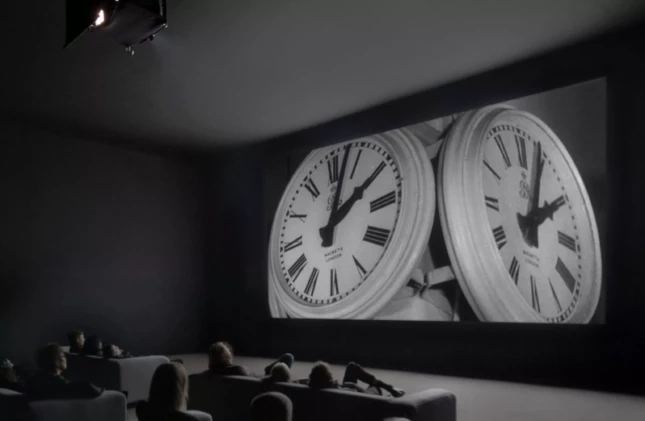
the collection of Luma
It is no coincidence that both works belong to the collection of the Luma Foundation, established by the seasoned Swiss collector Maja Hoffmann. During the summer and until January 10, her institution in Arles has become a key destination on the international calendar for contemporary art. This year, despite a program that is slightly less dazzling than usual, three major exhibitions take film as their raw material.
Sustain Our Work with a Small Monthly Gift
Become part of the Judith Benhamou Reports circle.
Contribute, even from just €10
Camille henrot
The first is by Camille Henrot, the French artist who lives in New York and was born in 1979. She also works in drawing, sculpture and painting, but it is above all in her films that the force of her creativity becomes apparent. In 2013, she won the Silver Lion at the Venice Biennale for Grosse Fatigue, a fascinating 13-minute video constructed as a form of chaotic channel-surfing.
a world that grows and destroys itself
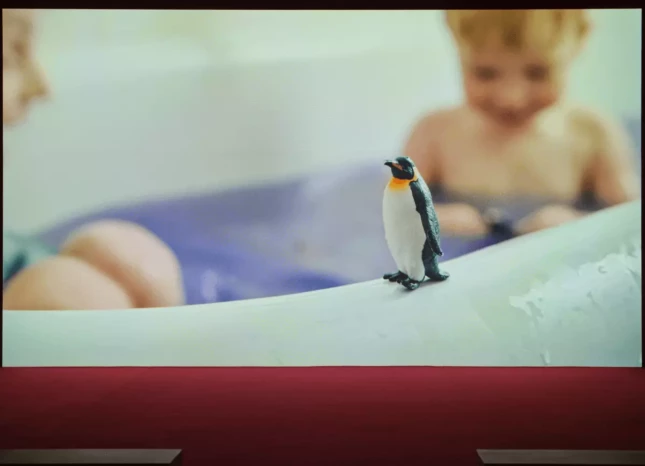
In 2026, her new film strikes a more somber note. She has become a mother. In this narrative, once again anything but linear, apparently unrelated images are intertwined: her children, global warming, the behavior of animals in captivity. The young boys observe a world that grows and destroys itself, while birds of prey tear apart the bodies of other birds. This chronicle, combining the intimate with the terrifying, is filmed in close-up. Video art rooted in reality.
Soundwalk collective and Patti smith
Patti Smith, the legendary singer and veteran of American punk, has joined forces with Soundwalk Collective, founded by the sound artist Stephan Crasneanscki, to create Correspondences, an immersive video installation shown across nine enormous screens.
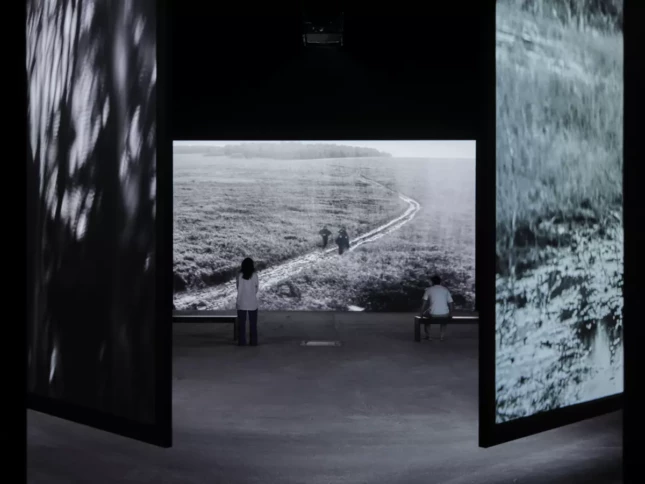
Imagine being plunged into the darkness of a former warehouse of seemingly unfathomable depth. Here and there, the blackness is pierced by projected light, revealing monumental faces, including that of Maria Callas. These spectral apparitions, selected by Crasneanscki, are accompanied by poems recited by Patti Smith.
Stephan Crasneanscki
“I travel around the world. I bring back sounds, which I submit to Patti, and they inspire her poems. The videos, meanwhile, combine images from my travels with discarded sequences from films made by Pasolini, Tarkovsky or Godard,” Stephan Crasneanscki explains.
stan douglas
The third captivating encounter at Luma this summer is the work of the Canadian artist Stan Douglas, born in 1960. Since the 1990s, the artist, who will be the subject of a retrospective at the Jeu de Paume in Paris in October, has explored the power of documentary film and the ways in which its message can be transformed.
“All my projects begin with films I admire, made by Godard, Orson Welles and others. But the story is always reworked around outsider protagonists,” Stan Douglas says.
In 2007, for instance, he took inspiration from Film, the only film Samuel Beckett ever made, shot in 1965 with Buster Keaton, to create Video. Douglas replaces the leading actor with a Black woman pursued by a camera that itself becomes a protagonist in this nightmarish story, inspired by Kafka’s The Trial. hough the film is silent, it soon becomes captivating through the sheer power of its expressiveness and the anguish it conveys.
taking the time
Without taking the time to stop and understand this construction and its complex web of references, the viewer will miss its meaning. Video art contains an inherent contradiction: although its technology is entirely contemporary, it requires us to embrace slowness, a virtue for which contemporary life has little tolerance.