frida in big
The poster for this exhibition resembles certain insurance contracts: do not forget to read the small print. Looming large is the first name of the woman at the center of all this attention: Frida. At the bottom, in far more discreet lettering, comes the key to the whole enterprise: “The Making of an Icon.”
At Tate Modern in London, through January 3, the legend of Frida Kahlo is being examined on a grand scale—but with only thirty works by the Mexican artist.
Sustain Our Work with a Small Monthly Gift
Become part of the Judith Benhamou Reports circle.
Contribute, even from just €10
30 works
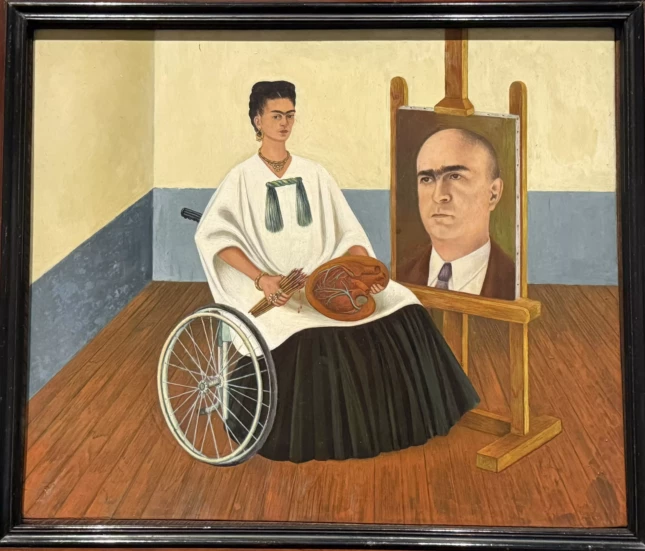
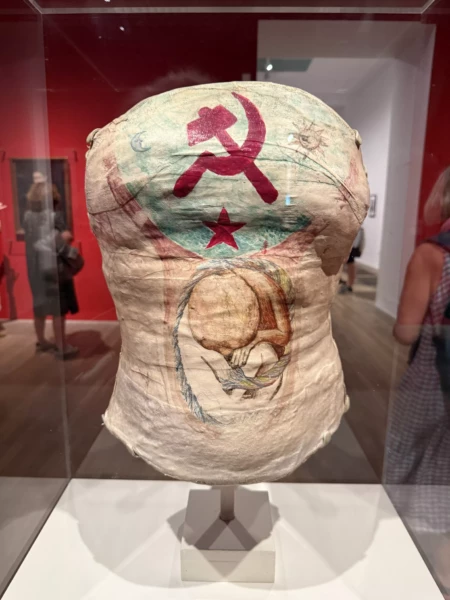
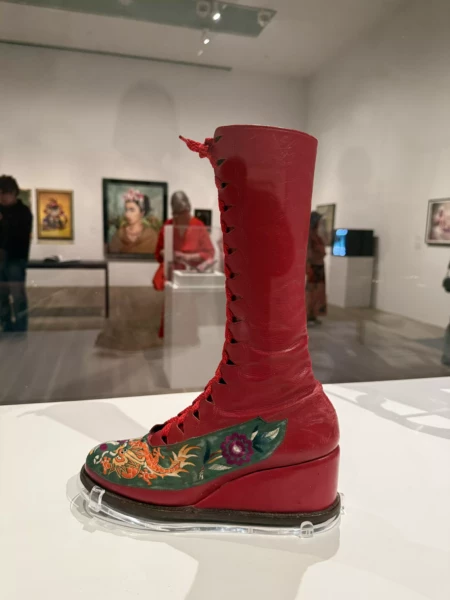
The rest of the exhibition deals with her creative circle, her influence and her everyday life, through dresses, corsets—she contracted polio at the age of 11 and was seriously injured in a bus accident at 18—jewelry and photographs. Some of the posters documenting the gradual popularization of the thick-browed artist are even garish and kitsch. What remains are thirty works—paintings and drawings—placed mainly at the beginning of the exhibition, which attempt, with varying degrees of success, to convey Frida’s genius.
In Mexico, all the paintings held in public institutions are considered absolute treasures. They draw crowds, and the museums that own them are generally reluctant to part with them, even temporarily. Moreover, her body of work is limited: around 150 pieces.
box-office considerations
Despite this extreme scarcity, box-office considerations have made Kahlo the pretext for numerous exhibitions. In Paris in 2022, the Musée Galliera displayed nine drawings and six paintings by the artist, who has also become a fashion icon. In 2025, the Art Institute of Chicago focused on her brief Parisian period—less than two months—when she had been invited to France by André Breton. Once again, the exhibition contained only twenty-five works.
the frame
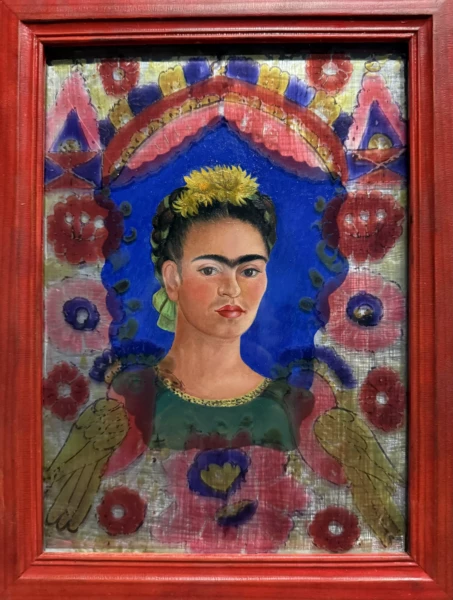
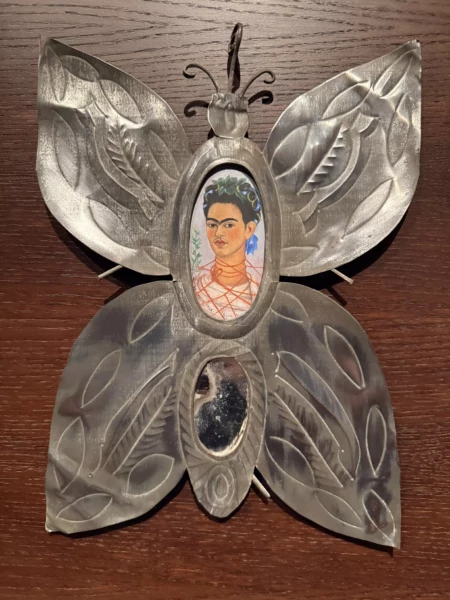
The catalogue cover featured a small self-portrait surrounded by flowers, painted on aluminum, The Frame. It was acquired at the time by the French national museums, which proved remarkably prescient. It reappears at Tate Modern in the section devoted to Kahlo’s Surrealist affinities.
“She found the Surrealists far too indulgent toward one another and called André Breton an old cockroach. She distanced herself from them by saying that she did not paint her dreams, but her reality. Her time in Paris nevertheless certainly had an influence,” explains Mari Carmen Ramírez, the exhibition’s co-curator.
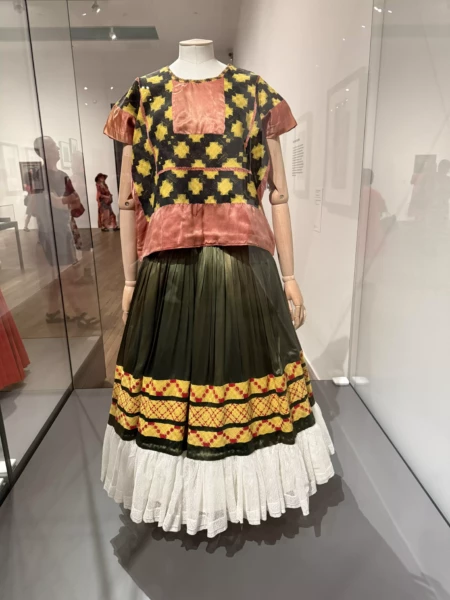
She adds: “We sought to show how she constructed her multifaceted identity. She was mestiza, an avant-garde artist, an intellectual and a devoted wife. But she was also bisexual and a political activist.”
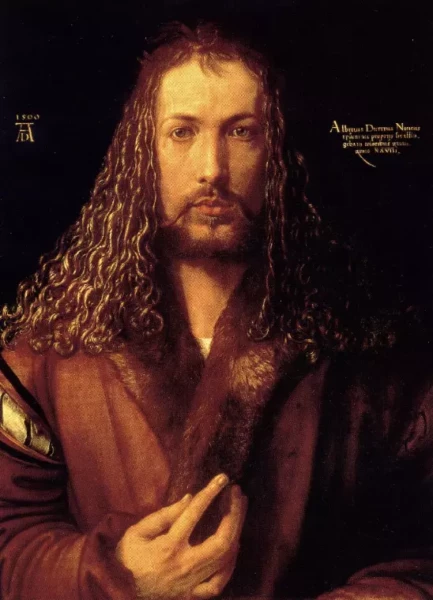
Like Dürer
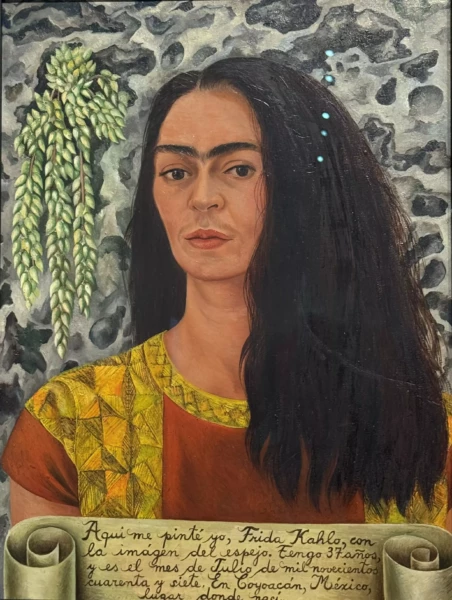
Frida would assert herself as an artist within the lineage of other great figures. In 1947, she portrayed herself with her hair loose, wearing traditional Mexican dress. The painting inevitably recalls a self-portrait dated 1500, now in Munich, by the great German Renaissance artist Albrecht Dürer, whose hair is styled in a similar way. Both accompany their likenesses with a declarative inscription: “Here I painted myself…”
the fan club
In the galleries devoted to her “fan club,” the comparisons are too often literal. The images turn Frida into a caricature, repeating the obligatory clichés: joined eyebrows, brightly colored dresses and elaborate chignons.
Julio Galan
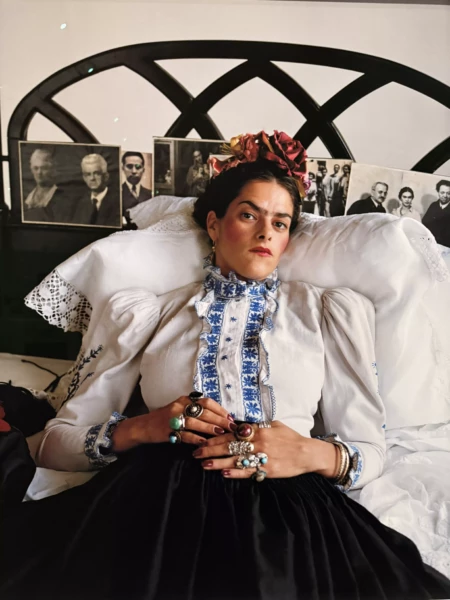
There are two major exceptions. The first is the portrait by Mary McCartney, of the English painter Tracey Emin, born in 1963, whose art is rooted in the staging of her own body and suffering. She is, incidentally, the subject of a retrospective on the same floor of the museum.
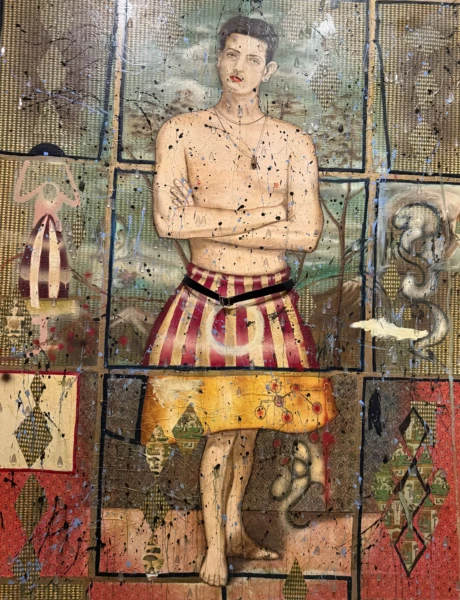
The other is a Mexican artist who was highly fashionable before his premature death: the fascinating Julio Galán (1958–2006). He made extensive use of self-portraiture, combining dreams, reality and symbols. One would have liked to see more of his work here.