Disenchanted Young people
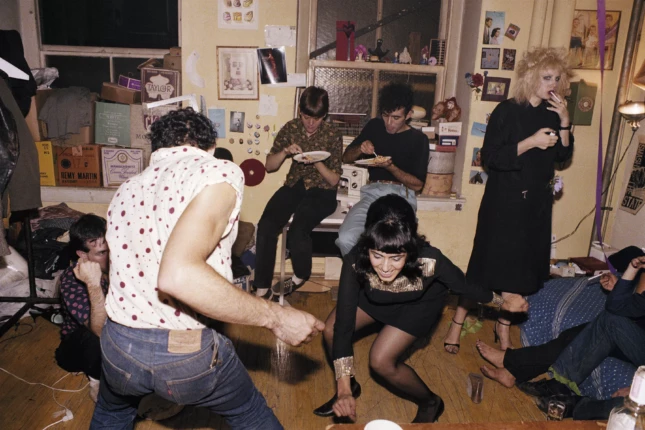
First and foremost, there are these beautiful, disenchanted young people. Their makeup is running. Their eyes are ringed with fatigue. They look like images of letting go at the end of a party. They are immortalized on the streets of a big city or in interiors that seem chaotic. It is a romantic vision, now dated, of the twilight of the twentieth century. The projected photographs unfold on a monumental scale against a range of musical backdrops. The audience watches the spectacle almost religiously. The music blares at full volume.
Grand Palais
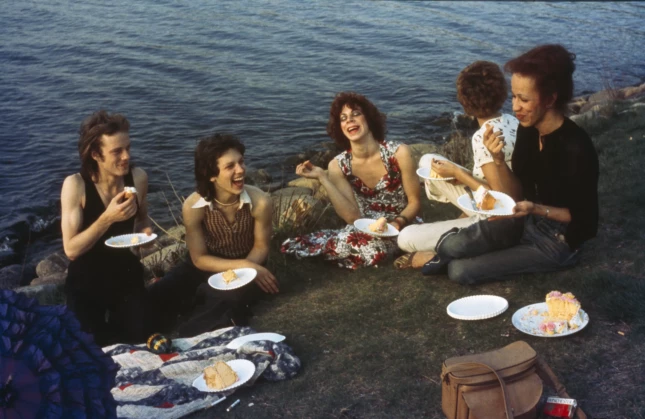
Through June 21, the Grand Palais invites us into the world of the American artist Nan Goldin (born in 1953). The installation, conceived as a sequence of projections housed in velvet-lined pavilions, each devoted to a different theme, was deftly designed by the architect Hala Wardé. But the show is misleadingly described as a “retrospective,” since Goldin first became known for her photographic prints.
Sustain Our Work with a Small Monthly Gift
Become part of the Judith Benhamou Reports circle.
Contribute, even from just €10
The Ballad of Sexual Dependency
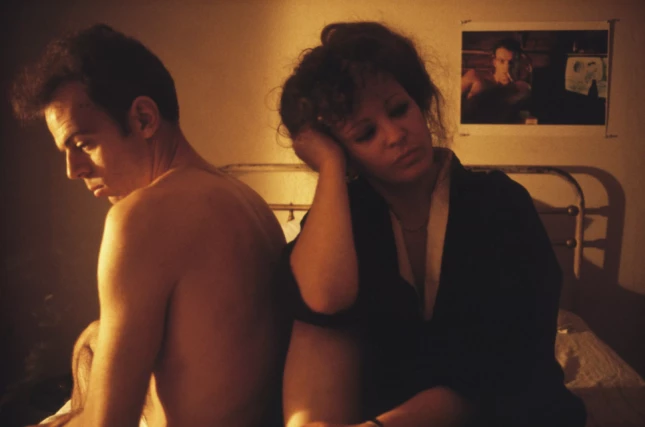
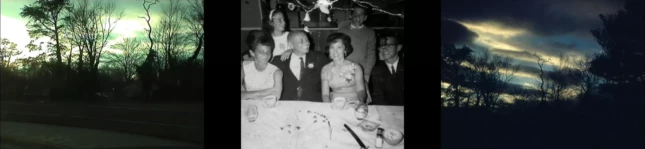
To be sure, she elevated the very principle of the slideshow set to music into a major art form. In 1981 she created her masterpiece, The Ballad of Sexual Dependency. These intimate scenes bring together some 700 portraits of people from her inner circle. The projected images, at times tender and at times raw, date from the 1970s through the 1990s. With each exhibition, Goldin revisits her iconographic and musical choices. And the experience remains hypnotic. In photographs that are deliberately rough and unpolished, she tells stories of physical and emotional love, but also of the arrival of AIDS, of death, and of pain. This is what one calls a cult work.
Sisters, Saints, Sibyls
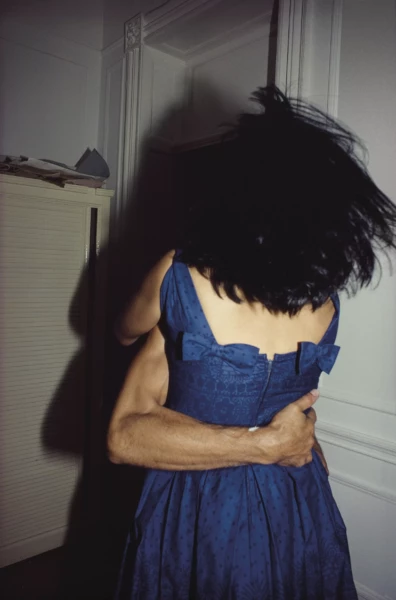
After that, Nan Goldin returned to the format many times, developing specific themes such as drug addiction in Memory Lost (2019–2021) or her transgender friends in The Other Side (1992–2021). One may regret that her other masterpiece, Sisters, Saints, Sibyls (2004–2022), which powerfully recounts how her sister Barbara was driven to suicide at the age of eighteen, is being shown far, at the Salpêtrière Chapel.
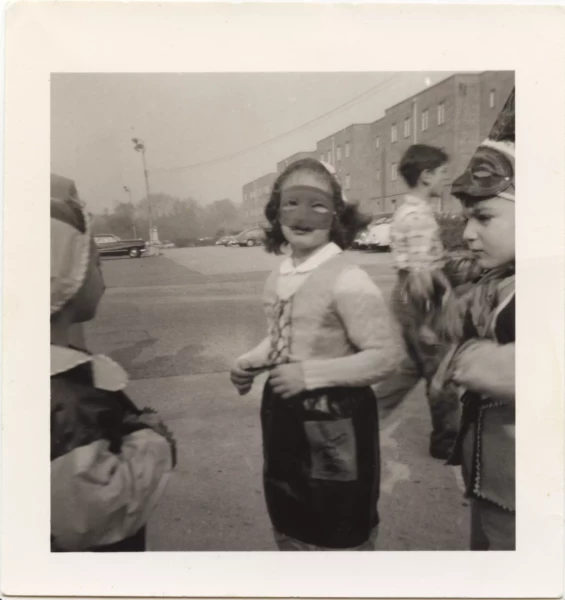
But it is located at the very place where it was first presented. It is a key work, and one that also helps us understand the younger sister’s rebellious spirit. On the other hand, fortunately for Paris, unlike the Berlin version of the exhibition, Goldin is not showing Fire Leap, the slideshow devoted to children, set to rather simplistic music, developed beginning in 2010.
exhausted creative corpus
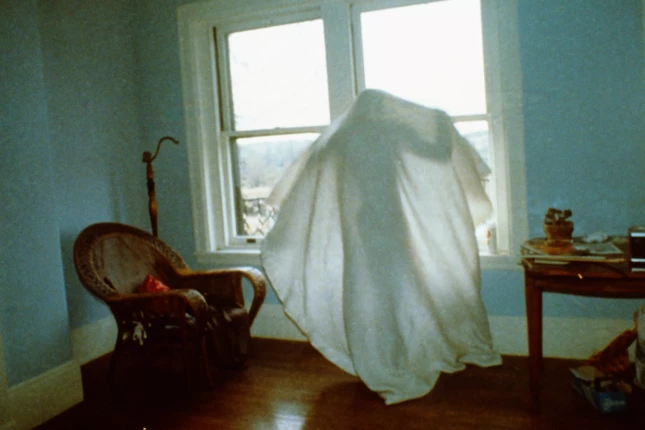
And then, moving quickly from one pavilion to the next, one notices that many of the images are repeated. Nan Goldin’s creative corpus is exhausted. She has become a master at promoting her past work.
Gaza
Her most recent creation, which appears neither in the booklet handed out during the visit nor in the press material, is a 2023 projection titled Gaza: Notes on a Genocide. It consists of appropriated photographs and videos. Whatever one’s political views, it must be said that here she confronts the viewer with images of staggering violence, including, among others, children buried beneath rubble, before dedicating the work to an animal-protection organization…Obsessed with death, she had until now expressed her power through allusion. She had known how to avoid, for example, showing the severely disfigured bodies of AIDS patients in their final hours.
political activist
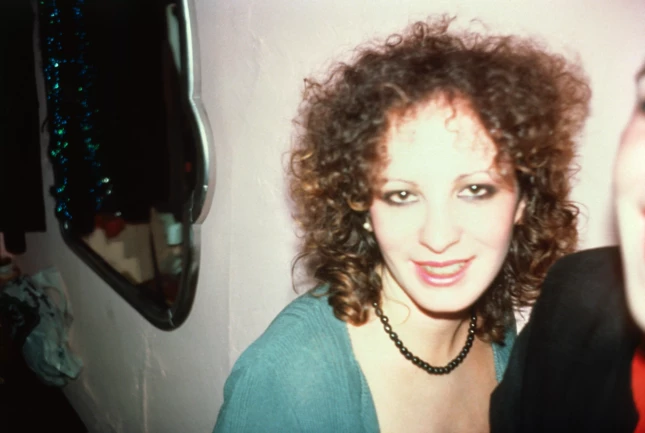
As Laura Poitras’s recent documentary on Goldin showed(1-, she is now above all a highly effective political activist in her campaign against opioids.
controlling her work
Once so free, Goldin has now become highly sensitive to the issue of controlling her work to an extent rarely seen. No photography is allowed anywhere in the exhibition. Needless to say, it was also forbidden to film the exhibition. And in the run-up to the show, she granted interviews only to journalists whose articles she was allowed to read and correct.
(1) All the Beauty and the Bloodshed. 2022.