positive signals
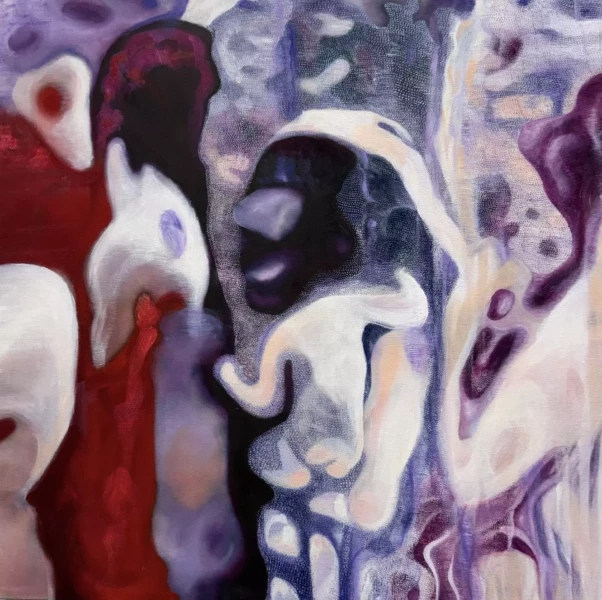
Desire, politics, and the economy: these are the three factors shaping the art market in this particularly turbulent moment. The economy, the driving force is the material capacity to buy. National and international politics also create—or fail to create—the psychological conditions favorable to the apparently superfluous act of buying art. It is fair to say that lately, almost everywhere in the world, those first two factors have not exactly encouraged acquisitions. And yet, against all expectations, the modern and contemporary art sales in London in February and the TEFAF Maastricht fair sent positive signals.
desire
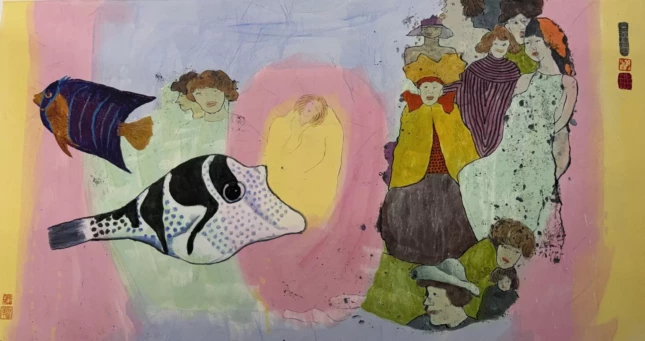
Then there is desire. In the modern and contemporary sector, it still seems very much alive. How can this be explained? First of all, because contemporary art, so much in vogue today, is associated with the idea that it somehow explains our highly complex era.
Sustain Our Work with a Small Monthly Gift
Become part of the Judith Benhamou Reports circle.
Contribute, even from just €10
The main function of modern and contemporary art fairs is to generate desire. From March 27 through 29, Hong Kong is hosting the most important fair in Asia. Art Basel Hong Kong seeks to multiply the possibilities of desire through its 241 exhibitors.
Vincenzo de bellis
“To me, desire in art is tied to scarcity. And there are now so many fairs around the world that truly rare offerings are very hard to come by. We have chosen to make this an extremely curated event. We are presenting things you do not see elsewhere,” says Vincenzo de Bellis, Art Basel’s global director, who applies a rigorous selection process focused on the content of each booth.
decline in transactions
ABHK’s impact is felt primarily across Asia and Australia. The principle is simple: bring the world’s galleries to Hong Kong.
For several years, this “special administrative region” of China floated on the euphoric tide of the market, with galleries setting up permanent spaces in what was effectively a free port. But the party is over. By all accounts, mainland China is suffering from an acute real estate crisis, and liquidity is becoming increasingly difficult to move out of the mainland. All of this has led to a decline in art transactions. Multinational galleries such as Pace, Lévy Gorvy Dayan, and Perrotin—which is planning to reopen in another location—have closed in Hong Kong. And yet Hong Kong still ranks third worldwide in auction turnover in 2025, with 14.5 percent, according to the Mishcon de Reya and ArtTactic report.
Kontempo in Manila
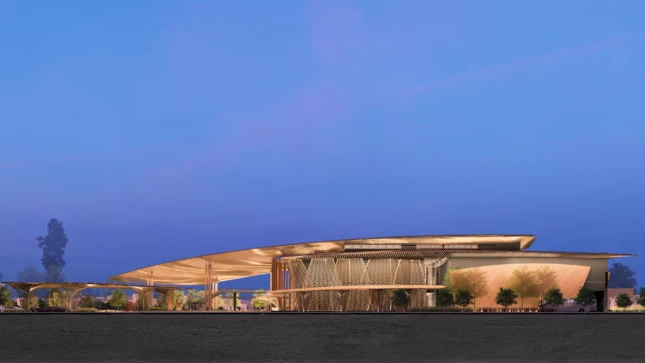
The region is also continuing to develop museum projects, though in a less spectacular form than in the past. At the end of 2028, Kontempo is set to open in Manila, a state-of-the-art contemporary art center in a building designed by the much sought-after architect Kulapat Yantrasast—who was also been chosen, among other things, to design the future Byzantine and Roman department at the Louvre. The project, funded by the Zóbel de Ayala family, which heads one of the Philippines’ largest conglomerates, does not, however, include the acquisition of artworks.
Rong museum in Shenzen
By the end of 2027, an ambitious museum is also expected to open in Shenzhen, in China’s Silicon Valley—just fifteen minutes by high-speed train from Hong Kong: the Rong Museum of Art, financed by Tenova Future. That company, like Tencent, the Chinese tech titan, was founded by one of the key figures in the Chinese business world, Ma Huateng. The museum’s director, Pi Li, explains: “We will begin acquisitions once our program is firmly established. We are not acting like other museums that build their collection before they even know what their exhibitions will contain.”
Nicole Eisenman
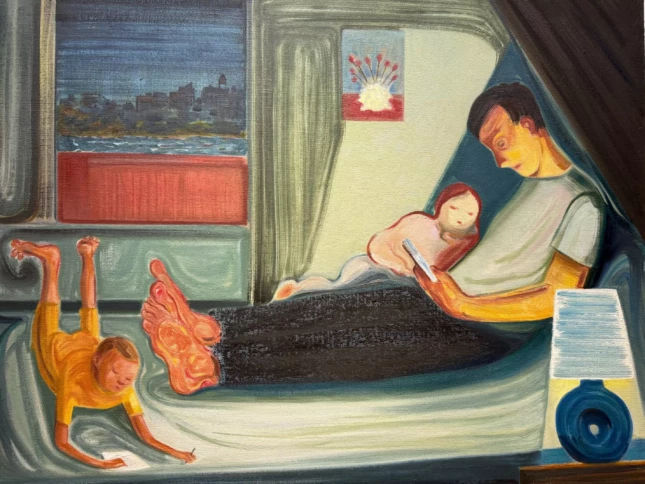
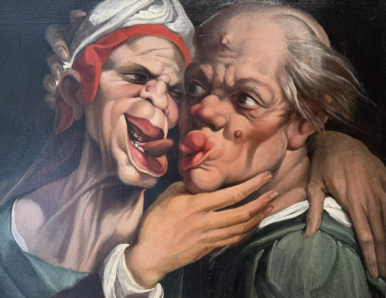
A private Chinese dealer confides: “My clients no longer want to buy young artists. They are looking for safe bets.” The market is responding perfectly to that demand. Prices, however, are not trending downward. Hauser & Wirth, for example, is presenting in its Hong Kong space works by the American Nicole Eisenman (born 1965). Long before the current craze for a kind of figuration oscillating between the naïve and the grotesque, she was already painting in that vein. Her works are selling for as much as $600,000.
Yan Pei Ming
The Franco-Chinese artist Yan Pei-Ming (born 1960), who lives in Dijon, may be seen as a chronicler of contemporary history through his often monochrome figurative painting. His work is currently the subject of an exhibition in Guangzhou at the private He Art Museum.
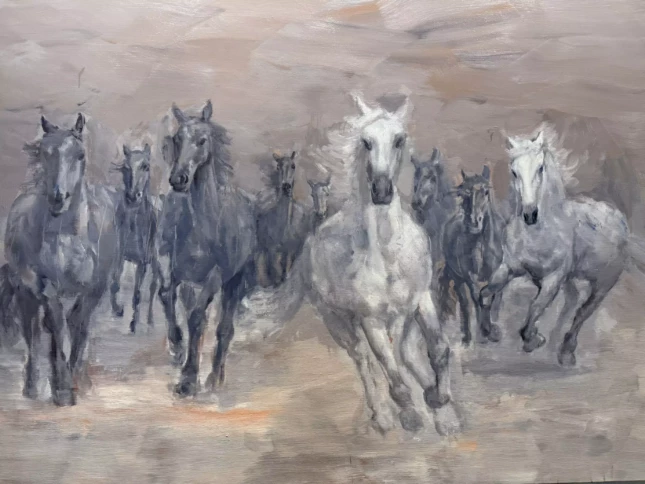
At the fair, one of his large canvases celebrating the Lunar New Year—2026 is the Year of the Fire Horse—depicting horses in full gallop in tones ranging from gray to violet, is being offered on Massimo De Carlo’s booth for €320,000. “I wish us a year like these horses, a year of freedom,” the artist comments.
Cui Jie
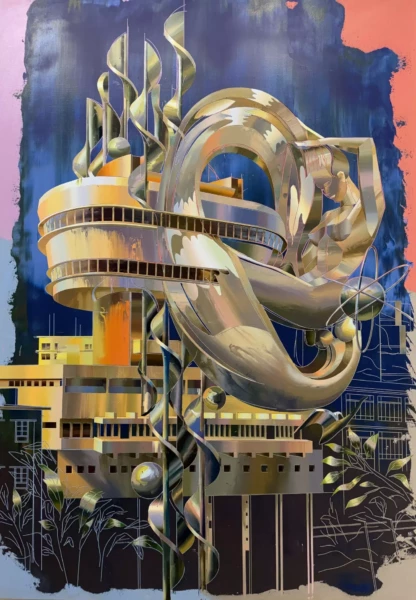
Among the global contemporary names of Chinese art is Cui Jie (born 1983). Her paintings are currently on view, among other places, at the New Museum in New York, which reopened on March 21, 2026, with the exhibition New Human: Memories of the Future, featuring her paintings of futuristic Chinese urban architecture. “Architecture shapes the way we experience daily life,” the artist explains. She creates anxious, labyrinthine environments in sharply contrasting tones. Her works are selling on Pilar Corrias ‘booth for $100,000.
Deekay
In ABHK’s new section devoted to digital art, the specialized American gallery AOTM is presenting a large-scale video by the Korean artist DeeKay. It shows a multitude of animated figures crossing paths in the city without speaking to one another, each absorbed in intimate thoughts. The unique work is priced at $150,000. The Honk Kong Tourism office commisioned a similar video from him, which is shown right in the center of the city, at Statue Square.
Lauren Tsai
A little farther on, Perrotin is unveiling an installation by Lauren Tsai (born 1998), a young Chinese American artist who has recreated her teenage bedroom at full scale. Its heroine appears there beheaded. Between cuteness and cruelty, an other stark expression of distress. Her paintings are priced at $50,000.
Tracey Emin
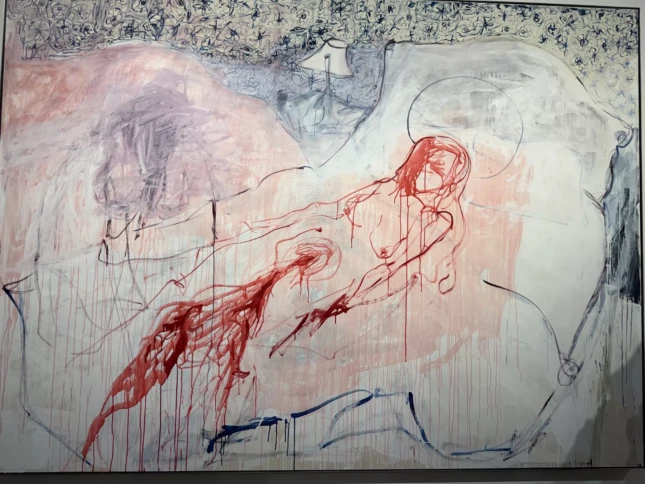
But the most famous bedroom by a contemporary artist is that of Tracey Emin (born 1963), now visible in the retrospective devoted to her at Tate Modern in London. In Hong Kong, on the White Cube booth, one of her recent paintings tells, somewhere between abstraction and figuration, the story of the artist’s physical suffering, now that she is ill. It was sold to an Asian collector for £1.2 million as soon as the fair opened.“
Yes, in times like these, people are still buying art. And that is a miracle,” concludes the gallery owner Massimo De Carlo, who is not unhappy either with ABHK’s first transactions.