Half of Humanity
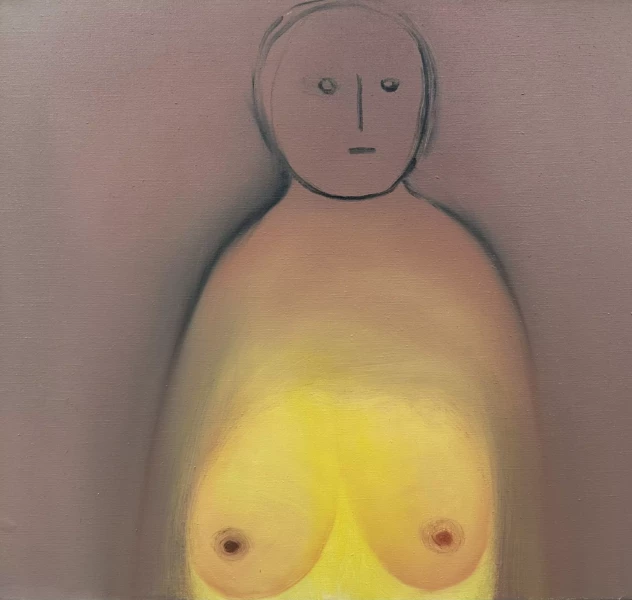
The Swiss artist Miriam Cahn (born in 1949) has gained an international reputation through her figurative paintings in vivid colors, animated by raw, direct messages that deal above all with women. In forms that might be described as deliberately archaic and fluid — water runs through the color — she shows naked bodies speaking of what is seldom spoken about: the suffering and the everyday reality of half of humanity, from rape in wartime to childbirth or simply having one’s period. These works are often executed on a large scale on paper, like flashes of lightning.
The body as an instrument
“I am very concentrated. Completely into the work. It lasts an hour or two. I use my body as an instrument. It is a performative moment.” Miriam Cahn learned this aspect of her practice, painting experienced as performance, in her youth, when performance reigned supreme, as opposed to painting, which seemed to have no future. This revelation came in a place she often frequented in Basel, the Stampa gallery. By coincidence, she now lives in the mountains in a village called Stampa in the canton of Graubünden.
Sustain Our Work with a Small Monthly Gift
Become part of the Judith Benhamou Reports circle.
Contribute, even from just €10
Another coincidence: it was in this very place that the illustrious sculptor Alberto Giacometti spent his youth. Because it lies in a narrow valley, the village sees no sun for four months of the year. A paradox for an artist who works with such raw color. “That is true, but I adore Stampa’s violet light.” It is also from here that she keeps abreast of world events and gives form in her painting to humanity’s open wounds. She perceives suffering and fear not through social media — she refuses that kind of connection — but through her attentive reading of three newspapers every day, along with television. Miriam Cahn is a painter of contemporary history. She speaks of some of her admirations, above all the Spaniard Francisco de Goya, who, among other things, depicted The Disasters of War, and the American Philip Guston, who mercilessly mocked the Ku Klux Klan and the president of his day, Richard Nixon, as could recently be seen in an exhibition at the Musée Picasso in Paris. “To put it simply, I do not illustrate what is happening; it is what is happening that comes to me.
Palais de Tokyo
And yet, in May 2023, during the retrospective devoted to her at the Palais de Tokyo in Paris, one of her canvases, Fuck Abstraction, depicting a scene showing one person kneeling before another, with an erect penis, and associated with the broader context of the horrors of war, was vandalized by a former elected member of the Front National (far right) on the pretext that it was an image of child abuse. The media impact was enormous.
The work was not removed. The exhibition was not closed. The French courts decided otherwise.
Galerie Jocelyn Wolff
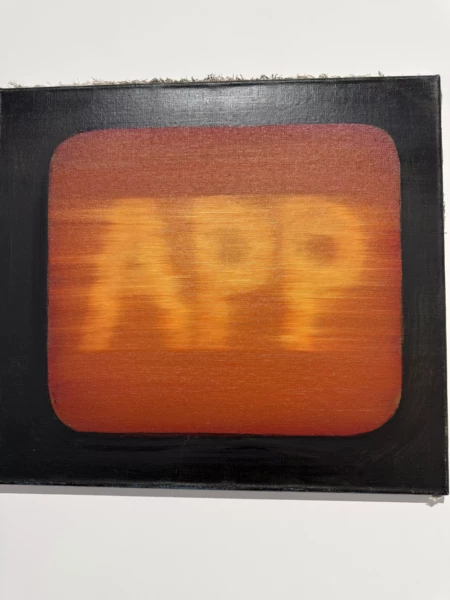
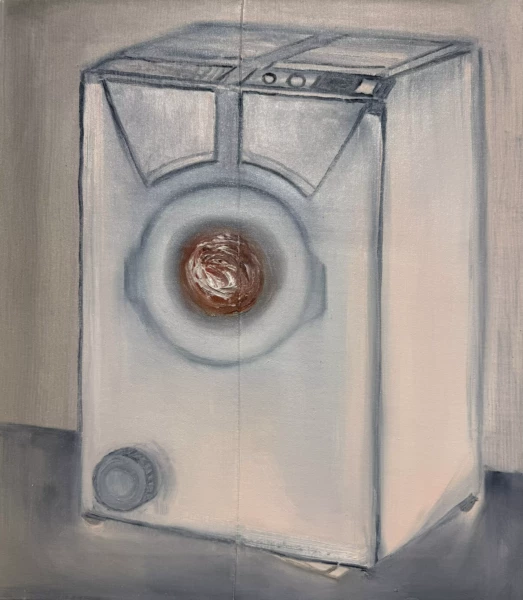
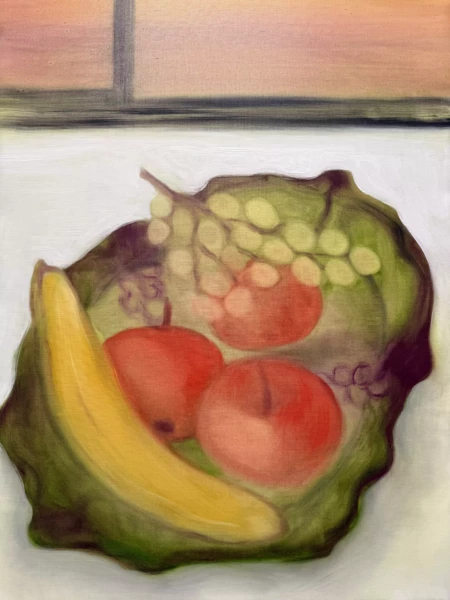
But today there has been an upheaval in Miriam Cahn’s mode of expression. In the vast new exhibition devoted to her at the Paris gallery of Jocelyn Wolff, on view through April 25 and titled Still Leben (Still Life), a dramatic turn has taken place. The bodies are gone. The nudes are no longer there. And yet today, in the world, wars rage more than ever. Destruction and suffering do too. Miriam Cahn, the spokesperson for history as it unfolds, offers no answer.
Then I went back to my valley
She explains: “In the Palais de Tokyo affair, it was not me they were targeting but the institution. We reacted well. There was that painting called Fuck Abstraction. It showed a man whose torso and erect penis could be seen, painted in an almost naturalistic way. The head was simply a laughing circle. A small figure painted in a ‘primitive’ manner had the penis in its mouth. The curator, Emma Lavigne, produced a great deal of didactic information about the exhibition. Then I went back to my valley and said to myself: ‘My role is not to fight on behalf of people who want the good, who defend freedom of expression, for example.’”
A new Page
Miriam Cahn does not want to be identified, in her art, as the standard-bearer of a political cause. As an artist, she refuses to confine herself to a political role.“I want my work to remain open.” So in Paris, in her new exhibition at Jocelyn Wolff, she is turning a new page. “First I had a dream. A cardboard door opened. In the morning I said to myself: now I am going to do something different.
Housework
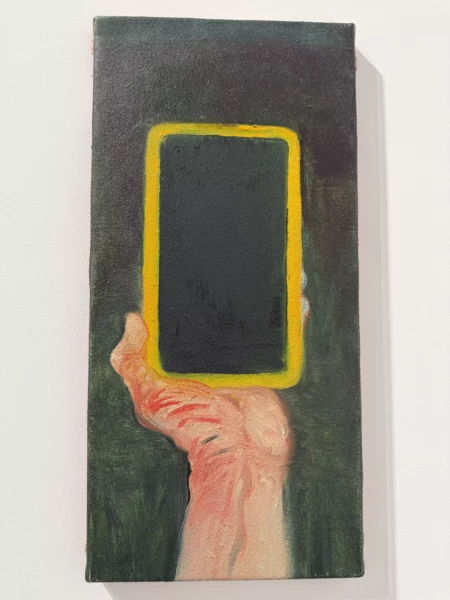
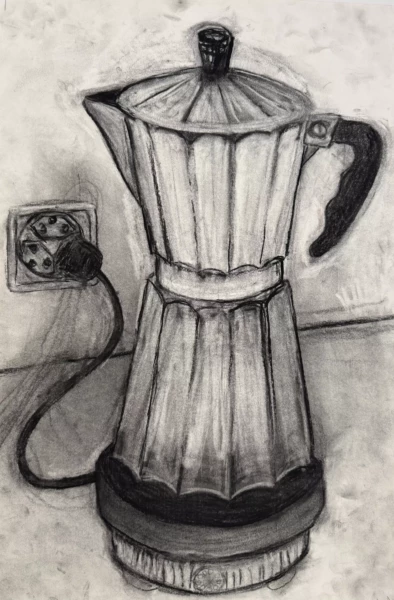
I made 174 works that were to be hung chronologically over 120 meters: drawings, paintings. I wrote my thoughts on them. I exhibited them at my Berlin gallery, Meyer-Riegger. In Paris I am showing ‘housework.’ All those objects we use every day. Besides, it is people of the second sex who do the housework. These ordinary objects are rarely addressed in art. I knew that one day I would have to change. I knew I was finished with those bodies. I had been painting them since 1995.”
Emma Lavigne
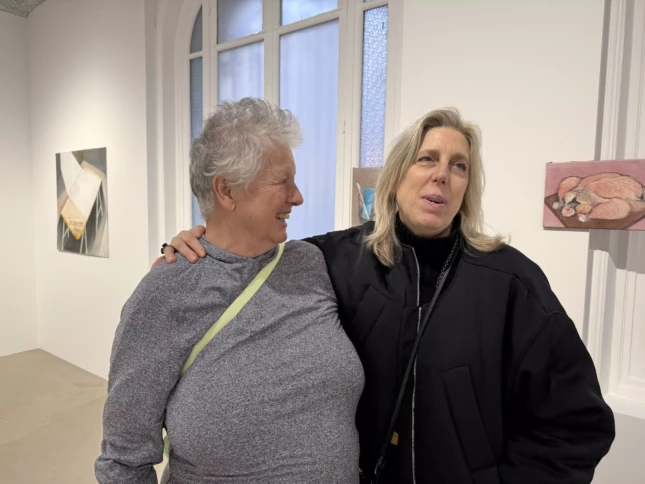
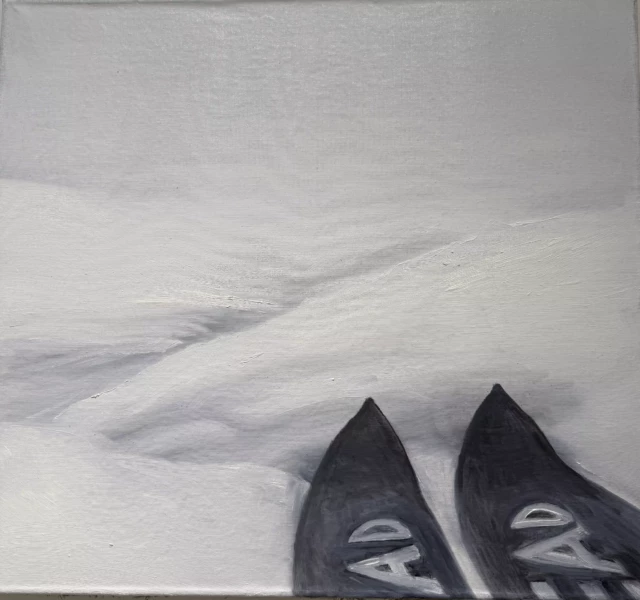
Emma Lavigne, now director of the Pinault Collection, appears in the exhibition and observes, quite rightly, “you can feel the bodies behind the objects depicted.” The palette and the style remain the same. There are those pieces of skis against a monochrome white mountain background.
Philip Guston’s purples
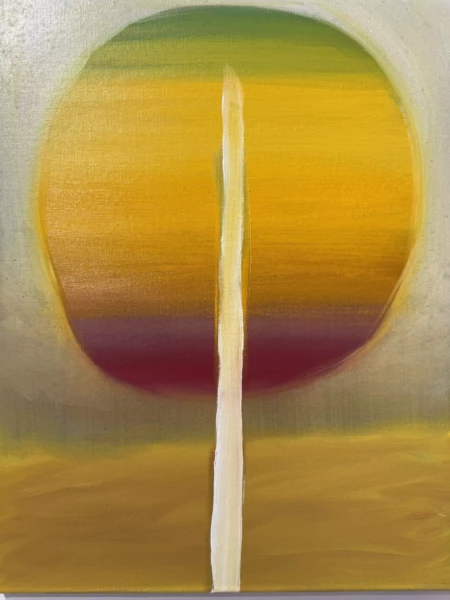
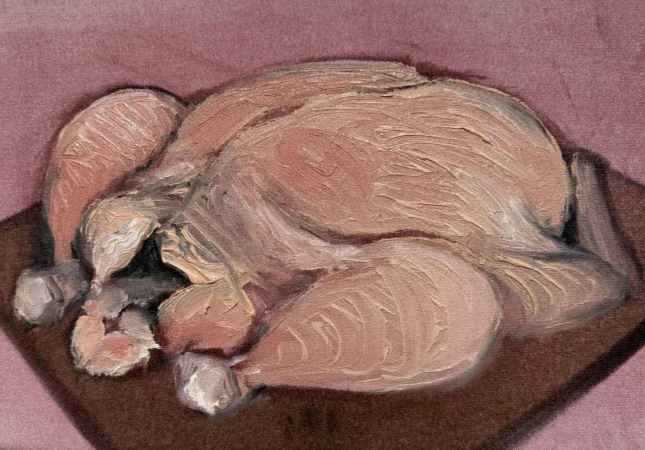
There is a roast chicken that reprises Philip Guston’s purples, a vivid orange tulip, a snow shovel in the same tones, or the portrait of the black-and-white Italian coffee pot she uses every day. The artist concludes: “Migrants, all displaced people, leave with all these everyday objects.” Even as the page is being turned, Miriam Cahn cannot help but once again draw a link between her work and current events. A calmer kind of painting. Less visceral. A painting of another contemporary history.