Flourishing situation
On the map, its position does not look particularly enviable. Uzbekistan’s capital, Tashkent, lies only about 1,700 kilometers as the crow flies from Tehran, and a little more than twice that distance from Kyiv and Moscow. Yet the echoes of war are imperceptible here. The situation in this former Soviet republic, which has a Muslim majority, is in fact flourishing: GDP growth reached 7.7 percent in 2025, and the country has substantial resources, not only in gold but also in gas.
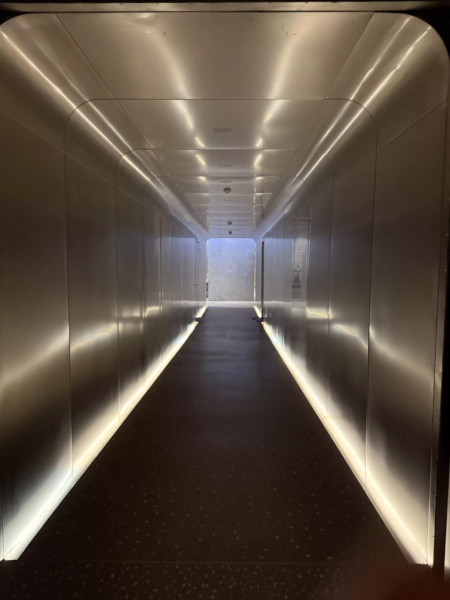
Welcome to a Central Asian capital with major cultural ambitions. The familiar saying that “art follows money” finds a new illustration here, backed by a clearly articulated vision.
Sustain Our Work with a Small Monthly Gift
Become part of the Judith Benhamou Reports circle.
Contribute, even from just €10
World Heritage
Tashkent is a pleasant, spacious city whose center is made up of broad, tree-lined avenues. Most of its buildings were constructed after 1966, with help from Moscow. That year, a powerful earthquake destroyed almost the entire city. The result is an important body of remarkable architecture.
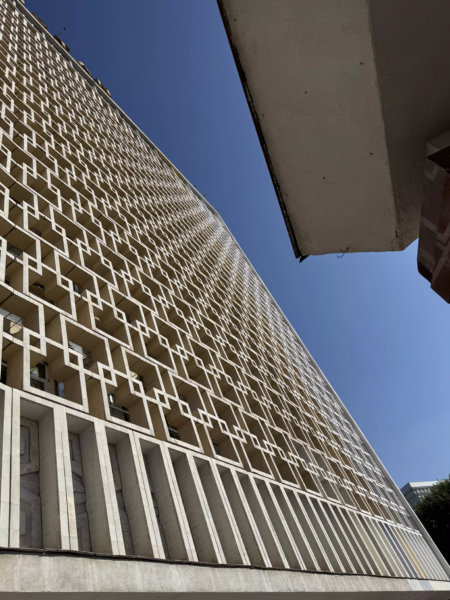
UNESCO clearly acknowledged its significance in 2026 by adding ten modernist buildings to the World Heritage List. They tell the story of a particular moment in socialist architecture, marked by a pronounced taste for repeated geometric patterns. Among the most striking examples are the colossal, stripped-down façade of the Hotel Uzbekistan and the former Lenin Museum, now the State Museum of History of Uzbekistan.
Gayane Umerova
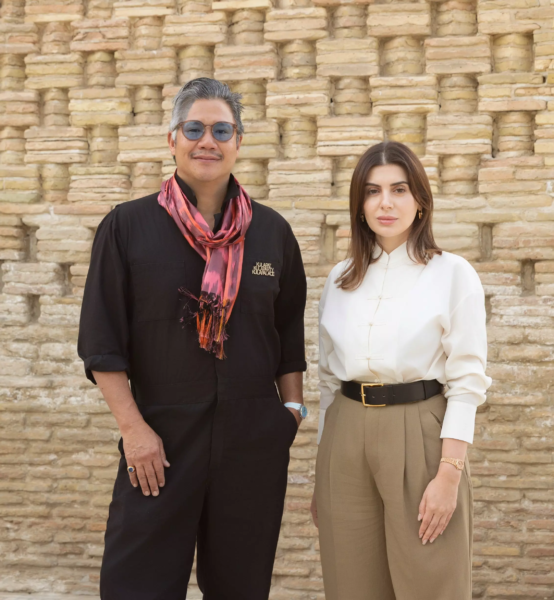
This recognition of the importance of the country’s architectural heritage did not happen by chance. It is the result of a broader strategy developed by a young Uzbek woman named Gayane Umerova. Today she can be seen at major contemporary art events around the world, from the Venice Biennale to Art Basel Qatar. She cuts the figure of a thoroughly contemporary executive.
A mother of three who studied art in London, she heads the department devoted to the creative economy and tourism within the administration of Shavkat Mirziyoyev, the country’s president since 2016. She also has the ear of his daughter, Saida, a key figure in the regime who herself heads the presidential administration.
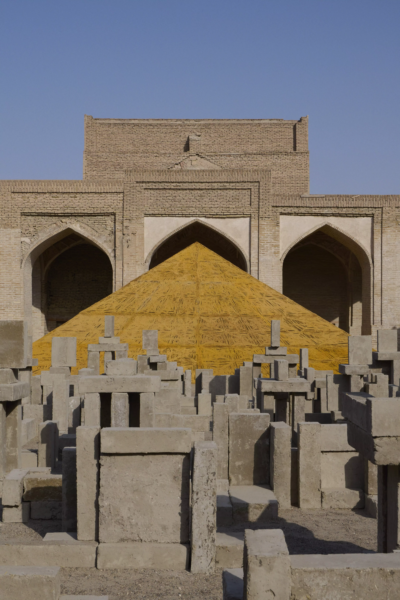
It was Gayane Umerova who orchestrated the launch last year of the Bukhara Biennial, based on an original model. All of the works were produced locally in collaboration with regional craftspeople — the promotion of traditional know-how is a major priority here — including an installation by the British sculptural superstar Antony Gormley.
tadao ando
It was spectacular: Gormley conceived 104 clay figures for the remains of a 16th-century mosque. The much-anticipated next edition, in September 2027, will be directed by Kulapat Yantrasast, an architect who has become omnipresent on the international contemporary art scene.
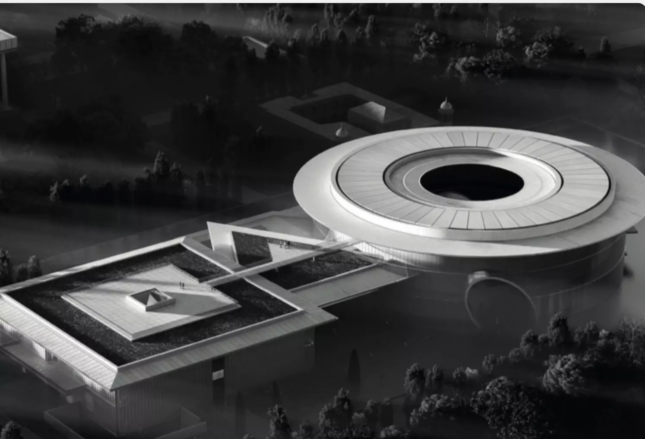
What the country still lacked, however, was a major museum built to international standards and capable of hosting blockbuster exhibitions. That gap should be filled in March 2028, when the National Museum of Uzbekistan, designed by Japan’s best-known architect, Tadao Ando, is scheduled to open.
The 40,000-square-meter complex will consist of three buildings inspired respectively by the square, the triangle and the circle. The project, which promises to be exceptional, will house local collections, including Soviet modern art. International acquisitions are also planned.
Centre for Contemporary Arts
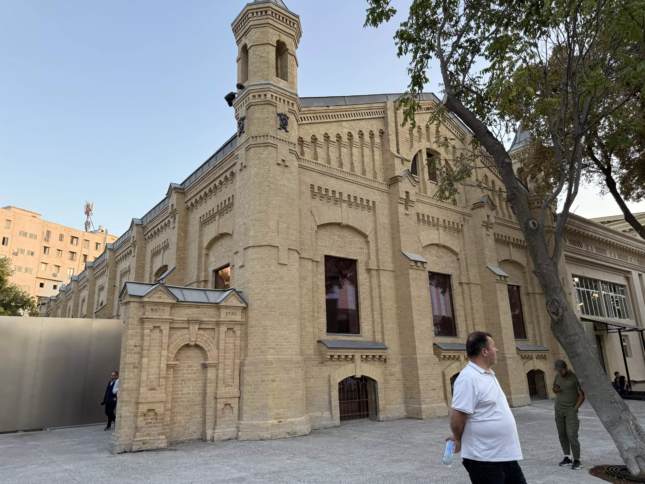
In the meantime, on September 4, 2026, in central Tashkent, Gayane unveiled her latest creation: the CCA, the Centre for Contemporary Arts.
The opening drew leading figures from the art world, from Laurent Le Bon, president of the Centre Pompidou, to Zelfira Tregulova, the former director of Moscow’s Tretyakov Gallery, as well as Sheikha Al Mayassa bint Hamad Al Thani, who oversees culture in Qatar.
The city’s former diesel power station, a 1912 building, has been masterfully transformed by the French architects Karl Fournier and Olivier Marty of Studio KO. The pair made their name with the Yves Saint Laurent Museum in Marrakesh.
studio ko
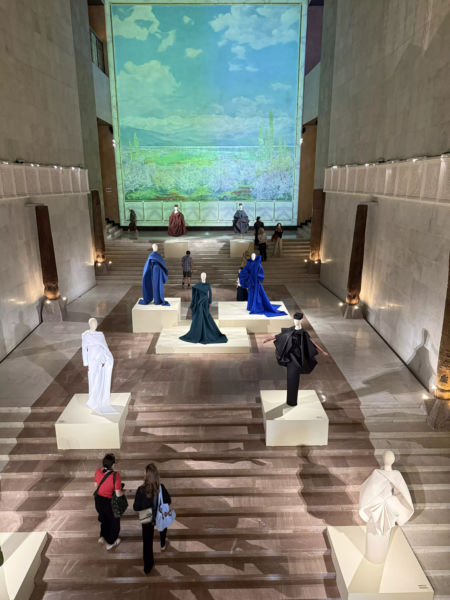
Here, the magic of the project, conceived almost like a jewel box, lies in the shifting atmosphere from one space to another. The largest room, originally used to store diesel, has been treated in a deliberately raw manner, with exposed brick walls and large openings.
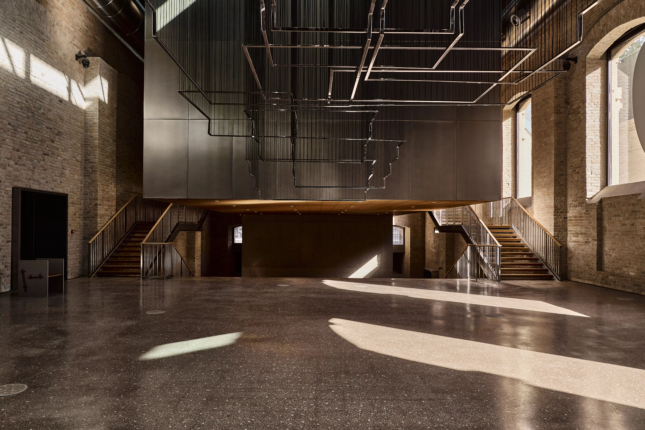
The monumental entrance and staircases are entirely covered in terrazzo, a material made from fragments of stone that was widely used during the Communist era. The restaurant, by contrast, adopts an Art Deco style of extreme refinement.
“We didn’t want a white space like the ones you usually find in the contemporary art world. We hate fashionable things. We want this to last for centuries,” Olivier Marty insists.
sara raza
The curator of the opening exhibition ans artistic director of the institution, Sara Raza, praises Studio KO’s work: “The CCA’s first exhibition is first and foremost a tribute to the architecture of the building.”
Indeed, the spaces are almost empty. Only ten artists are on view. The next exhibition, however, opening in March 2027, will have an entirely different spirit, when the center will be taken over by the Russian-born American artists Ilya Kabakov (1933–2023) and Emilia Kabakov (born 1945).
emilia kabakov
Their installations and paintings draw much of their visual language from life under Soviet Communism.
“This is our moment in contemporary art,” Gayane Umerova explains. “Today we need to create a context in which contemporary work can be shown. Our priority is not to collect. In fact, we haven’t even planned storage space for art. We want to commission artists, exhibit them and collaborate with other institutions. The works that emerge from these projects will become our ambassadors around the world. We want to create an art ecosystem.”
This broad policy of supporting contemporary art as a form of cultural diplomacy is beginning to bear fruit. Local talents are emerging on the international scene, among them the video artist Saodat Ismailova.
Born in Tashkent in 1981, she received Art Basel’s emerging artist gold medal in 2025. Her work is now on view at Luma Arles through January 10, 2027, and at the Kunsthalle Bern in Switzerland through November 22.
But it was her native city that had already given her a retrospective in 2019, in what was then the forerunner of the CCA.