












The grotesque and Picasso
In the vast landscape of exhibitions devoted to exploring the work, life and habits of the greatest painter of the 20th century, Pablo Picasso, there is one obvious subject that had never been tackled: the grotesque. The pretext of the Cubist form is not enough to justify all these distortions, all these caricatures that even strike the women he loves. Picasso takes great delight in caricaturing his world. It took the Musée Picasso in Paris presenting “Philip Guston, The Irony of History”, on view until 1 March, for our eyes and minds to be opened.
Pablo Picasso
Didier Ottinger
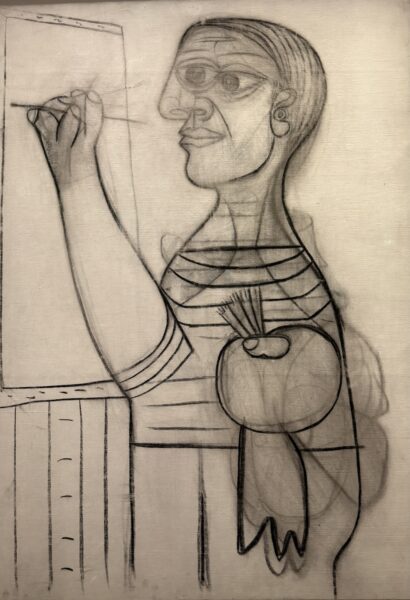
For Didier Ottinger, co-curator of this powerful show, the idea of a carnivalesque image runs through Picasso’s work: “You can already see it in 1907, when Picasso painted Les Demoiselles d’Avignon. Félix Fénéon, who at the time was one of the very best art critics, visits his studio and says to him: ‘Young man, you should certainly draw caricatures.’ He was right. He sensed that the grotesque was in his painting—this very element that makes it possible to take the step toward modern art, abstraction, and so on.”
Mocking the dictator
Pablo Picasso
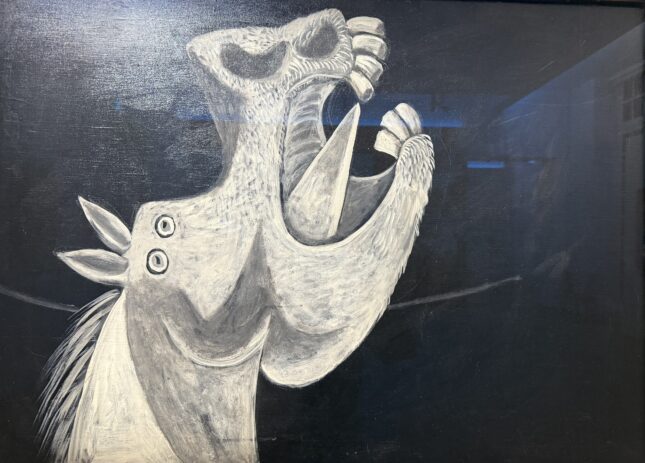
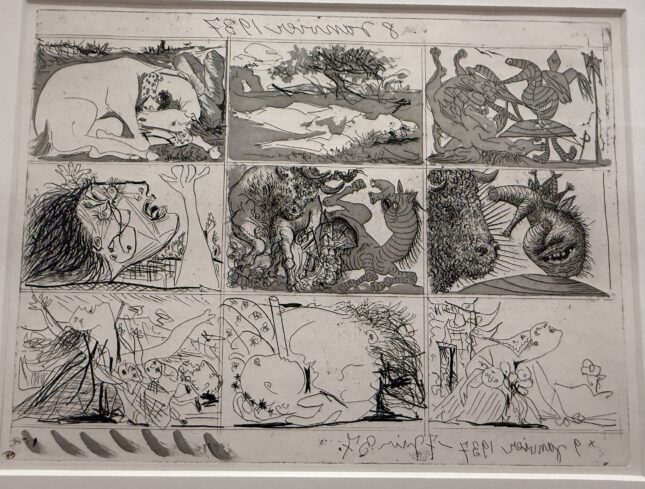
At the Musée Picasso, the narrative begins in 1937, when Pablo, mocking the dictator then in power in Spain, produced a series of etching plates entitled Songes et mensonges de Franco (Dreams and Lies of Franco), which would be shown in New York. A young American painter in the making, Philip Guston (1913–1980), saw them—just as, in 1939, he saw the famous painting Guernica, the fresco of grief over the massacre in the small Basque town, as it toured the United States. The ensemble would have a profound influence on him.
Pablo Picasso
Virtuoso figurative
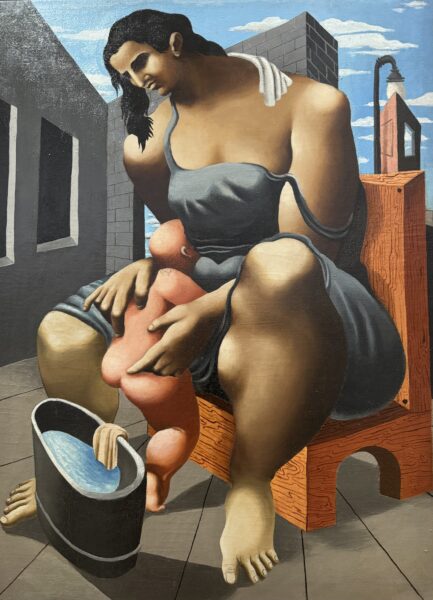
The Paris exhibition brings together 80 works that sketch, briefly but effectively, Guston’s different periods. He is first driven by a virtuoso figurative verve with humanist themes, as in his Bombardment of 1937—an extraordinary, round painting, distorted like an anamorphosis. In 1947, in New York, he enters an abstract period, that of Action Painting, alongside Pollock and de Kooning. It comes to an end in 1969 with his return to figuration.
Philip Guston
Dark Pink
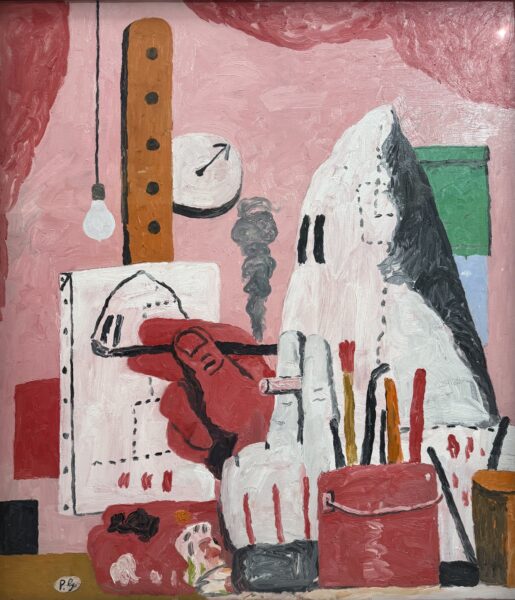
He then develops an extraordinary iconography that will sharply isolate him from the purists of abstraction. An heir to comic strips, he practices the grotesque through subjects that are often politically engaged, or through the depiction of deliberately banal themes. All of it bathed in a dominant dark pink—a tone Didier Ottinger calls “burlesque” in painting.
Philip Guston
Philip Roth
Philip Guston
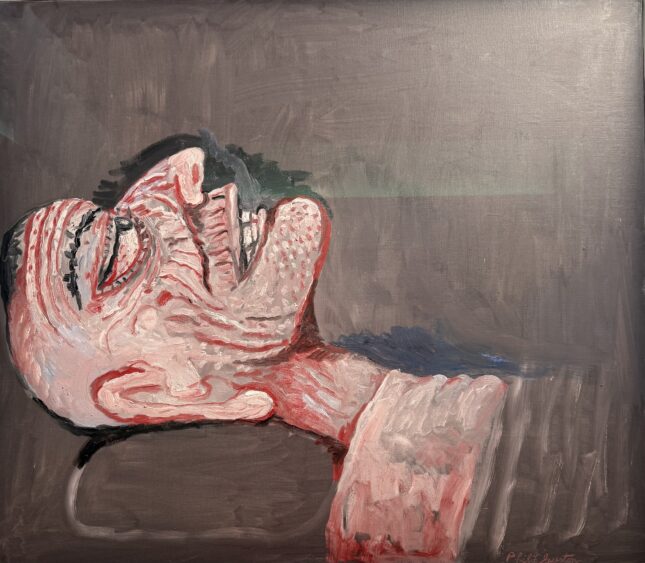
It is during his forced quarantine in the countryside around Woodstock that he meets another Philip, the writer Roth—equally isolated—whose 1971 book, a critique of the Nixon years, Our Gang, Guston illustrates. Here the reference to Picasso enters the picture, since Guston then draws inspiration from the Málaga master’s 1937 plates.
Thunderous grimaces
From that point on, Guston’s paintings become thunderous grimaces at American current affairs. As early as 1968, figures wearing white hoods begin to invade his canvases. These “little bastards”—a term used in the catalogue, apparently by Guston—represent the worst side of humanity. These Ku Klux Klan men, whom he chronicles across painting after painting, stand out for their ridiculousness, even when they play the role of the artist in his studio. They unfold, as always with Guston, in warped, glowing red worlds.

Philip Guston
President Nixon
Philip Guston
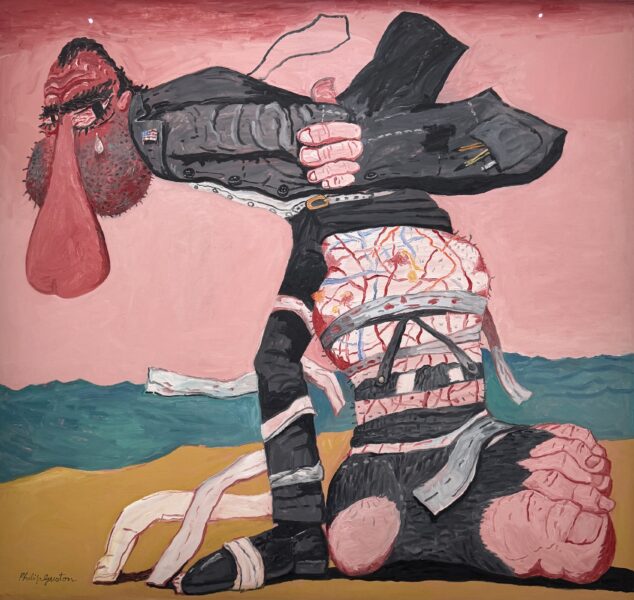
In 1975, the painter makes a portrait of President Nixon in disarray after the Watergate scandal: suppurating flesh from a diseased leg, a nose that resembles a phallus… It is impossible to do more grotesque in order to figure the misery of the man of power toppled from his pedestal. It is the masterpiece of the exhibition.
No fewer than two great masters of 20th-century art, show us that the grotesque is a weapon of mass destruction in periods of political chaos.
Through 1 March. Musée Picasso, Paris .
Support independent art journalist
If you value Judith Benhamou Reports, consider supporting our work. Your contribution keeps JB Reports independent and ad-free.
Choose a monthly or one-time donation — even a small amount makes a difference.
You can cancel a recurring donation at any time.