two famous japanese artists
Just as Japan has lost its most famous contemporary artist, Yayoi Kusama, who died at 97 on 14 August 2026, Sotheby’s is preparing to celebrate the man who was arguably the most internationally recognized Japanese modern painter: Tsuguharu (Léonard) Foujita (1886–1968). Beyond their origins, the two artists share several traits: both spent long periods abroad, both embodied a singular kind of radicalism, and both left behind a substantial body of work.
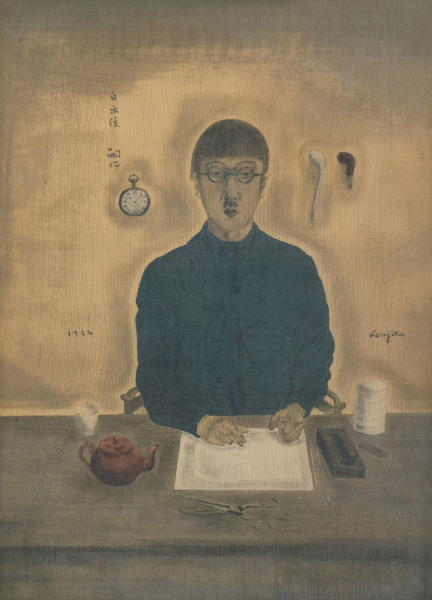
Kusama transformed her mental-health problems into something close to a creative asset, to the point of living year-round in a psychiatric hospital while continuing to produce art on a massive scale. Foujita, in an entirely different register, painted throughout his life, moving from one style to another as time and circumstances changed.
Sustain Our Work with a Small Monthly Gift
Become part of the Judith Benhamou Reports circle.
Contribute, even from just €10
second life
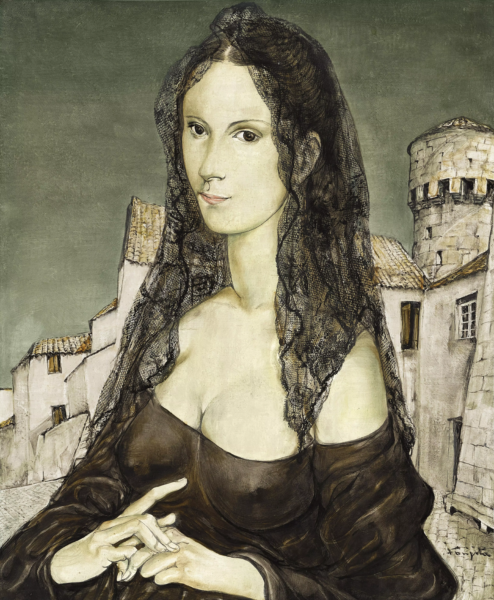
In 1955, he began what might be called a second life. That year, he became a French citizen. Four years later, increasingly mystical, Tsuguharu converted to Catholicism in Reims. At his baptism, he took the name Léonard, in homage to Leonardo da Vinci.
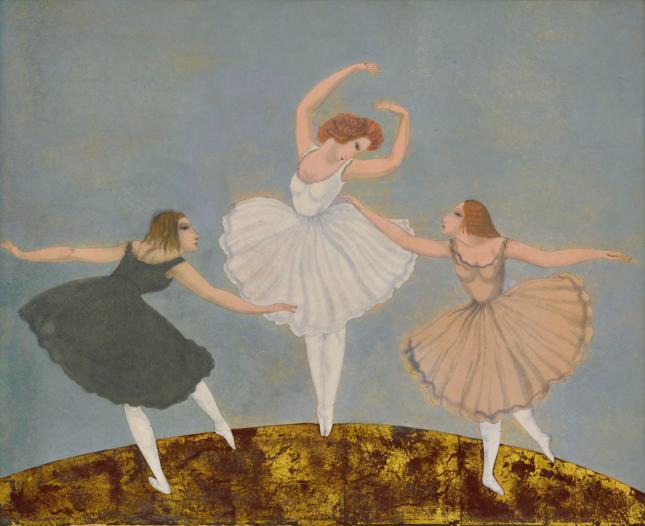
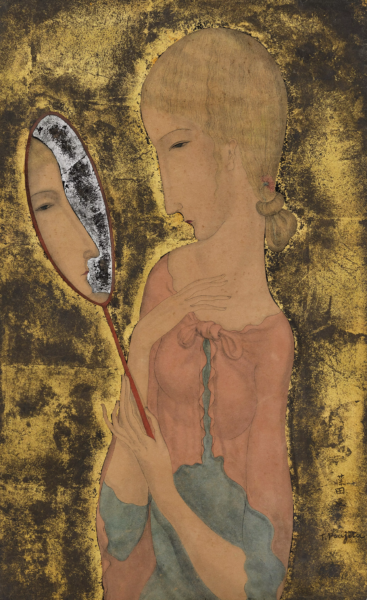
From then on, he became obsessed with the image of the Virgin: typically a pale young woman with large eyes and an elongated face. He produced numerous female portraits in this vein. They are particularly prized by the market, and the second-highest price ever achieved for Foujita at auction — €5.8 million — was paid for Young Girl in a Park, painted in 1957 and depicting one of these figures.
speculations
That price was achieved in 1990, when Japan was still speculating heavily on Foujita and on other modern painters with similarly ethereal styles, such as Marie Laurencin. The fall that followed was brutal, and for a time the market for his work became almost dormant.
But the art market moves in cycles. In uncertain periods, as today, demand tends to shift toward bodies of work that seem reassuring: complete, documented and already tested by the market.
Sotheby’s Hong Kong
Today, beyond Western collectors of modern art, it is above all Japanese buyers who are once again showing strong interest in Foujita, joined by collectors from Taiwan and mainland China. This helps explain Sotheby’s decision to offer a group of 14 paintings by the most French of Japanese masters in Hong Kong rather than Paris, on September 28, 2026.
joe lewis
All of them belong to the businessman Joe Lewis. In 1998, Lewis sold his stake in Christie’s to François Pinault for $244 million. An exceptionally discreet figure, he is known for having made his fortune speculating on the foreign-exchange market.
“I really feel that if one is successful, one of the rewards of your success is the quiet enjoyment of it. Being on the front page of newspapers doesn’t allow that.” he told The New York Times in 1998.
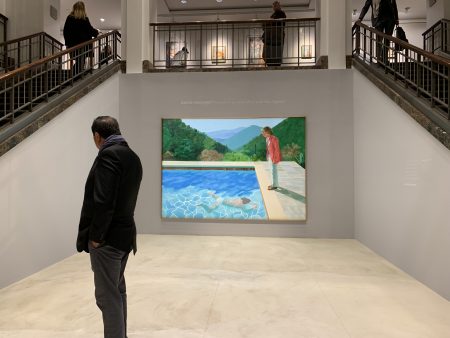
Since then, he has found himself, somewhat involuntarily, in the headlines. In 2018, he sold David Hockney’s extraordinary Portrait of an Artist (Pool with Two Figures) at auction for $90.3 million, at the time a record for a living artist.
Then, very publicly, in June 2026, the British businessman sold modern works at Sotheby’s in London for £306 million. The next episode in the Lewis Collection story now takes place in Hong Kong.
Modern auctions
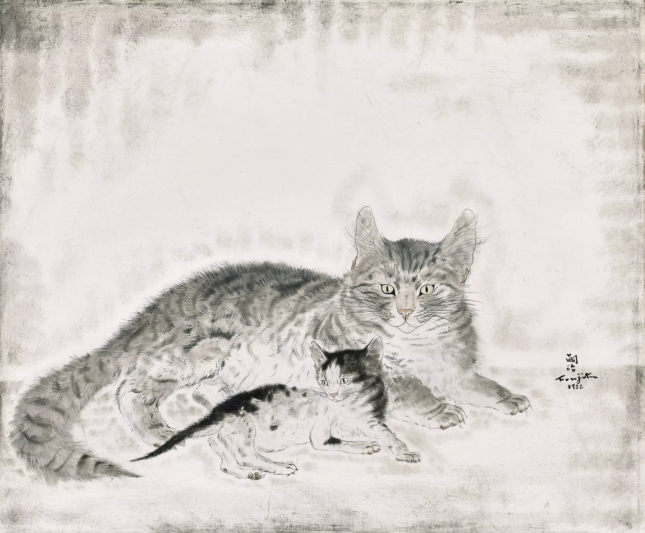
According to Evelyn Lin, the Sotheby’s specialist overseeing the sale, 85 percent of bidders for Foujita at Sotheby’s over the past three years have come from Asia.
One might object that Asia, and China in particular, has been pulling back from the art market in the wake of the severe property crisis. Yet Sotheby’s official figures show, for example, that Asian buyers accounted for one third of participation in its most recent modern sale in New York in May 2026, a sale generally regarded as setting the tone for the market over the following six months.
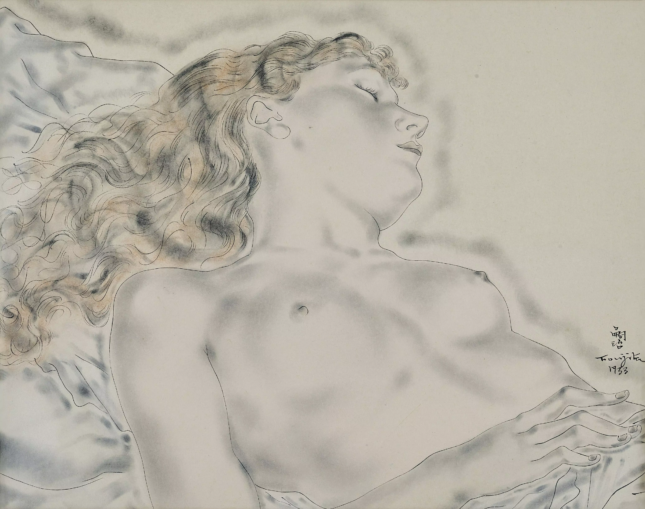
In Paris, Arnaud Cornette de Saint Cyr, president of Bonhams France, organized six sales between 2011 and 2013 comprising 3,000 lots, all signed by Foujita. They came from the estate of the artist’s widow, Kimiyo Foujita.
“For a long time, the market was essentially Franco-Japanese before becoming truly international with the strong arrival of Chinese buyers,” he observes.
sylvie buisson
The world’s leading Foujita specialist, the French scholar Sylvie Buisson, is the author of the artist’s catalogue raisonné, whose fourth volume, containing 4,000 reproductions, has just been published.
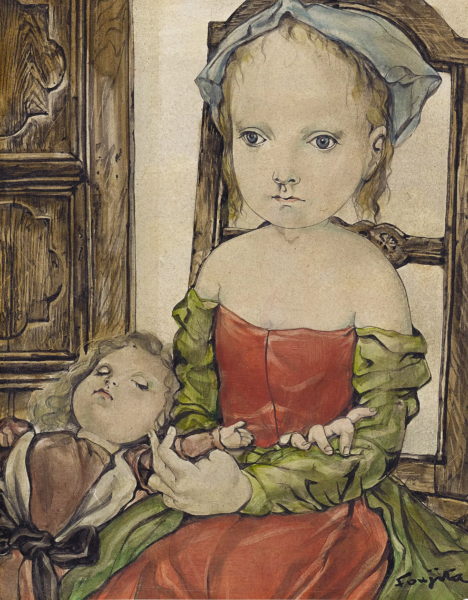
“It took 17 years to complete,” she explains.
Buisson has also organized numerous exhibitions, including the latest, which has travelled through several Japanese cities under the title The Seven Passions of Foujita. It will conclude in November 2026 at the Sagawa Museum. The exhibition may well have helped strengthen the artist’s reception in his country of birth.
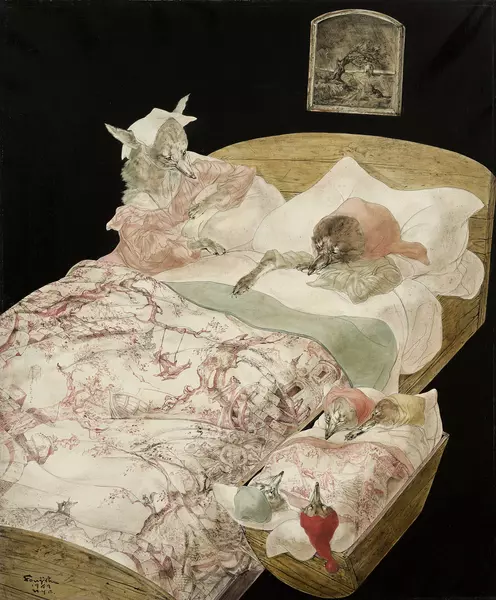
Léonard spent most of his life in France, where he first arrived in 1913. Montparnasse was then teeming with members of a cosmopolitan bohemia at the forefront of the avant-garde — Modigliani, Soutine, Picasso. They welcomed him warmly. Foujita began laying the foundations of his visual language.
The interest of the Lewis sale lies precisely in the fact that it presents works from every period of his career. All were acquired at public auction.
Sleeping Nude on a Table
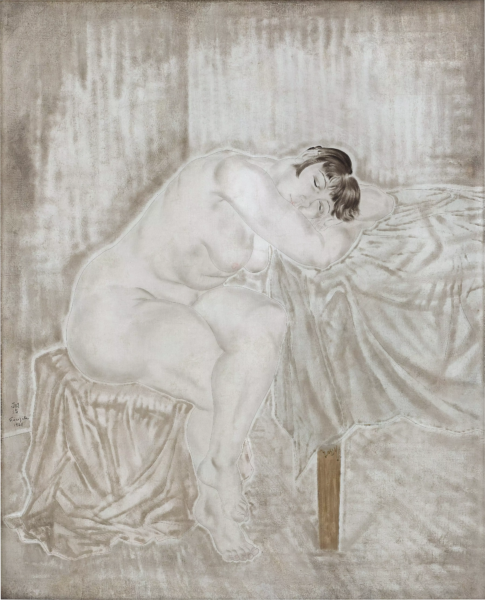
Among the most fascinating is Sleeping Nude on a Table from 1927, showing, in a stripped-down style, a naked woman with porcelain skin against a white ground made from the same luminous material. It is estimated at $260,000. The work was acquired for $341,000 in 2014.
According to Sylvie Buisson, Foujita had a secret for producing these white-gray grounds, at once glossy and subtly patinated. In 1921, he developed a technique combining plaster, animal glue, silver white and titanium white.
In 2016, Joe Lewis bought La Belle Espagnole of 1954 at Christie’s Paris for €410,500. It depicts a mysterious, Virgin-like figure wearing a mantilla. It is now estimated at $195,000.
cautious with estimates
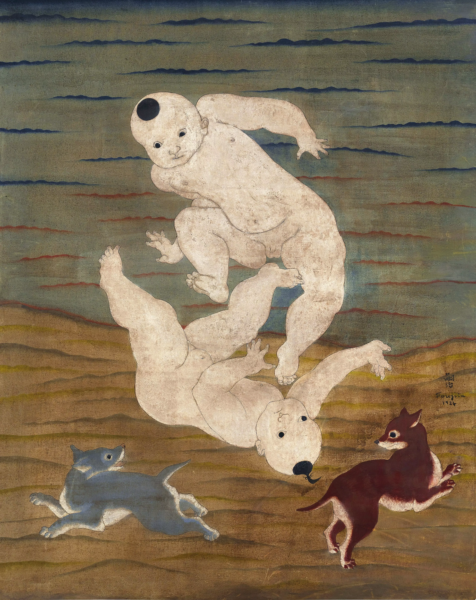
Finally, The Dream (Homage to La Fontaine), a 1949 scene in which animals grimace like humans, carries the highest estimate in the sale: $520,000. Its purchase price in 2016 was $785,500.
Sotheby’s is clearly being cautious with its estimates.
The auction record for Foujita, €8 million, was achieved in 2018. The painting, made the same year and in a similar spirit to the Lewis work, shows a group of animals gathered around a table, feasting.
Foujita had just left Japan, where he had apparently been compelled to serve as an “official war painter of the Imperial Army.”
Reputation
The American art historian Joachim Pissarro responded to the article on Foujita with the following comment:
“While Benhamou’s analysis of the resurgence of Foujita’s market in Asia is striking and accurate, at the same time, Foujita’s past as a volunteer officer during World War II, accompanying the Japanese army as it committed nameless atrocities on civilians in China, cast a dark cloud over his reputation.”
For her part, Sylvie Buisson believes that Foujita was forcibly conscripted into the Japanese army.
(At the top of the page, don’t miss this never-before-published film of Foujita on holiday in Deauville. YouTube’s rules prevent us from showing the bare breasts of his female friends.)