the forgotten corners of art history
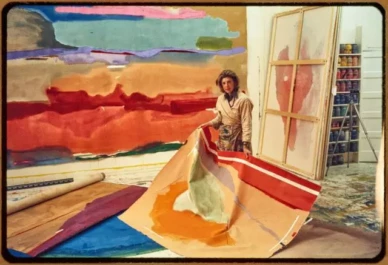
Not only did she invent a singular and powerful abstract painting technique in the 1950s, but she was also championed by Clement Greenberg, the most influential art critic of the time in America. She lived in New York, then the global epicentre of art, and represented the United States at the Venice Biennale in 1966. Who was she? For a time, the answer was consigned to the forgotten corners of art history. Her name was Helen Frankenthaler (1928–2011).
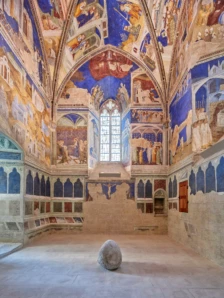
Kunstmuseum Basel
Today, justice is being done to her, as part of the great wave of rediscoveries of women artists taking place in museums and galleries. In early 2025, the Museum of Modern Art in New York restored her XXL paintings to centre stage. In Europe, following exhibitions devoted to her at Palazzo Strozzi in Florence and the Guggenheim Museum Bilbao, the Kunstmuseum Basel in Switzerland is showing more than fifty of her works through August 23.
Sustain Our Work with a Small Monthly Gift
Become part of the Judith Benhamou Reports circle.
Contribute, even from just €10
Large scale
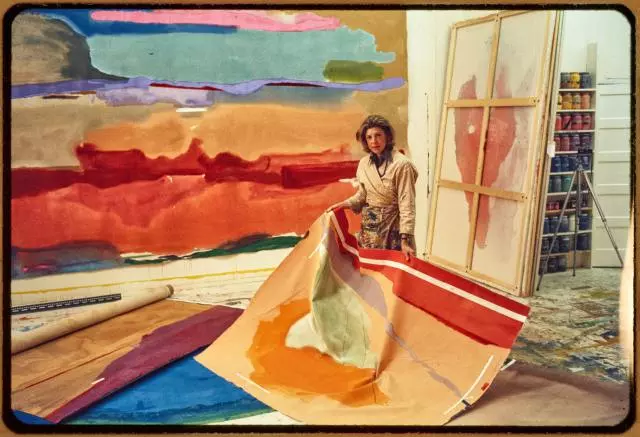
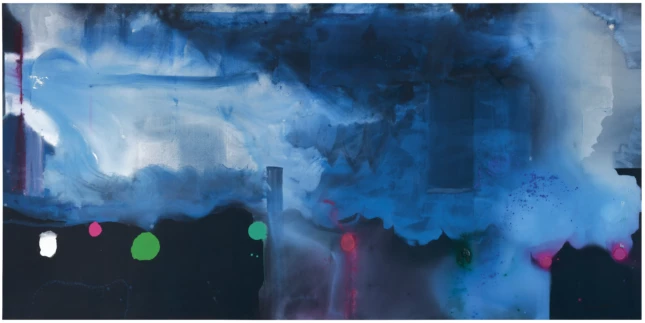
These are primarily large-scale abstract paintings in diluted, fluid colours that overlap, collide or blend harmoniously. At the Kunstmuseum, the dialogue between the canvases is particularly successful, as visitors move gently from one chromatic environment to another.
Helen Frankenthaler invented a pictorial world using a process she developed when she was only 23.
Anita Haldemann
It became known as the “soak-stain” technique. As curator Anita Haldemann explains, Frankenthaler achieved it by painting on the floor: “The canvas was left unprimed so that it could absorb all the colour. She diluted the oil paint so that it would be drawn into the surface. She did not know what was going to happen. Her talent initially lay in using chance, before regaining control by manipulating the colours. She was highly intuitive.”
Jackson Pollock
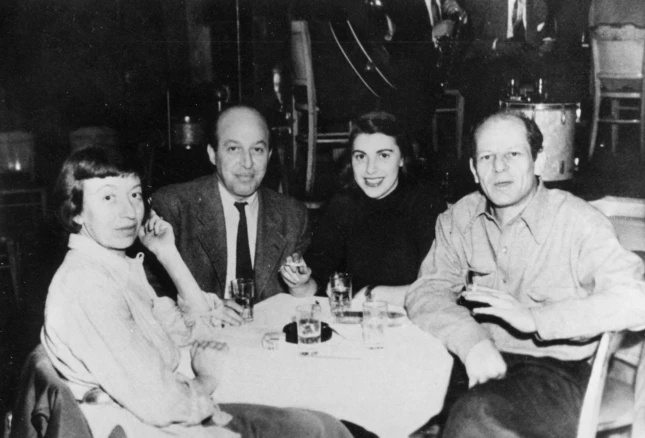
Helen herself explained: “You have to know how to use the accident, how to recognise it, how to control it, and ways to eliminate it so that the whole surface looks felt and born all at once.”
The turning point came in 1950, when she visited an exhibition of Jackson Pollock’s work. Pollock was already practising a foundational gesture, dripping, which swept away all previous conventions. The canvas lay directly on the floor. In a carefully orchestrated choreography, he poured paint until an abstract composition emerged, made up of splashes and stains that might resemble a celestial map.
All about risks
A year later, Helen visited her fellow artist’s studio and grasped the importance, for her own experiments, of placing the canvas horizontally . The art world at the time was overwhelmingly male. At a moment when the so-called weaker sex was expected to paint pretty things, Helen Frankenthaler thought big.
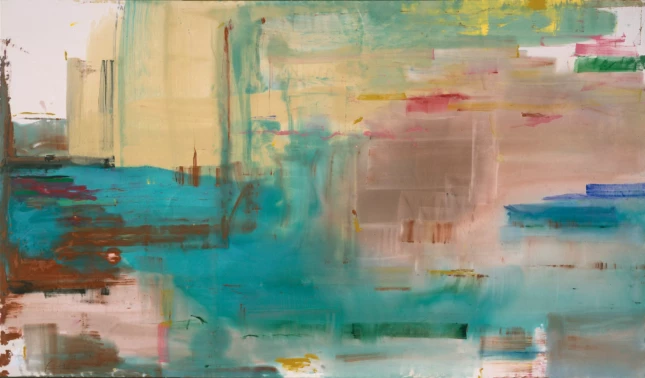
“The only rule is that there are no rules. Anything is possible… It’s all about risks, deliberate risks,” the defiant artist explained in 1984. She was, of course, right. It is radicality that gives abstraction its meaning.
art history
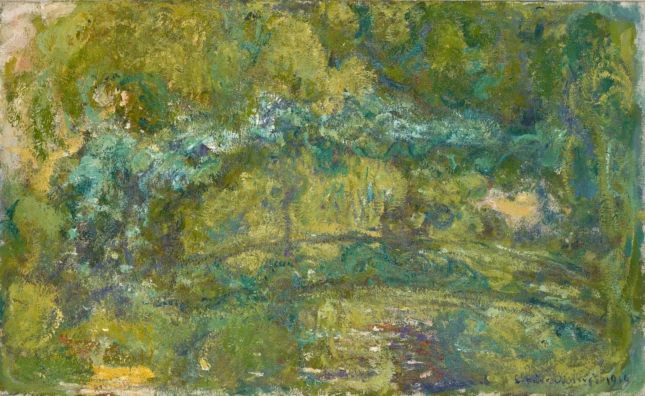
At the same time, as the exhibition demonstrates, Frankenthaler was deeply rooted in art history. She sometimes took “classical” paintings as her starting point, dissolving their subject matter. One of the most striking examples was painted in 1976. Nearly three metres wide, the work bears an explicit title: Claude’s Message. It consists of a vast, vibrant pool of colour ranging from violet to green.
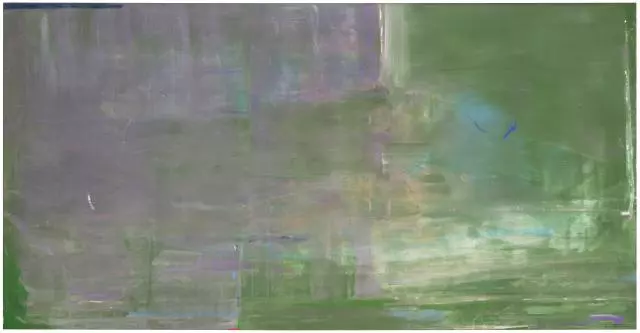
Nearby hangs a 1919 painting by Claude Monet depicting his famous Japanese bridge at Giverny, with water lilies floating beneath it. One would like to see Frankenthaler’s canvas at the entrance to the sumptuous Water Lilies rooms at the Musée de l’Orangerie in Paris.
edouard manet
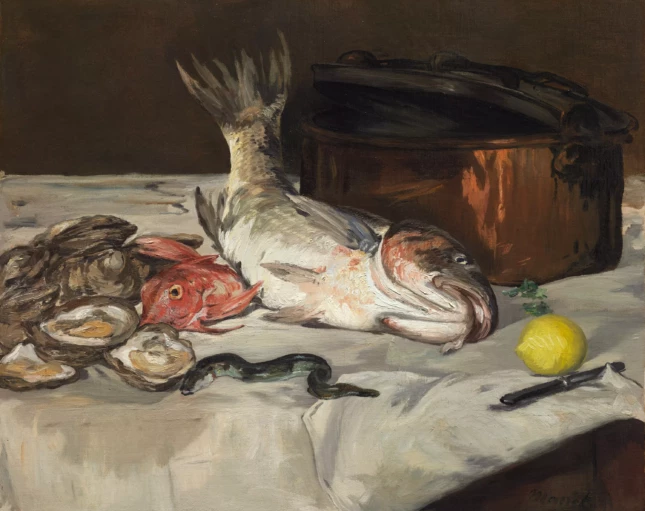
The demonstration of her creative process continues with an equally imposing painting from 1981, executed in shades of brown. Its inspiration?
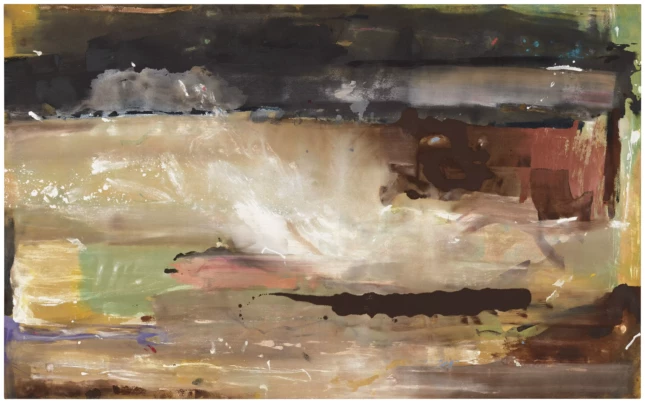
Édouard Manet’s 1864 still life of a fish, displayed beside it. In Frankenthaler’s painting, the dead animal is represented by a ghostly white trace.
It offers a key to understanding paintings she described as “explosive landscapes, worlds, and distances held on a flat surface.”