staggering estimates
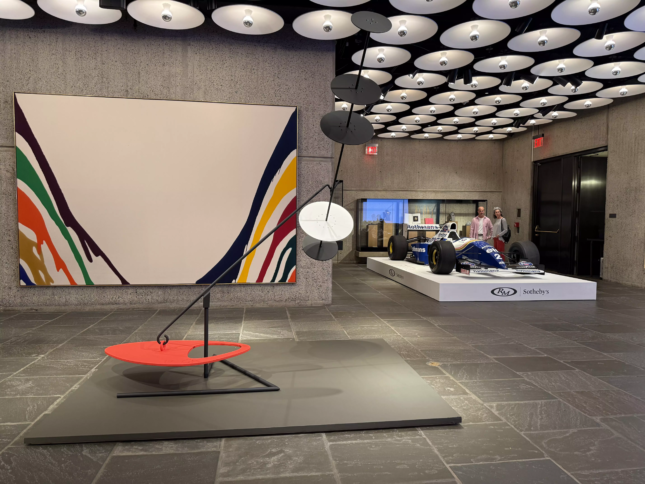
All eyes are on New York, where Sotheby’s and Christie’s are staging their major modern and contemporary art auctions during the week of November 16. Masterpieces are carrying staggering estimates, seemingly impervious to the uncertainty surrounding the global economy. When great paintings become safe havens…
Because that is precisely what the market now demands: works whose place in art history is beyond question. It is worth remembering, however, that the vast majority have effectively been presold through financial mechanisms that have become standard practice at auction, such as guarantees — a minimum price guaranteed to the seller, whether or not the work sells during the auction.
Sustain Our Work with a Small Monthly Gift
Become part of the Judith Benhamou Reports circle.
Contribute, even from just €10
Sotheby’s is leaving Christie’s far behind this time. Not long ago, the auction house was being written off as moribund. Yet in November 2026, Sotheby’s, owned by the French businessman Patrick Drahi, is offering $1.1 billion worth of modern and contemporary art during the week of November 16, an unprecedented figure for the house. Christie’s, by comparison, has a total estimated value of $823 million.
Jeff Koons’s Picasso
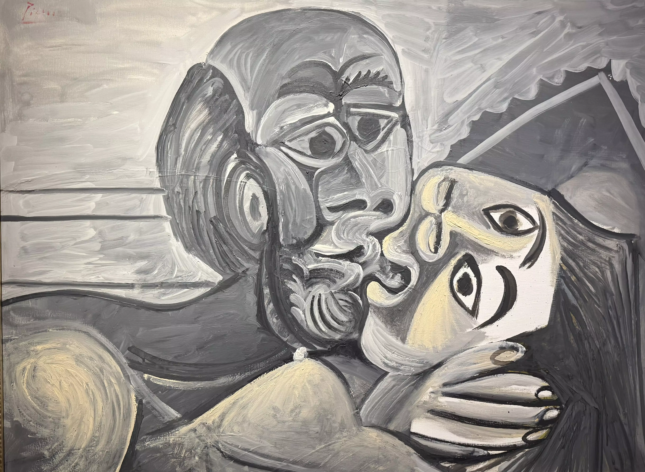
Auction houses have a vocabulary all their own. When they wish to describe a collector without revealing a name — a delicate exercise — they often resort to the rather old-fashioned phrase “property of a distinguished collector.” In this case, the distinguished collector is none other than Jeff Koons.
He has already quietly sold several treasures from his collection in the past. Producing his sculptures requires considerable resources, and Koons is known for pursuing his desires and ambitions to the very end, at a time when dealers have less financial leeway to support him.
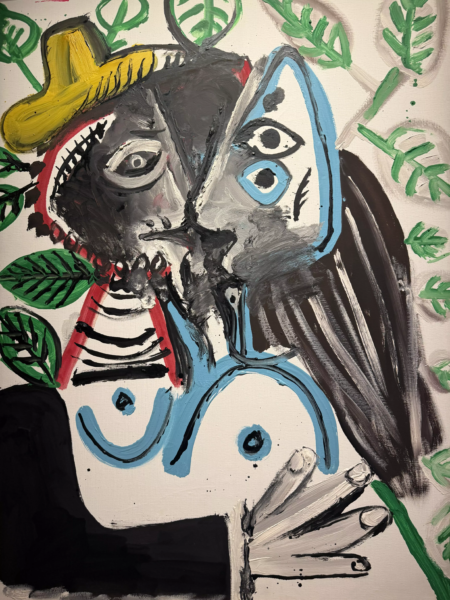
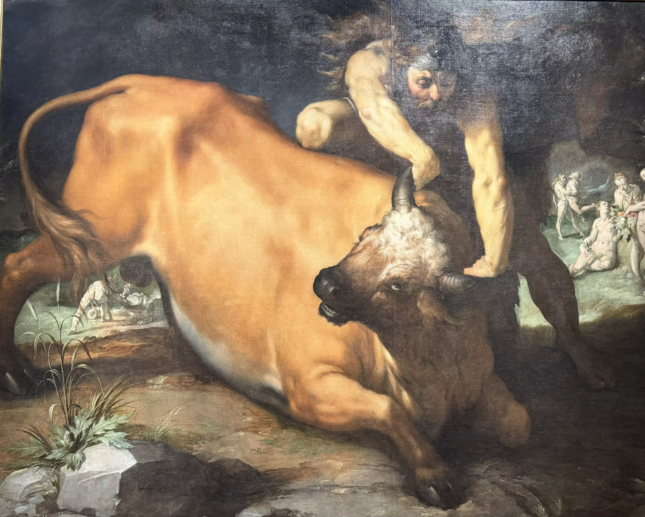
The nine paintings assembled at Christie’s, with a combined estimated value of $100 million, leave little room for doubt. Who other than Koons could own and present side by side a delightful Fragonard depicting a young woman with rosy breasts, two late Picassos, feverish compositions, and a mythological scene by Cornelis van Haarlem (1562–1638)?
It takes a thorough command of art history to move so effortlessly from one period to another.
The surprise is that the Van Haarlem, a swirling struggle of muscles and movement between Hercules and a bull, is being offered in a 20th-century sale, with an estimate that will make Old Master specialists shudder: $12 million. It was acquired in 2008 for $8 million, already a record price.
As for Picasso, the most remarkable work is a large black-and-white Kiss from 1969, carrying a staggering $40 million estimate. Koons bought it in 2008 for $17.4 million.
The painting was created by the great genius of 20th-century painting on the eve of his 88th birthday. In this exuberant embrace, Picasso expresses an overwhelming physical desire. His late works, painted with extraordinary fervor, sometimes in a single day, and combining Cubism with the grotesque, are now particularly sought after.
A Bath of Green by Klimt
In the work of the great Gustav Klimt (1862–1918), two worlds coexist. On one side are his fascinating portraits of women, depicted amid luxuriant decorative settings. These paintings command record prices, most recently in November 2025, when his portrait of Elisabeth Lederer fetched $226 million.
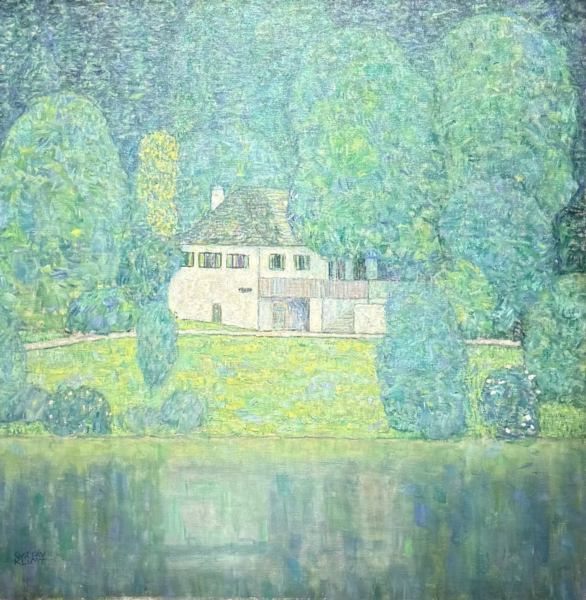
On the other are his landscapes, composed of countless patterns of flowers, plants and trees. They are valued somewhat less highly, though they are every bit as hypnotic.
In this instance, the Austrian artist depicted, in 1916, an inn beside a river that he regularly frequented. The perspective is flattened by the telescope he used to observe the landscape on the opposite bank.
In 1997, the square canvas sold for what was then a record $14.4 million. In 2026, Christie’s estimates it at $60 million.
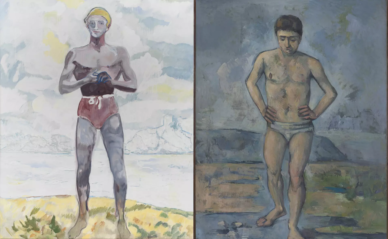
The History of Modern Art in a Single Cézanne Harlequin
This is surely the most moving painting of the season.
The work by Paul Cézanne (1839–1906) had belonged since 1975 to a wealthy Argentine family, the Blaquier-Arrietas, who acquired it from the London dealers Lefevre Gallery.
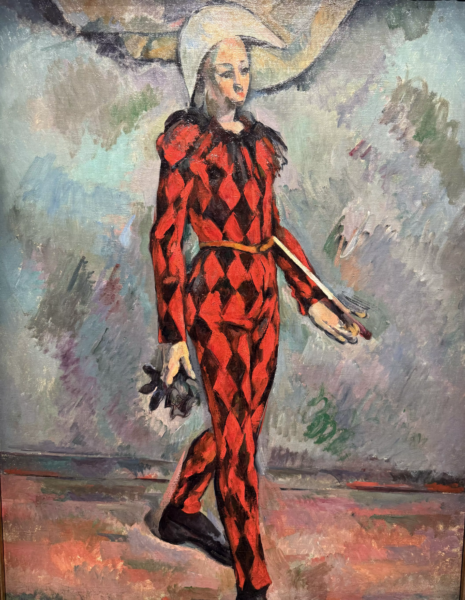
The background of the composition, Impressionist in its blues and greens, recalls the touch of Cézanne’s contemporary Claude Monet, while the figure — actually the artist’s son in costume — anticipates Picasso’s harlequins, which the latter regarded as self-portraits.
The term “icon of modern art” is used all too often, but this time it truly applies.
Cézanne returned to the subject four times. The other three Harlequins are all in museums, in Washington, Moscow and near Tokyo.
Sotheby’s estimates this one at more than $120 million.
Which great fortune will acquire it? A Gulf state? Despite their plans to open new museums, these countries have a few geostrategic problems to contend with at the moment…
It is worth recalling that Qatar reportedly acquired Cézanne’s The Card Players in 2011 for $250 million.
Place your bets.
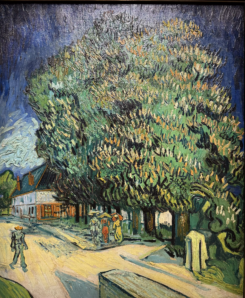
Van Gogh’s Last Chestnut Trees
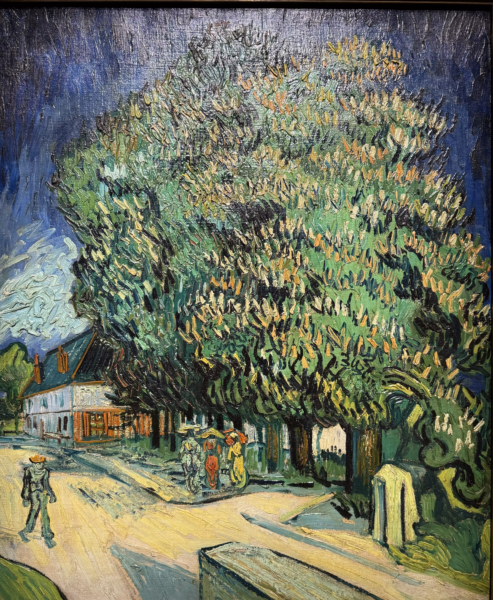
Vincent van Gogh (1853–1890) arrived in the now-legendary village of Auvers-sur-Oise on May 20, 1890, after leaving the asylum at Saint-Rémy-de-Provence, where he had voluntarily admitted himself.
Spring was everywhere, particularly in the magnificent blossoms adorning the village’s chestnut trees.
Four days later, he painted a composition in which the sky, even in broad daylight, is midnight blue. A storm is brewing, and the light is surreal, anticipating by 69 years the atmosphere of Magritte’s The Empire of Light.
Van Gogh captured his impressions in yellow, orange and green against a dark blue background.
It is extraordinarily beautiful.
The painting was acquired by the Argentine collectors Blaquier-Arrieta in 1975 from the dealer Wildenstein.
Today, it carries an estimate of $180 million — $60 million more than the record set in 2022 for a Van Gogh landscape, an admittedly less striking work.