Rarely elsewhere
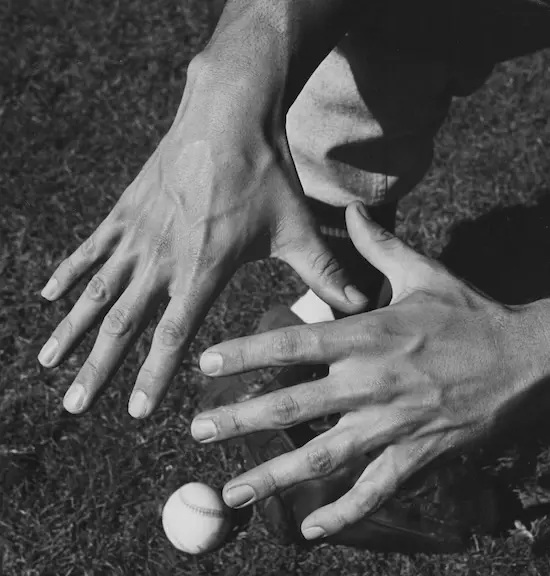
One of the great things about Paris Photo, which brings together 246 exhibitors under the glass roof of the Grand Palais from November 12 to 15, is that it showcases what you rarely see elsewhere. Around the world, wherever antique fairs and contemporary art fairs flourish, collectible photography remains relatively scarce.
Sustain Our Work with a Small Monthly Gift
Become part of the Judith Benhamou Reports circle.
Contribute, even from just €10
As early as 1934, the French writer Paul Valéry had an extraordinary premonition of the immense power that images would come to wield. “Just as water, gas, and electricity are brought into our houses from far off to satisfy our needs with almost no effort on our part, so we shall be supplied with visual or auditory images, appearing and disappearing at the slightest gesture, almost at a mere sign.” (1)
the print
Today, in contrast to the fleeting nature of the dematerialized images circulating on the internet, the photography market is decidedly materialistic and governed by strict codes. Beyond the photographer’s signature and the appeal of the image itself, value depends on very specific criteria: the quality of the print, the number of prints produced, the date of printing, its dimensions and the printing technique. It is through these distinctions that photography becomes a collectible object in its own right.
At Paris Photo, those looking for genuine masterpieces should turn to the category known as “classic photography.” As it happens, this year marks the 200th anniversary of the invention of the medium.
the ancestor
The booth of the well-known French dealer Serge Plantureux is devoted exclusively to 19th-century photography. This is an area in which, as the fair’s director Florence Bourgeois explains, “a generational shift among collectors is slowly taking place.” In other words, a new audience has yet to fully emerge, even though the 19th century was an era of extraordinary innovation.
Nevertheless, Plantureux has no hesitation in presenting what is almost certainly the most expensive work at the fair, priced at €2.5 million.
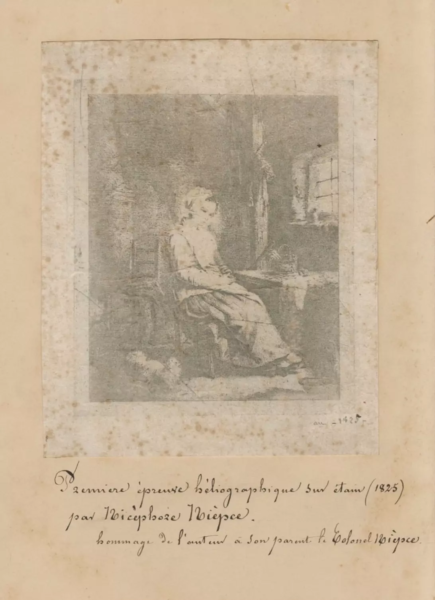
La Jeune Fille filant sa quenouille (Young Girl Spinning with a Distaff) is a heliograph on copper, a reproduction of a document made in 1825 by the great Nicéphore Niépce (1765–1833). Visually rather indistinct, it is less a beautiful image than a document of immense historical significance: one of the earliest known photographic documents, produced just before the invention of the camera.
It sold at auction in 2008 for €88,000. “This is today’s price for something of such rarity in the history of invention,” explains the dealer, justifying the spectacular increase.
Irving penn
Elsewhere in Paris, two exhibitions are currently celebrating the extraordinary talent of the American fashion photographer Irving Penn (1917–2009). At the Bourse de Commerce, he is the subject of a tour de force featuring 450 images, while the Maison Européenne de la Photographie is presenting a more modest exhibition focused on his fashion work.
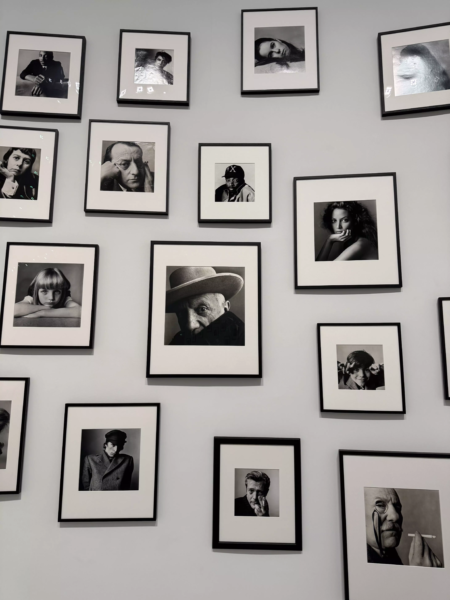
Penn worked for Vogue until the age of 91, creating images of striking simplicity, their power heightened by sharply defined, almost unreal silhouettes. He is also renowned for his portraits, which convey remarkable psychological depth.
He was obsessed with photographic prints, which he always made himself, sometimes producing as many as 30 from a single negative.
One might have thought that these two exhibitions offered a comprehensive view of his work. Yet at Paris Photo, on the booth of San Francisco’s Fraenkel Gallery, previously unseen works by the artist are still being discovered.
Jeffrey Fraenkel
Jeffrey Fraenkel recalls: “In the 2000s, I visited him at his studio and discovered these irregularly cut photographs, designed to emphasize particular details, such as a gaze or an expression. They were all unique works that I dreamed about for 20 years before finally acquiring them.”
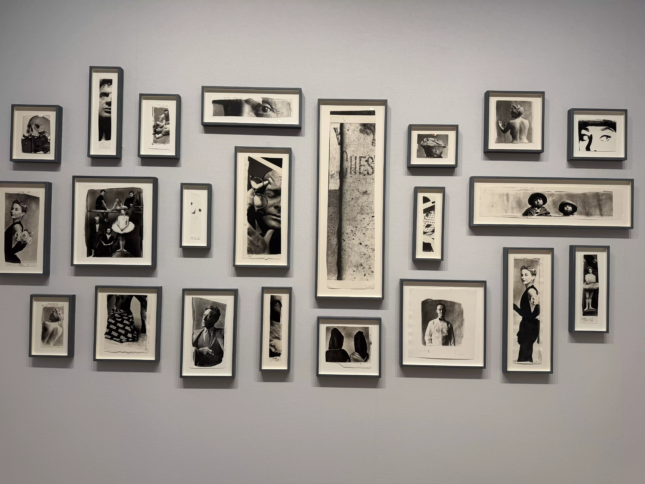
Presented in highly unusual formats, often horizontal, they are priced between €14,000 and €45,000.
Brancusi
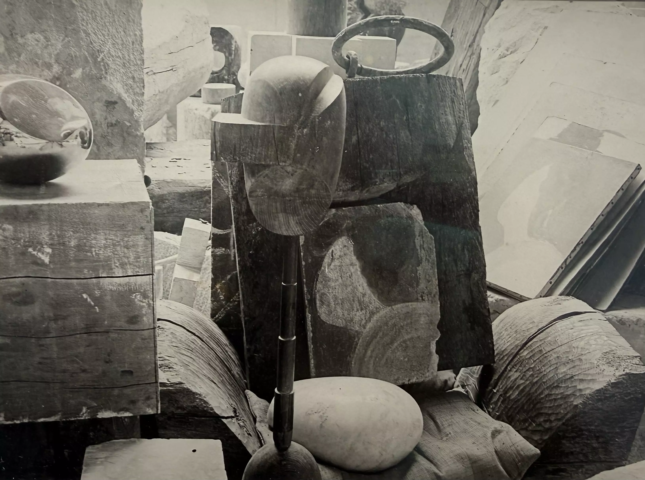
At MoMA in New York, an exhibition is currently devoted to Constantin Brancusi (1876–1957) and his studio. It is worth remembering that the Romanian-born sculptural genius took his own photographs of his works and even made films.
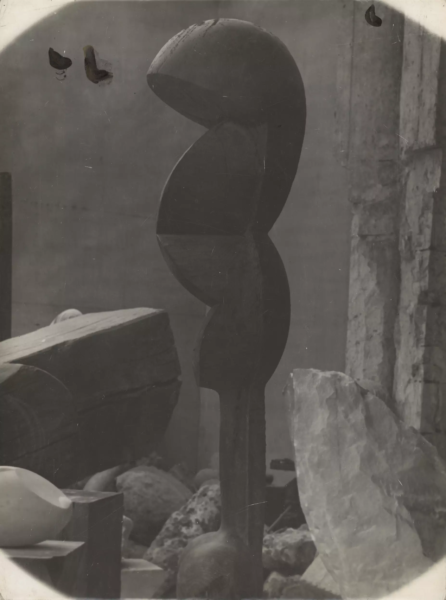
He documented his studio as a work of art in its own right, recording new sculptures, changes in their arrangement, the play of shadows and the presence of his celebrated pedestals.
New York photography dealer Bruce Silverstein, who has a booth at Paris Photo, points out that at MoMA, “Brancusi’s photographs are completely integrated into the display of his sculptures, complementing them. As for the exhibition catalogue, it contains exclusively images taken by Brancusi himself.”
The artist had, after all, learned from the best. In photography, he had received advice from two 20th-century geniuses, Man Ray and Edward Steichen.
Bruce Silverstein is offering two photographs of Brancusi’s studio, priced at $40,000 and $125,000. “When I opened my gallery in 2001, his prints were selling for $10,000. They are exceptionally rare.”
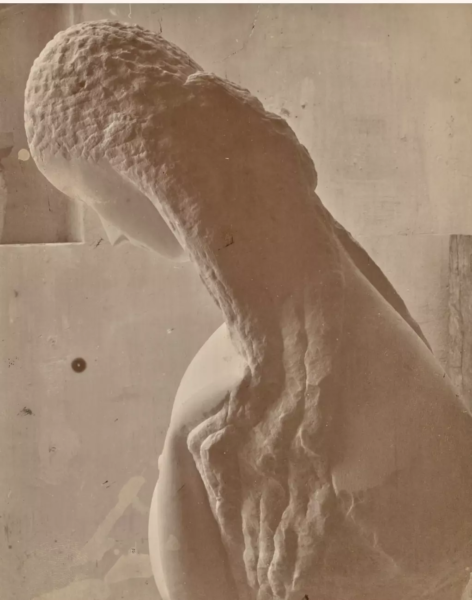
On November 13, a print dating from 1909 will be offered at auction. It belonged to Roger Thérond (1924–2001), a pioneer of photography collecting and former editor-in-chief of Paris Match. Its estimate is €40,000.
The sale of Thérond’s collection, estimated at €6.6 million, is one of the most eagerly anticipated events of Paris’s photography week.
The auction record for a Brancusi photograph dates to 2019, when a 1924 image depicting two sculptures brought to life by an intricate play of shadows sold for €187,500.
Shigeru Onishi
Tokyo’s MEM Gallery is exhibiting, among other works, rare photographs by Shigeru Onishi (1928–1994), a Japanese mathematician who became a painter.
“He wanted to transpose his mathematical theories into the realm of art. Photography occupied him for only ten years, during the 1950s,” explains the gallery’s director, Katsuya Ishida.
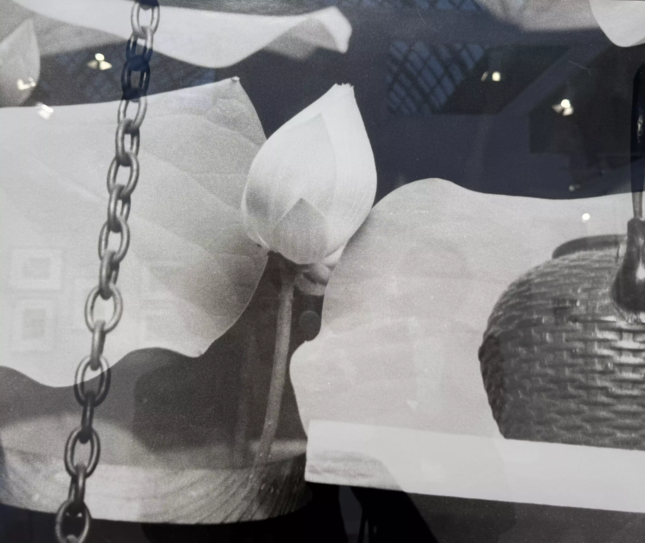
During that period, Onishi pushed technical experimentation to remarkable extremes. His black-and-white photographs combine superimposition, solarization, bleaching and other effects.
Despite the relatively small body of work he produced, his prints have attracted the attention of major institutions. They are held, among other collections, by MoMA and are currently on view at Tate Modern in London as part of the exhibition Light and Magic: The Birth of Art Photography.
His rare prints depicting leaves mingled with various objects are being offered at Paris Photo for €20,000.
Stanley Kubrick
Finally, it is easy to forget that before Stanley Kubrick (1928–1999) became one of the greatest filmmakers of the 20th century (see the auction of his memorabilia at Bonhams in February 2027) , he worked as a photojournalist for the American news magazine Look from 1946 to 1950.
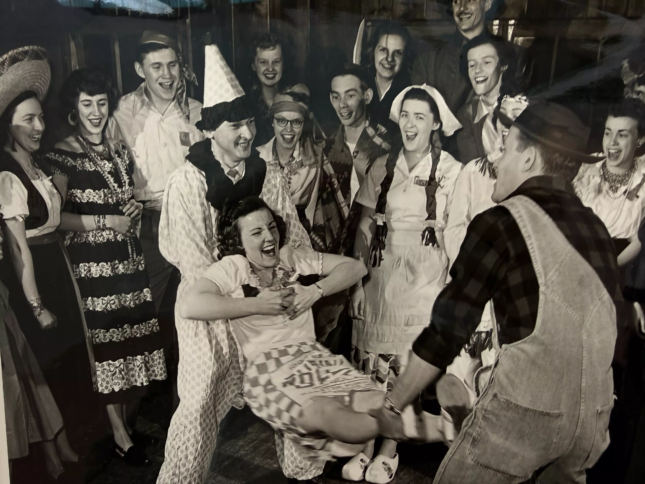
The Library of Congress in Washington has documented his early career in detail.
In 1945, Kubrick captured the image of a New York newspaper vendor devastated by the news of President Franklin D. Roosevelt’s death. Stanley was just 17. The publication of that photograph earned him not only $25 but also his first major job.
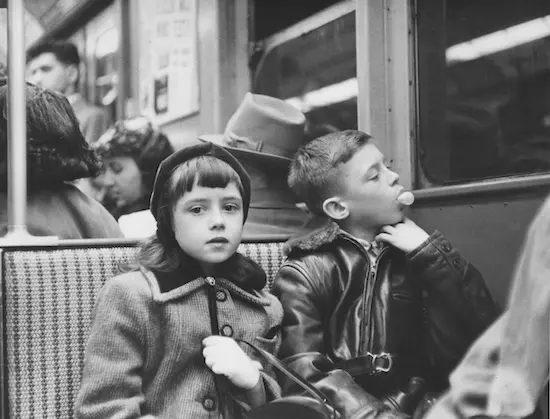
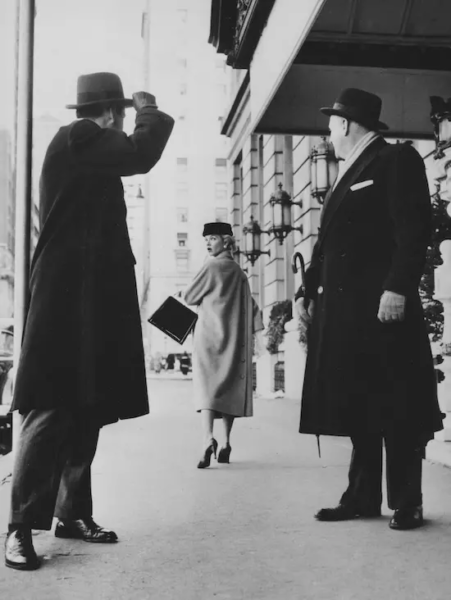
Los Angeles photography dealer Duncan Miller had purchased boxes of archival material without knowing who had taken the photographs they contained. After extensive research, he identified their author: the future legendary Stanley Kubrick.
These scenes of celebrations, street life and intimate moments, printed specifically for publication in the late 1940s, clearly foreshadow the filmmaker he would become.
An incisive eye, alert to the telling detail or the perfect expression.
The photographs are offered for between €2,000 and €12,000. One of the best opportunities at Paris Photo.
(1) Paul Valéry, La Conquête de l’ubiquité, in Pièces sur l’art, Gallimard, 1934.