first, 1997
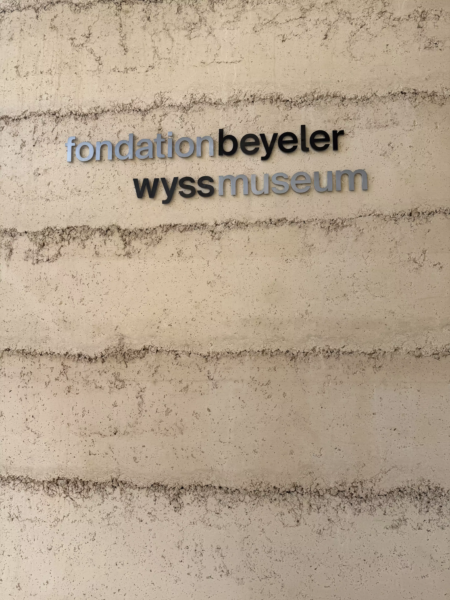
In 1997, in Basel, Switzerland, the art dealer Ernst Beyeler inaugurated a foundation bearing his name. With its Renzo Piano-designed building, exceptionally well suited to showing art, the institution quickly became an international reference.
Looking out at the surrounding hills, where cows graze and wander, Beyeler liked to say: “That is my Sainte-Victoire.” It was a direct reference to the mountain that obsessed Paul Cézanne, an artist he particularly cherished.
Sustain Our Work with a Small Monthly Gift
Become part of the Judith Benhamou Reports circle.
Contribute, even from just €10
sam Keller
Ernst Beyeler died in 2010. By then, the museum was headed by Samuel Keller, another Basel native, who had previously spent many years running the world’s leading art fair, Art Basel.
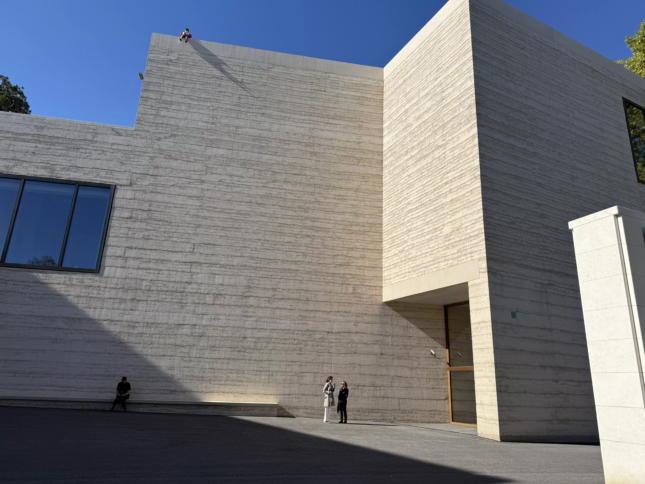
Sixteen years later, Keller is deftly steering the institution into its next chapter, inaugurating a new three-building complex immediately beside Renzo Piano’s original structure. One of the three, devoted to administration, is not open to visitors.
Peter Zumthor
The ensemble is the work of yet another Basel figure who has achieved international renown as an architect: Peter Zumthor (born 1943). A recipient of the Pritzker Prize, often described as architecture’s Nobel, Zumthor has, among other projects, designed the spectacular new LACMA in Los Angeles, inaugurated in spring 2026.
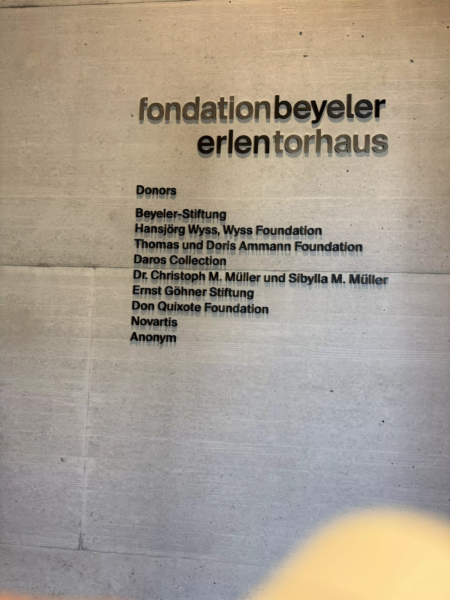
In Basel, the 120-million-Swiss-franc project has relied substantially on private funding, led by the Swiss billionaire Hansjörg Wyss, whose name is attached to the new 1,500-square-meter exhibition building.
Wyss museum
The expanded Fondation Beyeler now therefore includes the Wyss Museum, whose primary purpose is to display the permanent collection. For the time being, temporary exhibitions will continue in the original building.
The appearance of a new name within the Beyeler stronghold is a small revolution. It also provides an ideal setting for long-term loans and donations. The inaugural presentation seems designed to make that point.
18 Magritte
The collection had previously been relatively weak in paintings by the Belgian Surrealist René Magritte. Now, in a room devoted to fantastic figuration, no fewer than 18 of his works are on view, on loan from the private Wyss and Reuben collections.
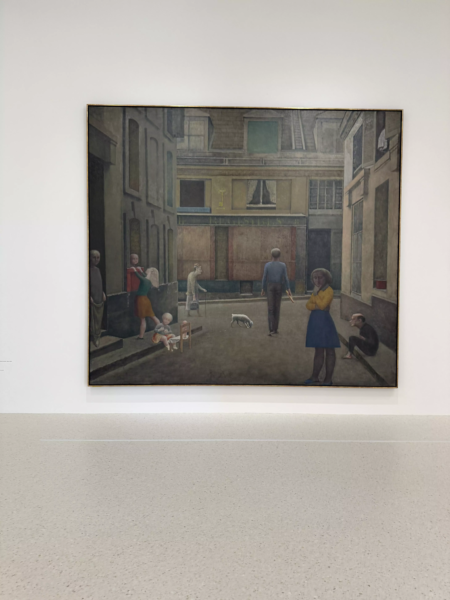
In the same gallery hangs a major Balthus, one of his most famous paintings: a frozen moment on a Paris street, Passage du commerce Saint-André. It belongs to yet another private collection, the Hersaint Collection.
Nearby, a hairy wax leg protrudes from the wall. It is one of the best-known sculptures by the American artist Robert Gober and belongs to the Daros Collection of Swiss entrepreneur Stephan Schmidheiny.
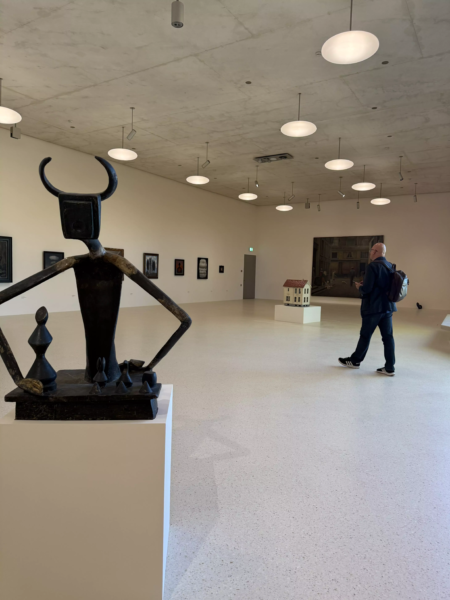
“Ernst Beyeler told me that the collection had to remain alive, among other things through dialogues with long-term loans. This project is a natural evolution,” Samuel Keller explains.
ginkgo biloba
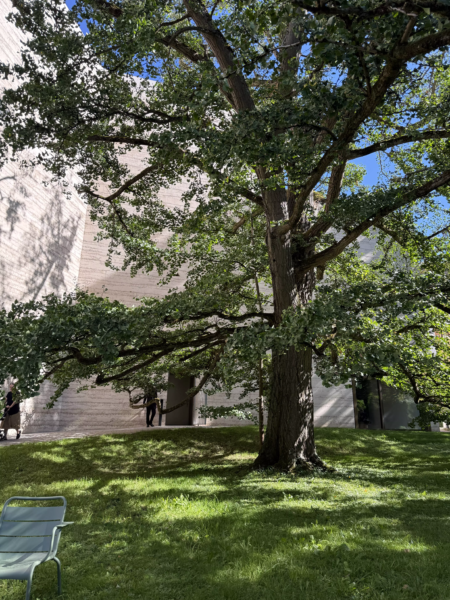
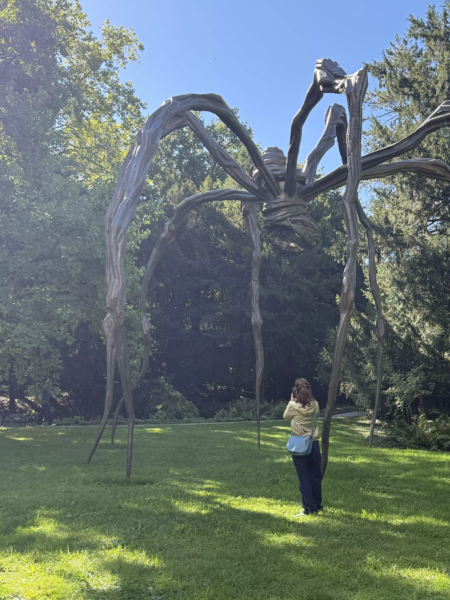
Faithful to the founder’s belief in art existing in communion with nature, the angular concrete building sits within a former private park. It has been designed to work around certain existing trees, including a spectacular ginkgo biloba more than 200 years old.
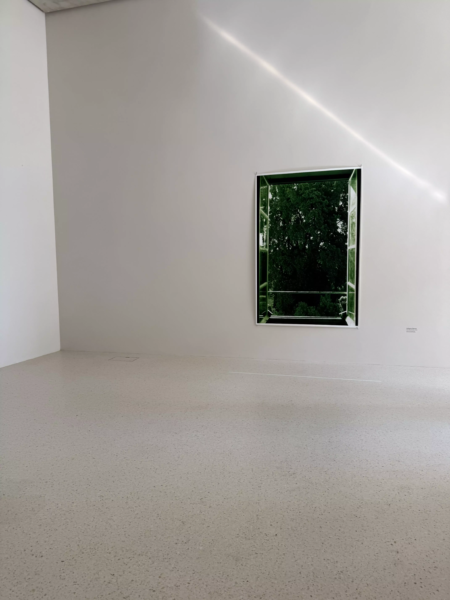
Zumthor favors lateral light for illuminating paintings. “The museum is conceived as a spiral over three floors. On each level, the large windows that bring in streams of daylight are positioned differently. This building is entirely devoted to art, without the kitsch shops you usually find in museums.”
A new Glass house
Another building, the Ammann Pavilion — named after another donor — serves as an auditorium for small gatherings, concerts and other events. Designed with glass walls opening onto the surrounding landscape, it is freely accessible to all visitors. Entirely clad in warm-toned wood, it creates a striking sense of well-being. There is something here of the openness to the trees found in Philip Johnson’s Glass House, designed in Connecticut in 1949.
“Mine is better,” Peter Zumthor concludes with a smile.