Master of Spontaneity
Old Master painting is still too often imagined as a slow, painstaking, highly formal exercise — admirable, perhaps, but dull. Tintoretto makes nonsense of that idea.
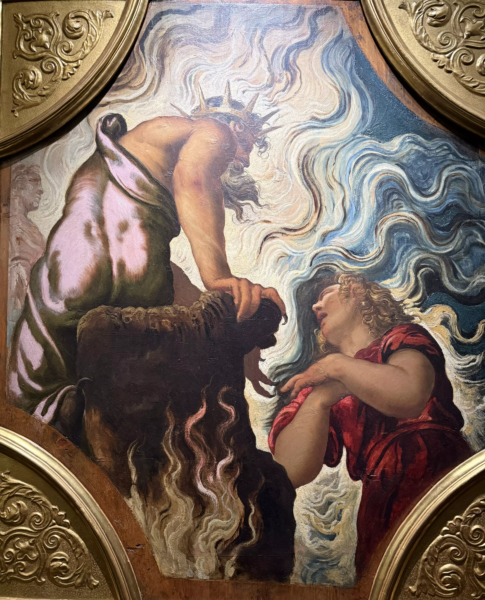
Jacopo Robusti, better known as Tintoretto (1518–1594), was one of the great masters of spontaneity. The Paris exhibition, on view through January 24, is modest in scale — 29 paintings — and, as usual at the Jacquemart-André, compressed into rather cramped rooms. Yet for anyone who responds to the physical act of painting, the effect can be almost revelatory.
Sustain Our Work with a Small Monthly Gift
Become part of the Judith Benhamou Reports circle.
Contribute, even from just €10
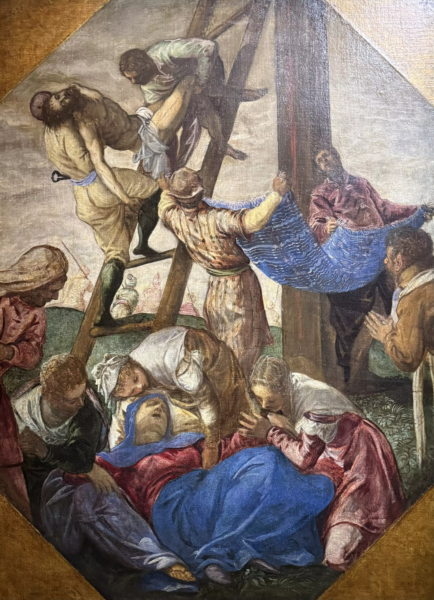
The son of a dyer — hence his nickname — Tintoretto had an exceptionally sharp sense of color. In one of his Descents from the Cross, usually in the Musée des Beaux-Arts in Caen, the eye is immediately caught by a brilliant azure cloth, almost at the center of the composition, waiting to receive Christ’s body. It is echoed by the intense blue of the Virgin’s robes. She has collapsed to the ground, overcome as Christ is lowered from the cross.
Predator in the Art World
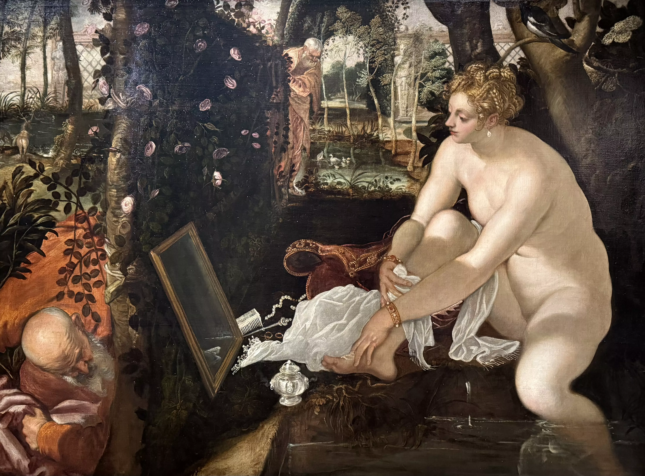
Tintoretto was also a formidable operator. A former pupil of Titian — whose influence is palpable in his depictions of languorous female nudes — he behaved like a true predator in the art world, ready to use every advantage available to him. His virtuosity and speed were among his most effective weapons.
One famous episode says it all. In 1564, the Venetian confraternity of San Rocco organized a competition to decorate its great hall. The artists were asked to submit sketches. Tintoretto did something else entirely: in less than a month, he produced the enormous full-scale painting destined for the center of the ceiling.
Naturally, he won.
Giovanni C. F. Villa
From the first room, co-curator Giovanni C. F. Villa points out the broad, rapid brushstrokes in the large Adoration of the Shepherds — almost 2.8 meters wide — normally housed in the Church of Saint-Eustache.
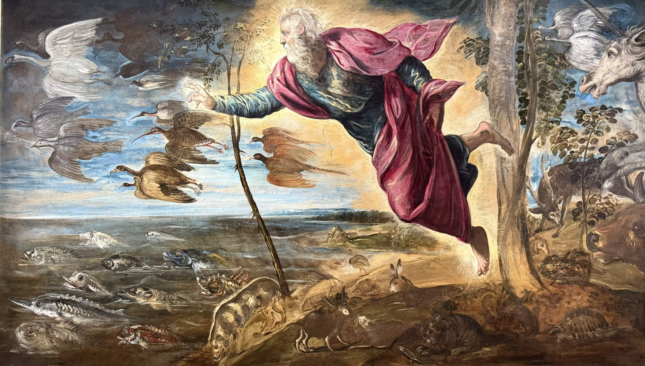
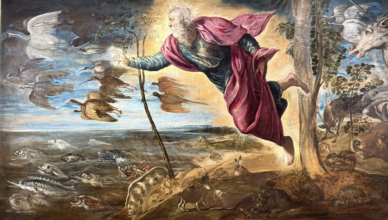
Tintoretto’s inventiveness lies just as much in the way he constructs space. In The Creation of the Animals, he multiplies the planes. God seems almost like a Spider-Man in robes, hurtling through the composition. Behind him swarm birds and fish. The drama comes from these strange, destabilizing points of view.
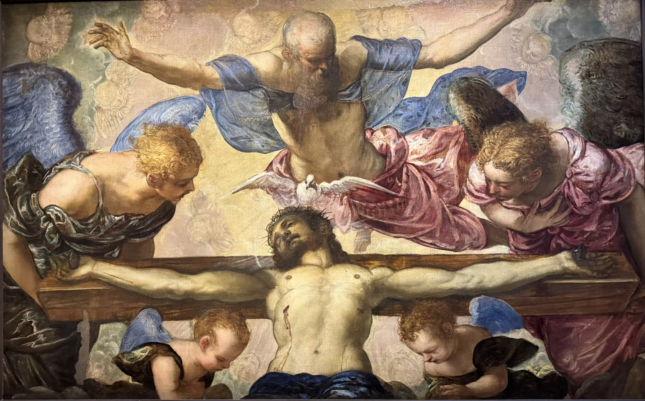
In The Holy Trinity, Christ appears magnificently foreshortened from above, surrounded by a profusion of figures.
lesson in art history
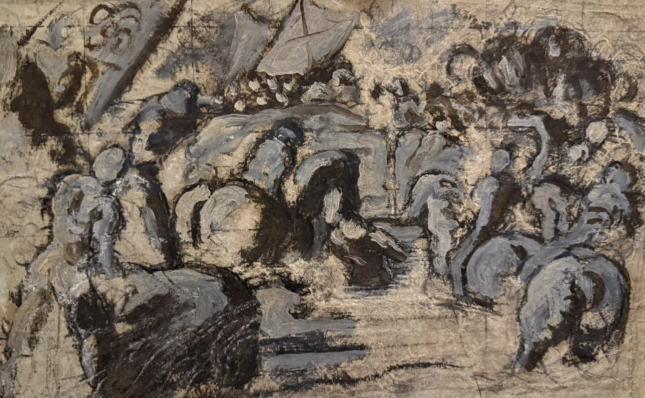
Because Tintoretto was both a precursor and an artist obsessively studied by later painters, the exhibition also becomes a compact lesson in art history. In Study for the Battle of the Taro, he uses the blue of the paper itself, setting white gouache against it so that ghostly figures seem to emerge from the surface. The result can bring to mind Cézanne — even early Kandinsky.
with Manet
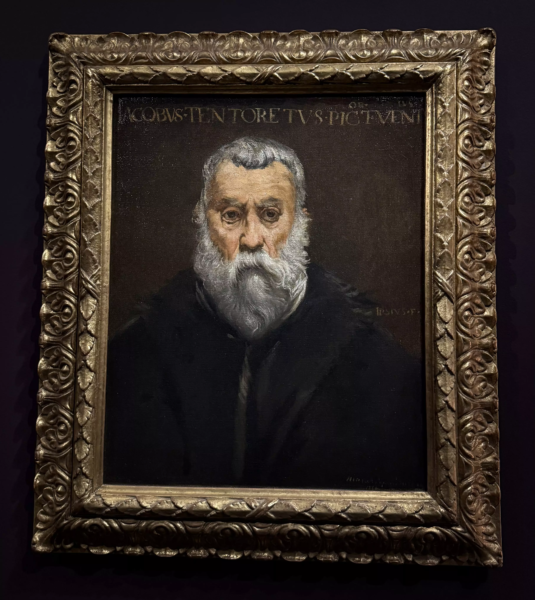
The final room delivers the most striking confrontation of all: a self-portrait by Tintoretto, painted around 1588 and normally in the Louvre, hangs beside an uncannily faithful copy made by Édouard Manet in 1854, now in the Musée des Beaux-Arts in Dijon.
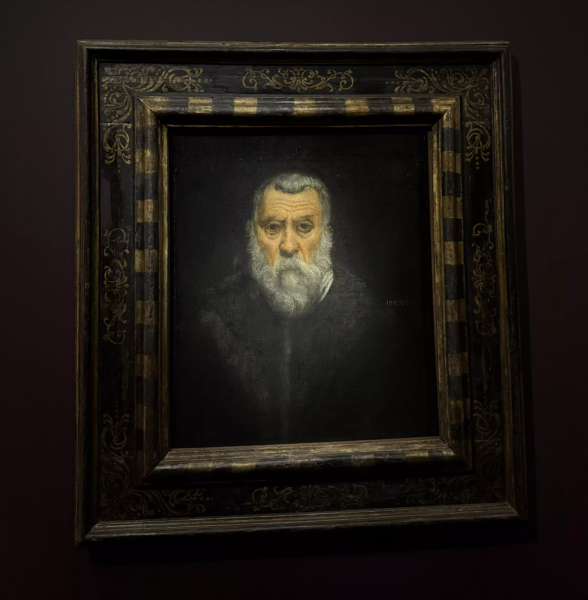
At the time, the young Manet was haunting the galleries of the Louvre, studying the great masters of the brushstroke. He copied Titian, Velázquez, Rubens. And Tintoretto.
What interested him was precisely what still feels so alive here. These painters did not try to make the surface disappear. They left the brushstroke visible, deliberately, almost as a signature. A trace of the hand. A radically modern gesture.