THe encyclopedic museum
By the late eighteenth century, when Western nations were beginning to pursue boundless cultural ambition, they invented the encyclopedic museum. Their aim was clear: to become the center of the world by assembling the most fascinating achievements of every civilization. That vision gave rise to institutions as rich and vast as the British Museum, the Louvre Museum, the Metropolitan Museum of Art and the State Hermitage Museum.
Sustain Our Work with a Small Monthly Gift
Become part of the Judith Benhamou Reports circle.
Contribute, even from just €10
Classical paintings
Needless to say, antiquities and what was long called classical painting reigned supreme there. Paintings by European masters of the past, portable and prestigious, dominated attention. Much the same spirit guided the inauguration in 2017 of Louvre Abu Dhabi, where treasures unfold chronologically from 3500 B.C. to the present.
Since 1965
In Los Angeles, the local county art museum,LACMA, founded in 1965, long followed a similar path. Presented as the largest museum in the American West, it houses 155,000 objects spanning 6,000 years of human creativity. In 2008 and 2010, the Italian architect Renzo Piano designed two buildings there that resembled, unsurprisingly, classic modern and contemporary art museums.
colossal works
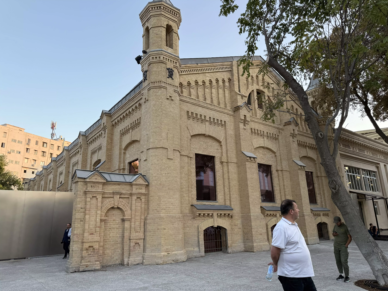
But on April 19, 2026, ahead of its public opening on May 4, another building was inaugurated on the same site, one that represents a true revolution in both form and intent.
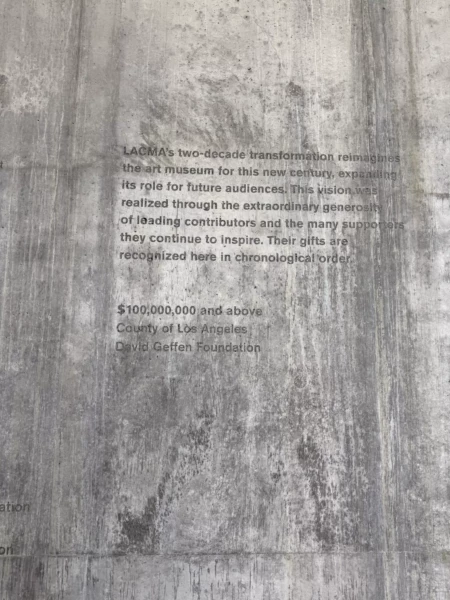
The project required colossal works costing $720 million. By comparison, the 2019 expansion of Museum of Modern Art cost $450 million, while the new Whitney Museum of American Art building designed by Piano carried a $422 million price tag in 2015.
David Geffen Galleries
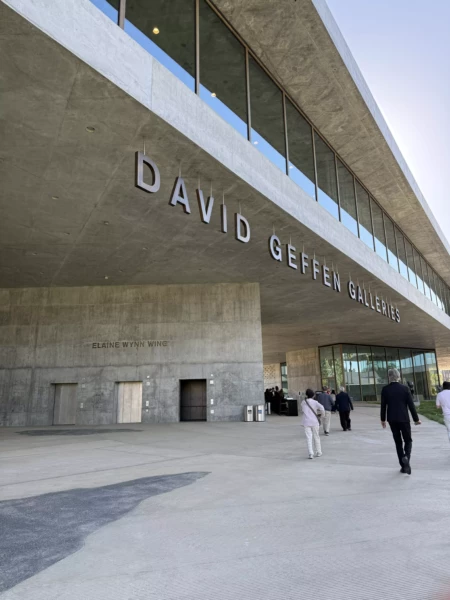
In Los Angeles, the new structure bears the name David Geffen Galleries, spelled out in giant letters at the entrance. David Geffen, the music mogul, DreamWorks co-founder and noted collector, contributed at least $150 million, making him the institution’s largest private donor.
Michael Govan
The visionary behind the project is Michael Govan, handsome as a Hollywood actor, with platinum hair, an ever-present smile and an effortless cool. He is also known as a formidable fundraiser. He recently told a collector friend, “When you decide to raise money, the only time you can stop working is in the shower.” He succeeded.
The construction itself began with demolition: four buildings had to come down. “There were leaks everywhere,” Govan said. “People no longer called it LACMA. Collectors called it Leakma.”
an entire mammoth
Six years later, the museum emerged with 11,219 square meters of exhibition space, compared with 11,148 before. All that for this? many asked. The fact that the new LACMA offered roughly the same amount of gallery space infuriated much of Los Angeles. Paleontologists joined the protests after Ice Age remains were found underground, including an entire mammoth and several contemporaries, all removed for study.
Still, Govan persevered against fierce headwinds. He is, after all, a man of large ambitions. In 2003 he helped envision one of the defining sites of global contemporary art, Dia Beacon, transforming a vast former printing plant into a spectacular shrine to American Minimalism.
a new kind of museum
Since arriving at LACMA in 2006, he had imagined a new kind of museum.
“I don’t think museum concepts have truly been renewed since the nineteenth century,” he said. “Peter Zumthor designed a fully horizontal museum.
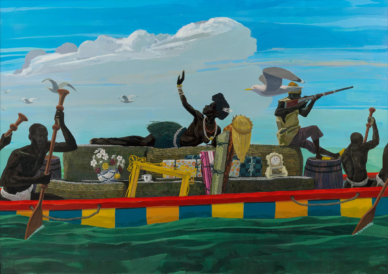
The curators divided it into four sections corresponding to the oceans, rather than dividing the world into nations. The Atlantic, for example, brings together Africa, Europe, North America and South America. Across that ocean, violent trade and ordinary commerce shaped who we are. There would be no rock ’n’ roll in the United States without the slave trade.”
immense glass walls
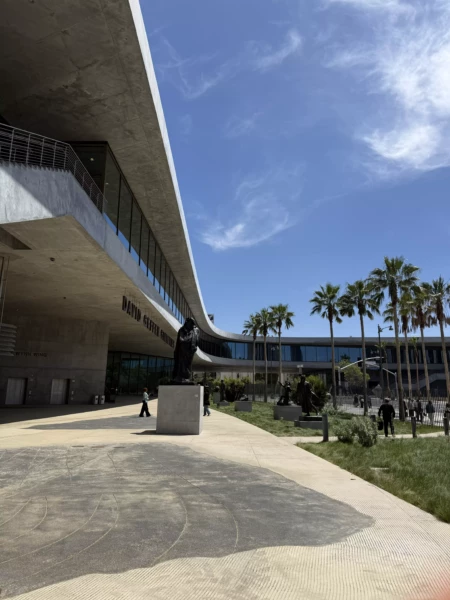
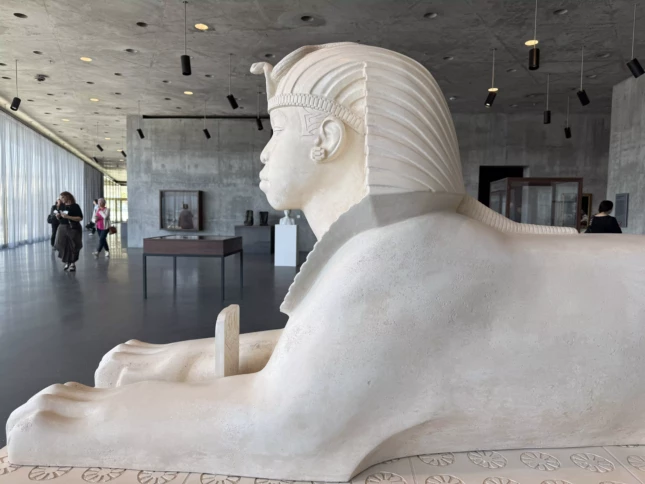
Yet the most striking aspect of the LACMA revolution is that paintings are no longer kings of the institution.
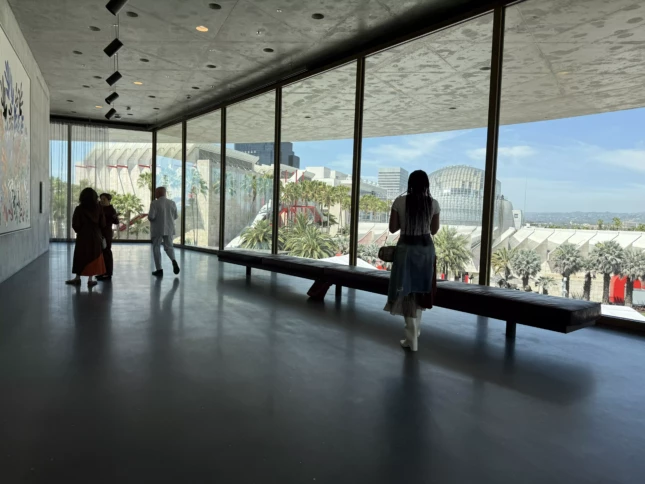
Each side of the sinuous building is lined with immense glass walls that frame the city like panoramic photographs — perhaps the finest tribute imaginable to the City of Angels. But there are fewer walls for hanging canvases. Govan has flattened the hierarchies of art history.
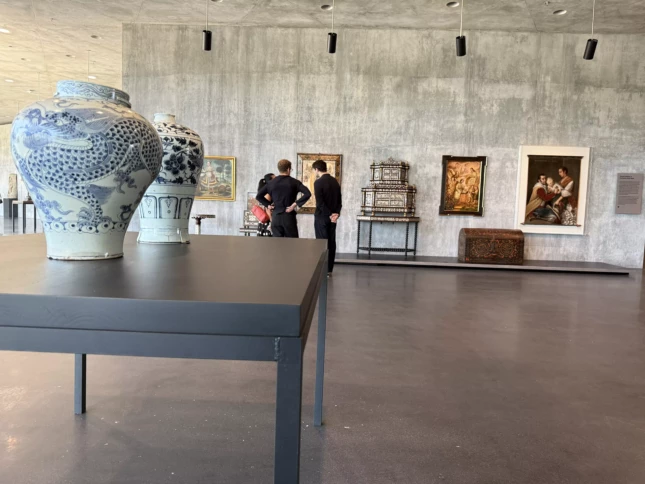
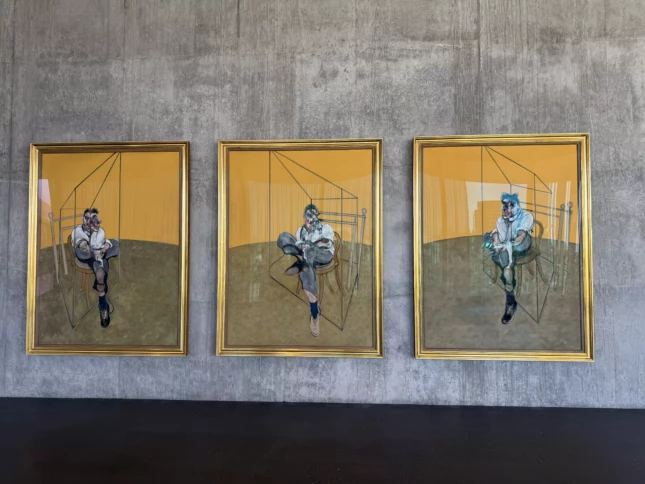
Here, fine art and decorative art are not separated, nor are periods or countries.
IN search of truth
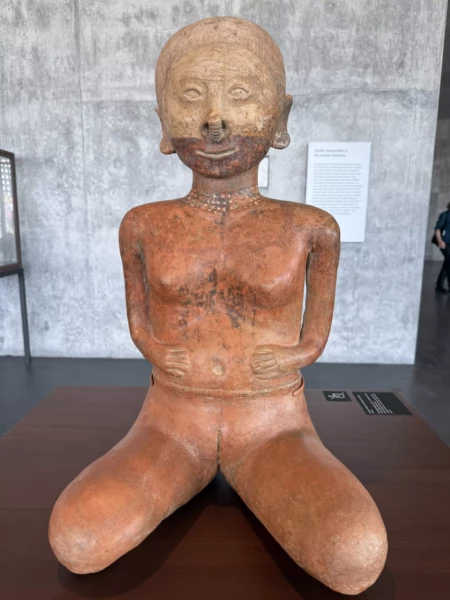
“The greater part of art history is not made of paintings,” he said. “It is made of textiles — tapestries, carpets, clothing — and countless ceramics, as well as stone, such as our Roman sculptures, and wood. We have a magnificent Bamana maternity figure, dated 1279–1395 in Mali, one of the oldest known of its kind. We did not seek to be revolutionary. I would say we are in search of truth.”
The concrete shell resembles an oversized California villa from the 1940s. It stretches so far that it forms a bridge over Wilshire Boulevard.
“My buildings are creators of emotion,” Peter Zumthor said. “They must be good for people and bear traces of beauty.”
Van Gogh and Loewy
Like Los Angeles itself, the building has no central point. Govan wanted visitors to lose themselves a little. He succeeded.
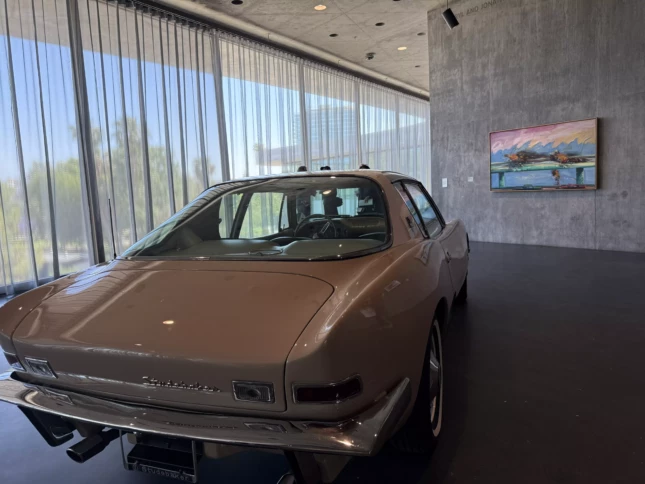
It takes time to savor the mix of genres. This gray concrete vessel offers an unusual artistic abundance. A Vincent van Gogh painting of stagecoaches in Tarascon hangs near a work by Paul Gauguin — Van Gogh had gone there to await his friend arriving from Paris. A classic pairing. But nearby, another vision of transportation appears: a real sports car designed by the French industrial designer Raymond Loewy. The Avanti was commissioned in 1961 by Studebaker.
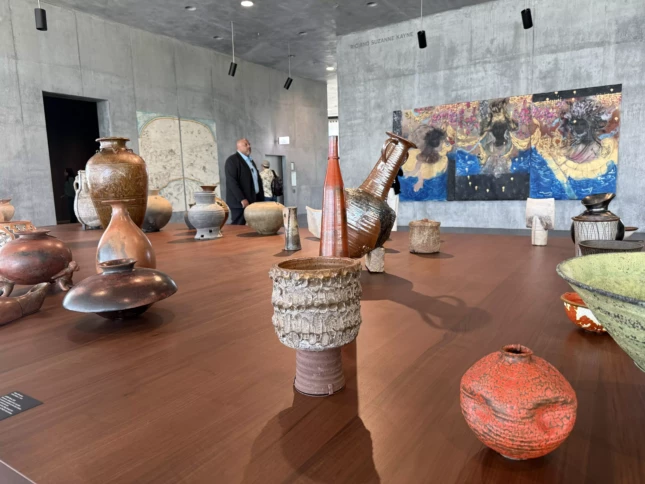
On a vast table stand ceramics from every era and every origin, proof of humanity’s shared concerns.
Richard Prince
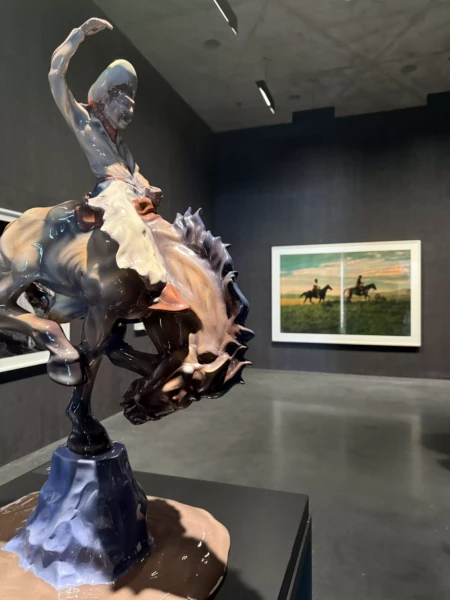
Not far from Hollywood, one room is devoted entirely to the cowboy myth, including photographs of Marlboro horsemen appropriated from advertising by the contemporary artist Richard Prince.
Across from Tibetan furniture and textiles, the young Chinese artist Lu Yang, who lives in Japan, presents a psychedelic video made with artificial intelligence yet inspired by ancestral deities.
Tino Sehgal
Nearby, young people wander through the galleries playing with trick bicycles. No cause for alarm: it is a staged intervention commissioned from the performance artist Tino Sehgal.
After visiting the new LACMA, Max Hollein, director of the encyclopedic museum on the other side of the country, the Metropolitan Museum of Art, posted a string of compliments on Instagram:
“Architecture as emotional catalyst, a museum of contemplation and surprises (…) The triumphant new LACMA by Michael Govan.”
No better conclusion could be imagined.