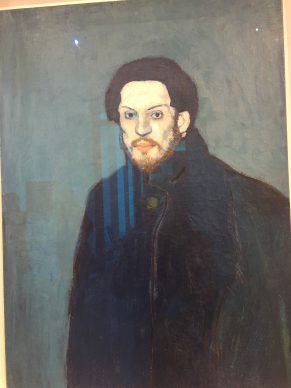
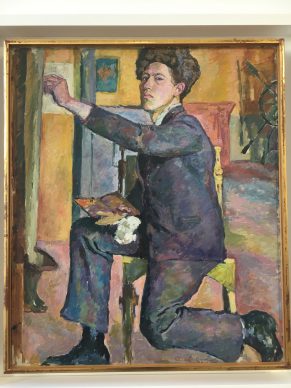
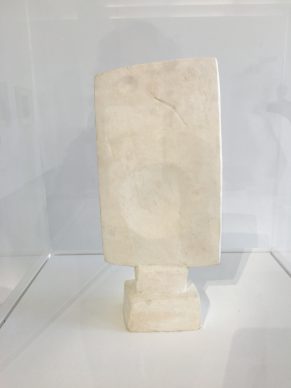
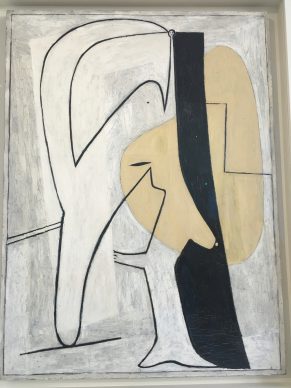
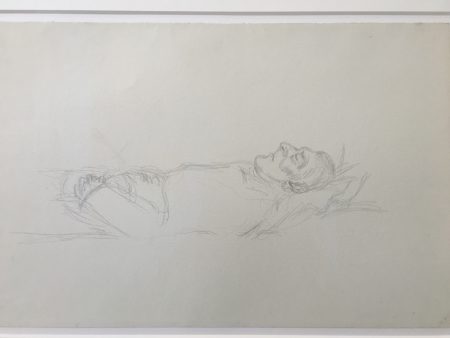
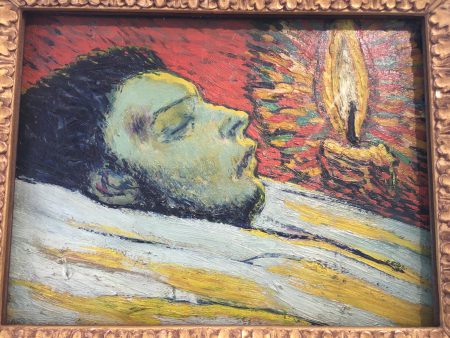


For the past few years, it’s been a thing for museums to show artists in pairs. This often involves some stylistic affinity that shines a light on their respective works.
For the new major exhibition at the Picasso Museum in Paris, however, it’s not immediately obvious what unites its two modern geniuses.
Sustain Our Work with a Small Monthly Gift
Become part of the Judith Benhamou Reports circle.
Contribute, even from just €10
On the one hand there’s Pablo Picasso (1881-1973) whose artistic output is vast, protean, violent and voluptuous, in painting as in sculpture, and on the other is Alberto Giacometti (1901-1966) who is best known for his late, stretched-out three-dimensional forms.
Catherine Grenier the director of the Giacometti Foundation and curator of the exhibition speaks about its genesis:
In fact, as Catherine Grenier reveals, there is an episode of modern art history that is little-known: ‘From 1932, they saw quite a lot of each other and despite their difference in age – over 20 years – they had a remarkable intellectual understanding. At some points they met up every day. What interests me in their relationship is that they asked themselves the same questions but often provided different answers.’
She explained:
The exhibition is consequently made up of confrontations rather than common points.
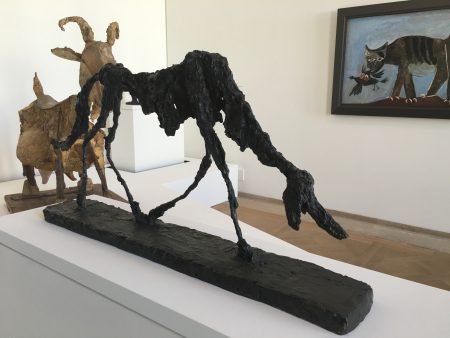
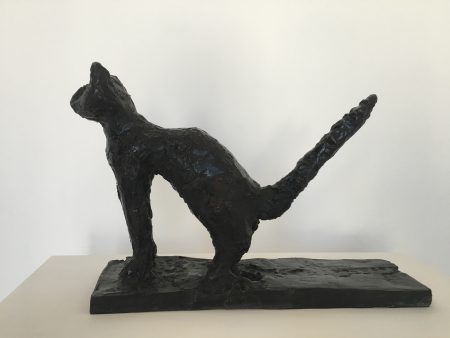
So if Picasso loves animals, representing them in abundance and with affection (see his monkey, his goat, and his cat, tongue-in-cheek…) Giacometti, for his part, is indifferent to them.
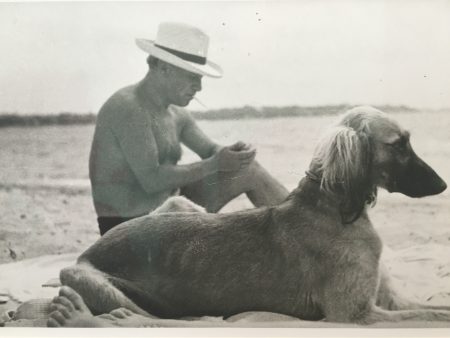
And when he chooses to model a dog, it’s Picasso’s Afghan hound. He does not give the pet the noble allure you might expect but instead an almost human attitude: a poor scrawny thing.
The two artists both share a compulsive relationship to their artistic practice.
They draw everywhere and on everything, as we see at the beginning of the exhibition in sketches that they made on various sheets of newspaper.
Evidently they both have a profound love for women, and great need for them too, transforming them now into objects, now into monsters. For one it’s Dora Maar, for the other it’s Annette, not forgetting all the others too…
The exhibition’s apotheosis is located in the section dedicated to Surrealism in the period ’32-’35.
While Picasso flirted with the movement, Giacometti fully embraced it.
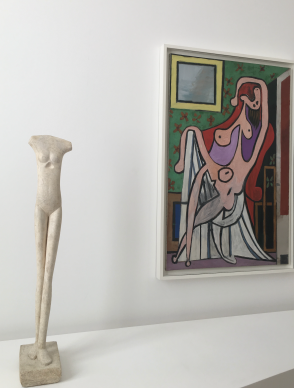
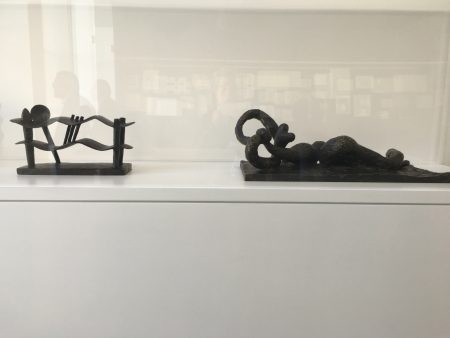
An entire room is devoted to these curbed and phallic shapes that haunt the paintings and sculptures in Picasso and Giacometti.
After the war they would go their separate ways, as much in their expressions as for geographical reasons.
Picasso would leave Paris.
Giacometti, haunted by death, imagined his characters far away, fixed in bronze, and as if in the process of disappearing.
Picasso, meanwhile, continued to make forms, colours and sexual obsessions swirl together with a great degree of freedom.
A little over 200 works are on display at the Picasso Museum. These two major, radical and radically opposed approaches to modernism did not rule out a famous friendship.
Until 5 February. www.museepicassoparis.fr
Picasso-Giacometti will travel from 22 February until 21 May 2017 to Fire Station Artist in Residence in Doha, Qatar. The exhibition which will bring together about 80 works is the first to show these artists in the Middle East