Irving Penn Takes Paris, Twice
IIrving Penn Takes Paris twice this fall. From October 7, the Bourse de Commerce is devoting 454 photographs to him as part of Remember Me, the exhibition of François Pinault’s photography collection. Never before, perhaps, have so many of his images been gathered under a single roof. While the Maison Européenne de la Photographie is showing 140 more through January 17.
Fashion photo
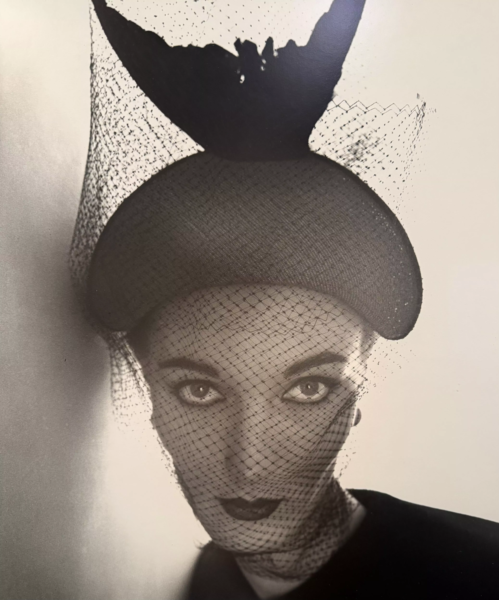
If there were a pantheon of fashion photographers, the American Irving Penn (1917–2009) would surely occupy one of its places of honor. A man whose first dream was to become a painter, Penn enjoyed a career of exceptional creativity and longevity. He began working for Vogue in 1943 and did not stop until he was 91, just a few months before his death.
Sustain Our Work with a Small Monthly Gift
Become part of the Judith Benhamou Reports circle.
Contribute, even from just €10
He entered the collective memory through his highly constructed yet relatively spare photographs of the 1950s: black-and-white images of creatures of almost unreal elegance. Fantasies of women. Fantasies of dresses…
too vulgar?
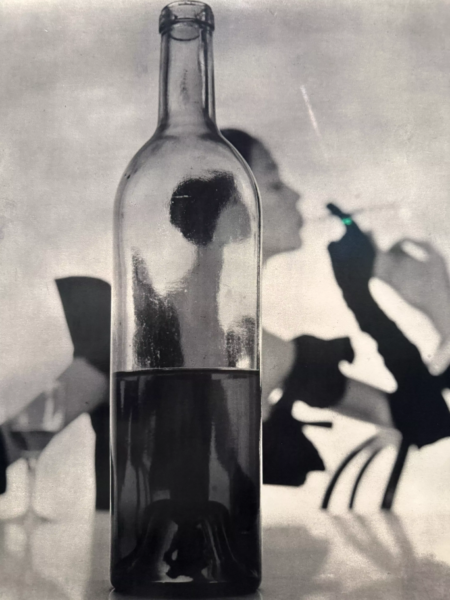
Yet we tend to forget today that for a long time, fashion photography, however talented its author, was regarded by collecting purists as being of only relative interest. Too commercial. Too mainstream. Which really meant: too vulgar.
Then attitudes began to loosen. By the 1980s, fashion photography had truly acquired its artistic credentials. The great museum recognition for the supreme maestro of the genre, Irving Penn, came in 1984 with an exhibition at the holy of holies, New York’s MoMA. More recently, in 2015, Palazzo Grassi in Venice unveiled François Pinault’s holdings of Penn. And above all, in 2017 came the ultimate French consecration: the majestic retrospective at the Grand Palais, originating at the Metropolitan Museum of Art in New York.
In Paris, the Maison Européenne de la photographie owns the largest public collection of the artist’s work: 109 prints. So it is fair to say that the recent exhibition schedule devoted to Penn has been remarkably rich.
Photo is important
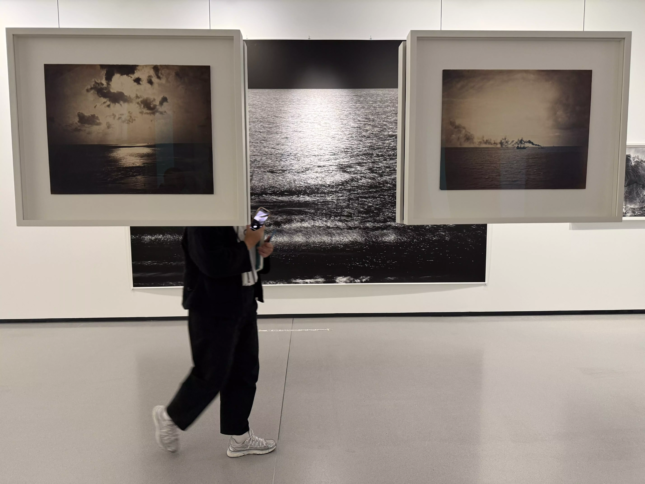
And now it is starting all over again, on an even larger scale. At the Bourse de Commerce, the show The World According to Penn is astonishing in its richness. More broadly, the fact that this ensemble is being displayed in one of Paris’s “temples” of contemporary art gives considerable weight to fashion photography and to its maestro, who was also an outstanding portraitist.
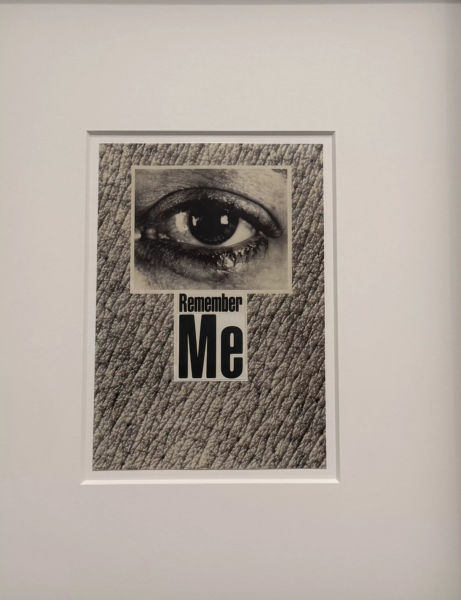
More generally still, the fact that the Bourse de Commerce is entirely devoted to photography this season sends a strong signal about the position the medium now occupies. The confrontation between Gustave Le Gray’s (1820–1884) 19th-century seascapes and those of Hiroshi Sugimoto (born 1948) and Wolfgang Tillmans (born 1968) also provides a salutary reminder of the genius of photography’s earliest years. Le Gray was already combining negatives to create the perfect image of sea and sky.
IMage making machine
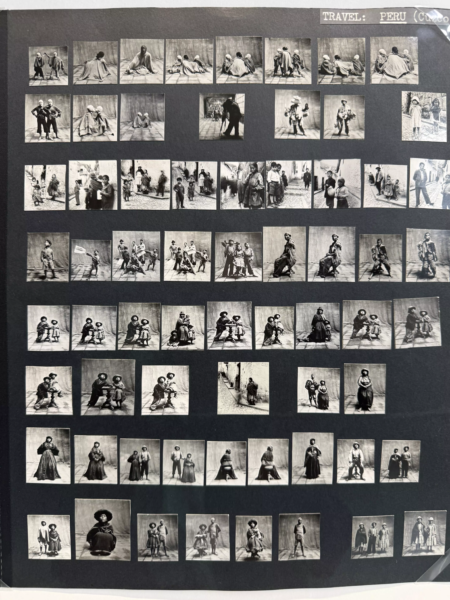
And if Matthieu Humery, who oversees photography matters for François Pinault (businessman, collector and owner of Christie’s), chose to place such an enormous spotlight on Irving Penn, it was to demonstrate what an extraordinary image-making machine this photographer was over the course of a 65-year career. (Unfortunately Matthieu Humery is not particularly fond of filmed interviews.)
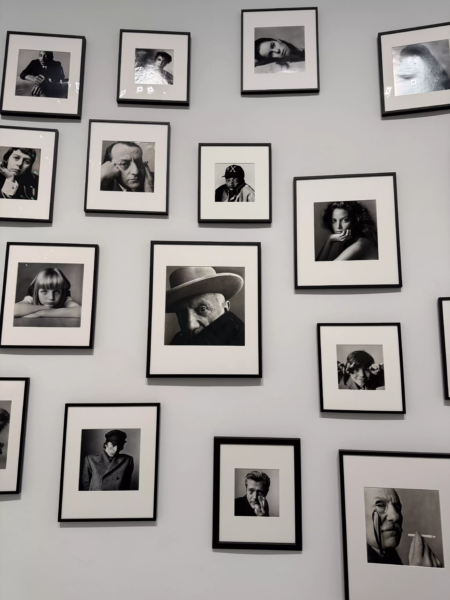
“He worked day and night. He would sometimes wake up just to check the quality of a print. He was completely obsessed with his work,” explains the exhibition’s curator.
Penn and fashion
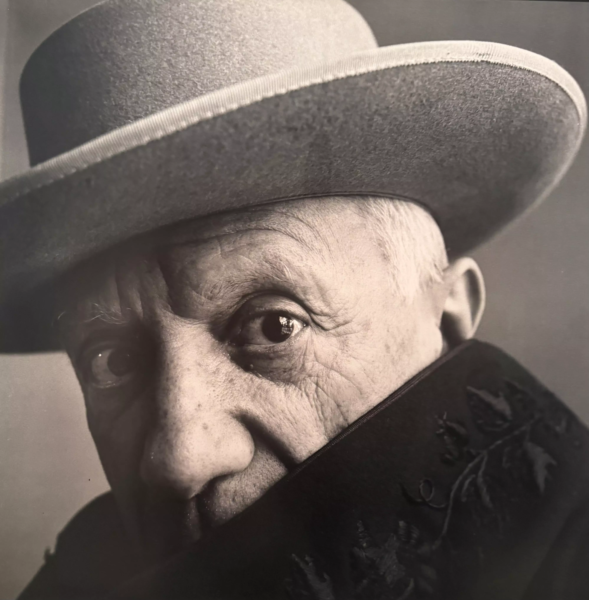
The MEP is also devoting its galleries to Penn through January 17, but with a more focused approach. The Marais institution has put together PENN & FASHION, an exhibition of 140 photographs aiming to provide a comprehensive view of this aspect of his work. To complement its own holdings, the photography museum has drawn on the Swiss collection of Nicola Erni and on the Irving Penn Foundation, run by the artist’s son.
One process
Fashion photographs or not, Penn always followed essentially the same process, as the exhibition’s curator Pascal Hoël explains: “A studio, a neutral backdrop that he carried from one place to another, natural light, a subject and a dress. In Paris, he frequently rented a studio in Saint-Germain-des-Prés, at 85 Rue de Vaugirard.”
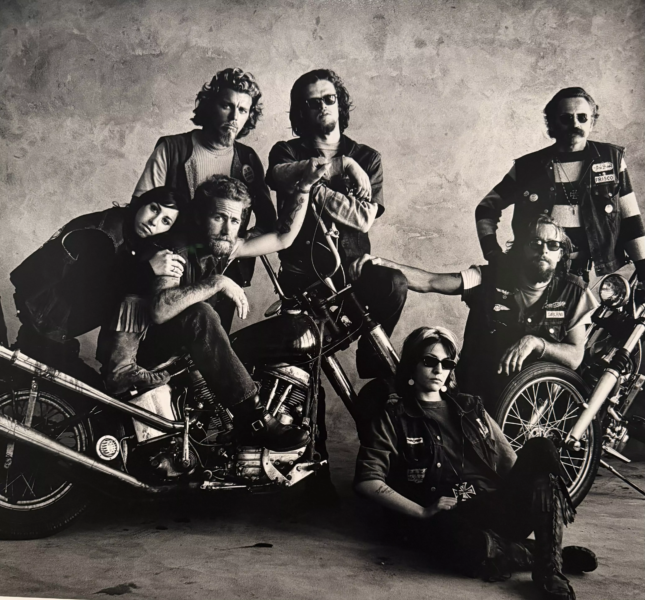
Penn would make his subjects pose for hours in a studio that he reconstructed wherever his travels took him. The backdrop, a painted gray curtain, became the “guest star” of many of his photographs. Through his lens, Los Angeles bikers could look just as stylish as models wearing the latest French fashions.
love of his life
His favorite subject was inseparable from the great love story of his life, visible in many photographs from the 1940s and 1950s: Lisa Fonssagrives, the legendary model whom he married after meeting her on a shoot in 1947. The selection in the exhibition is so precise that it includes the very photograph connected with the moment they fell in love.
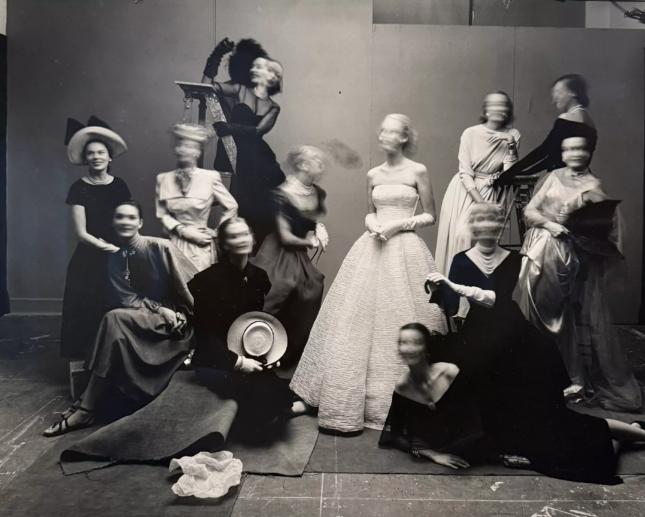
Penn was then photographing for Vogue the twelve most photographed models in America. He allowed each woman to move freely around the studio until she naturally settled into her preferred pose. The result is a remarkable composition of graceful attitudes, while the faces are blurred by movement.
Penn’s other great distinguishing feature was his obsession with printing, which he always did himself. In this respect he differed from his great American rival in fashion photography, Richard Avedon (1923–2004), who entrusted his prints to professionals. Penn was fanatical about the process.
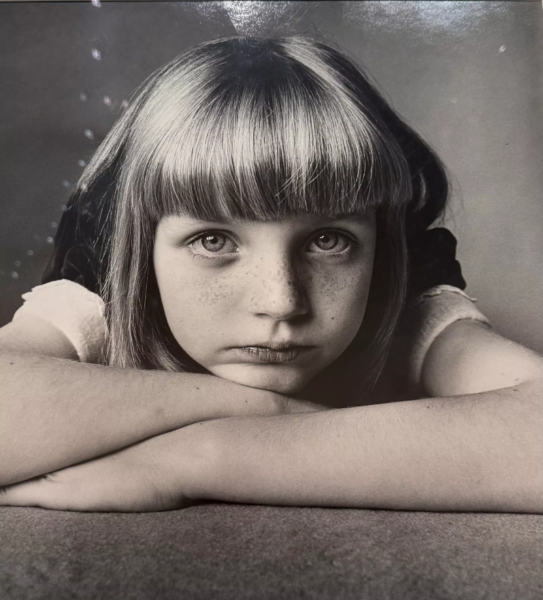
“He is one of the very few photographers capable of making 30 different prints from a single image,” Matthieu Humery points out.
platinum-palladium printing
From the 1970s onward, Penn revived a technique dating from the early 20th century that had fallen into disuse because it was so difficult to execute: platinum-palladium printing. It allowed him to create effects of extraordinary depth and relief, with an infinite range of nuances from white to black.
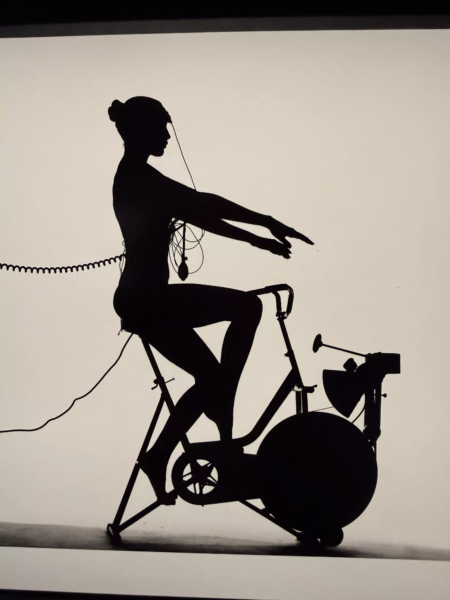
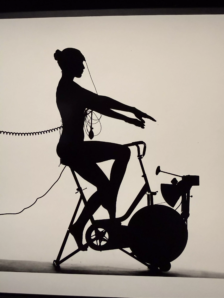
Naturally, many famous images will be recognized, with pleasure, in the exhibition at the Maison Européenne de la Photographie. But the show also contains rare discoveries. One example is a nude portrait of Jerry Hall, Mick Jagger’s former wife, reduced to a silhouette as she sits on an exercise bike. Dated 1975, Penn called it Wired Woman.
unexpected images
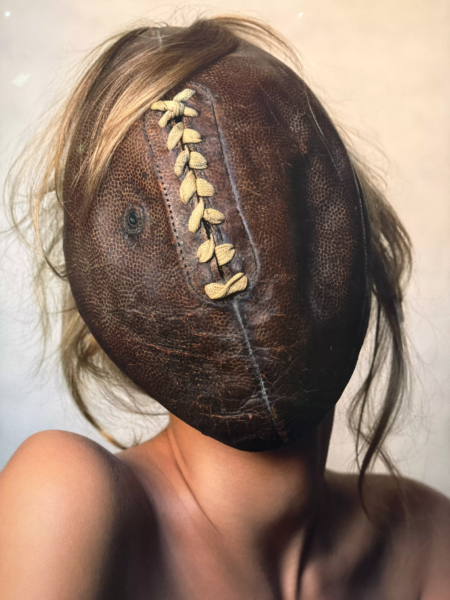
Among his later photographs are some extremely unexpected images. In 2002, for instance, when illustrating a Vogue article about the ravages of cosmetic surgery, he concealed his female subject’s face behind an American football. Contemporary artist Urs Fischer (born 1973) would later frequently use a similar device, obscuring the faces of icons with everyday objects.
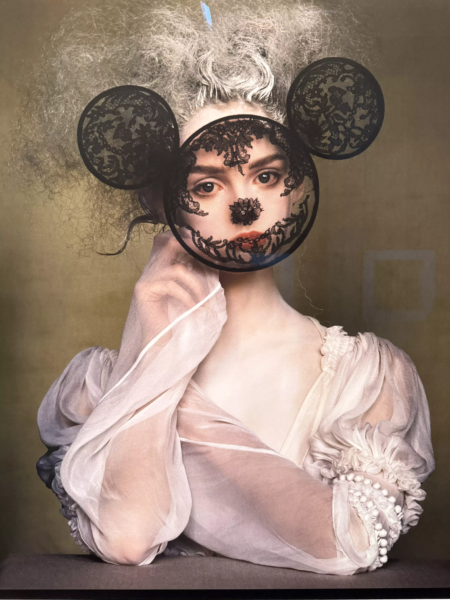
Just one small regret about the MEP exhibition: the absence of Kate Moss, who had become an absolute fashion icon by the 1990s. In 1996, Penn photographed her nude for Vogue. That languid pose, that fragile body: that, too, was fashion.